Feasibility and Acceptability of a Digital Medication Adherence Intervention for Adolescents and Young Adult Kidney and Liver Transplant Recipients
Authors
Affiliations
Abstract
INTRODUCTION: Adolescent/young adult (AYA) kidney and liver transplant recipients have high medication nonadherence rates leading to poor transplant outcomes, and may benefit from digital adherence interventions. This study reports the feasibility, acceptability, and pilot results of a digital adherence intervention involving real-time adherence monitoring via electronic pillbox (e-pillbox), which triggered tailored medication reminder text messages sent probabilistically to reduce alert fatigue.
METHODS: AYAs (13-25 years, >6 months post-transplant, taking tacrolimus and/or sirolimus) were recruited from an academic medical center, clinic referrals, and social media. AYAs received a Bluetooth My-Pills e-pillbox (Abiogenix, Inc.) to track adherence, downloaded the My-Pills app, entered regimen data, and linked e-pillbox to app with staff support (phone, video call, text) and written and video instructions. A 4-week run-in (e-pillbox only) preceded a 12-week trial (texts triggered probabilistically based on e-pillbox use: 80% chance of missed-dose message if dose >30 minutes late, 20% chance of taken-dose message if on time). Post-trial interviews elicited AYAs’ perspectives on the intervention.
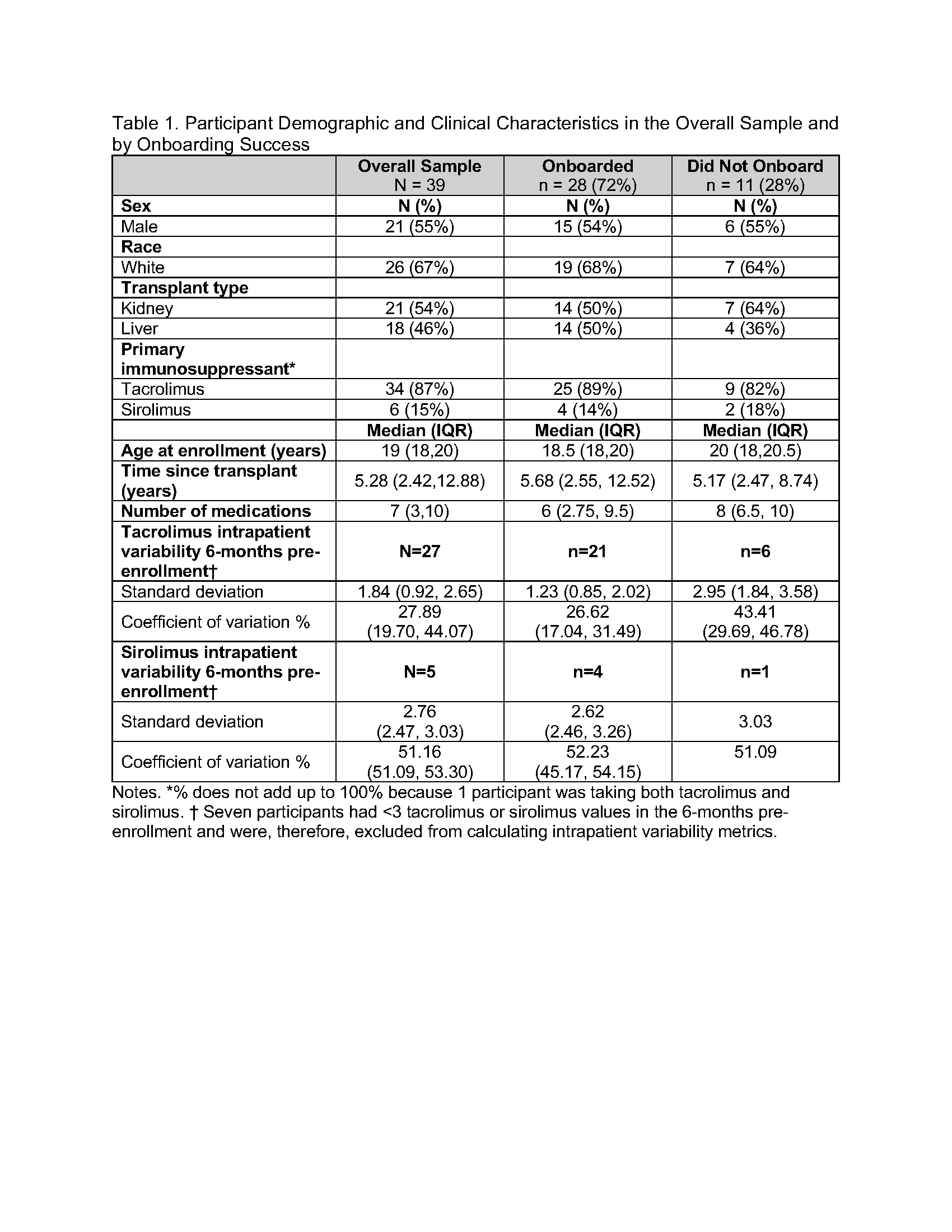
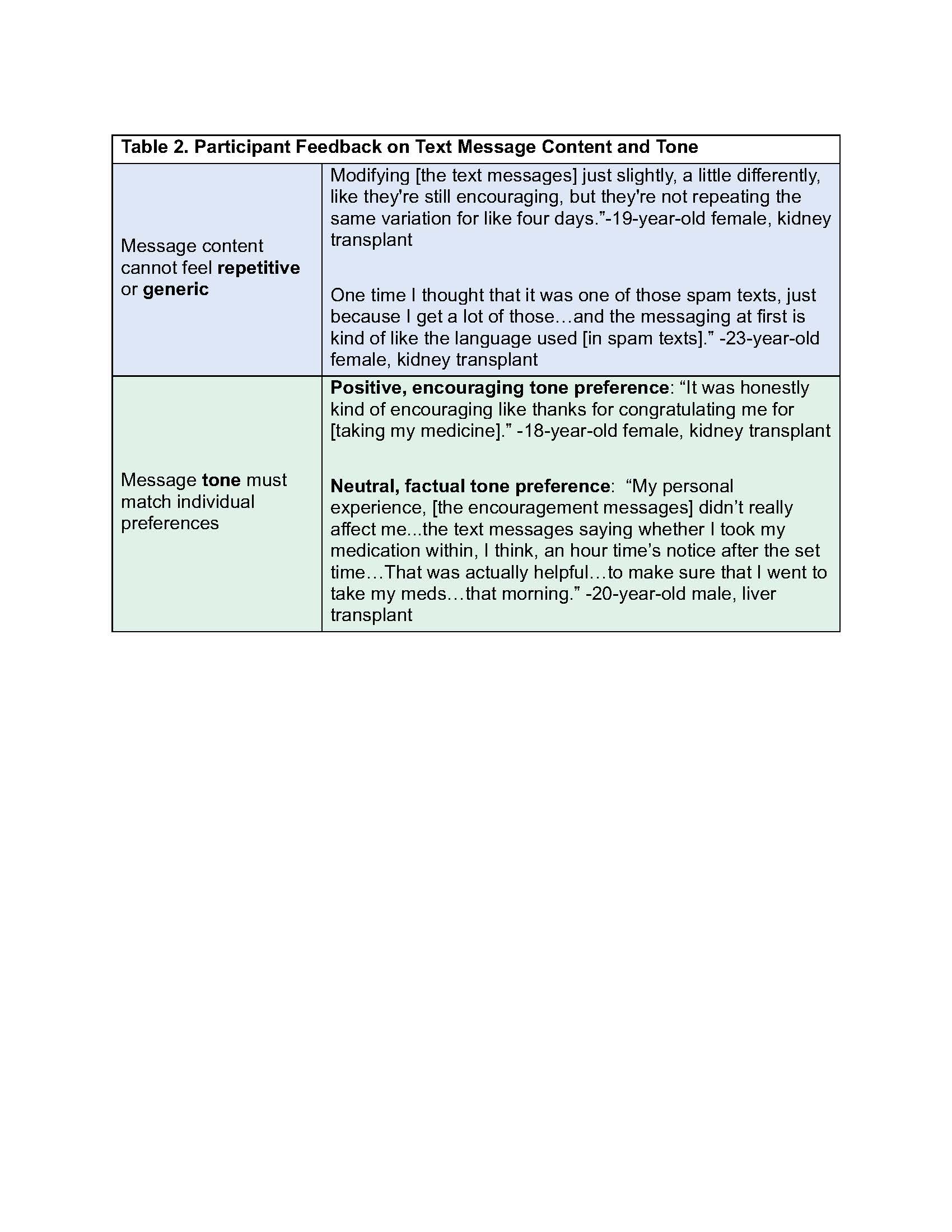
RESULTS: Forty AYAs enrolled (one screen fail); 39 received an e-pillbox (55% male, 67% White, 54% kidney transplant, 87% tacrolimus; median age=19 years, 5.28 years post-transplant; see Table 1 for details). Despite support, nine did not initiate onboarding and two initiated but did not complete onboarding. Of the 28 who onboarded, five had issues syncing e-pillbox data with the app and data collection cloud and one stopped e-pillbox use in the run-in. Thus, 22 AYAs were included in the text message analyses. Following missed-dose messages, AYAs took a median of 100% (IQR=24-100) of the doses triggering the message (median time-to-dose=0.51 hours, IQR=0.01-1.29). Following taken-dose messages, 90% (IQR=81-97) of the next doses were taken (median time-to-dose=11.22 hours, IQR=8.75-16.42) but only 69% (IQR=40-94) of doses were taken after no message. Participants reported that the text messages needed greater personalization (cannot feel repetitive, generic, or “spam-like”) and that message tone must match individual preferences (see Table 2 for thematic quotes).
CONCLUSIONS: AYAs experienced onboarding and engagement challenges, even with staff support, which is a barrier to digital adherence intervention uptake. E-pillbox-linked reminders delivered probabilistically to reduce alert fatigue, particularly missed-dose messages, may help prevent missing critical immunosuppressant and other medication doses. Future directions include addressing onboarding and syncing barriers and enhancing personalization of message content and tone, which could help optimize uptake and engagement from the start, and, in turn, support medication adherence for AYA kidney and liver transplant recipients.