
Utilization of Visual Materials to Improve Transplant Education
Authors
Affiliations
Abstract
Introduction
Patients and caregivers require extensive education after a solid organ transplant. The standard of care is written and verbal education, however there are barriers to this standardized method that can affect retention rate for certain populations. These barriers include patients and caregivers that cannot read at average reading level, cannot read or write in their native language, have a learning disability, or prefer visual learning styles for various reasons. In these cases, the medical team must provide teaching and educational resources in ways that do not primarily focus on the written word.
Methods
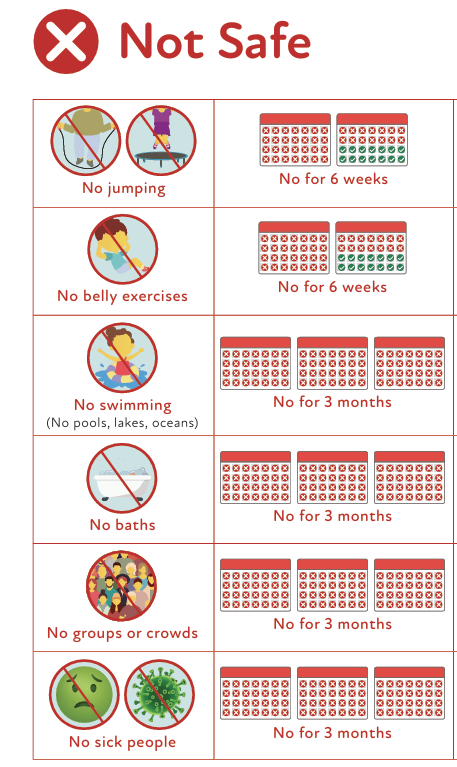
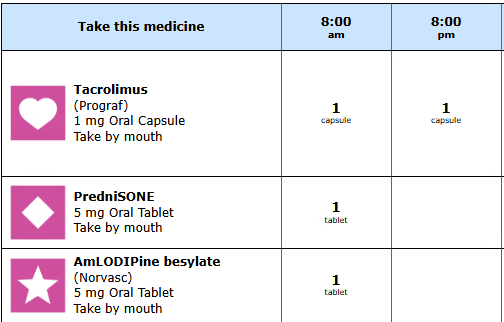
At our center, we have historically used one method to provide teaching to this population. The population of caregivers and patients offered additional resources is identified by speaking with transplant families to assess reading level, language barriers, and overall understanding of materials. Historically we used Medication Action Plan (MAP) sheets with assigned colors for each medication that matched a color sticker on the medication bottles. Our center has adapted our method by changing from colors to symbol matching, which are better understood across different cultures and do not have color variation. Additionally, we have added a second method by designing a teaching guide that uses pictographic aids. These include pictorial aids for symptoms to report, how to contact the transplant team, medication names, foods to avoid, activities to avoid post transplant (insert picture). A scoring system was implemented to track usability of the education materials and retention by patients and caregivers.
MAP and Illiteracy Resources Education Completed: {YES OR NO:29115}
Reason tool(s) used: patient preference, language barrier, illiteracy
Symbol Coding: {YES OR NO:29115}
Illiteracy Documents: {YES OR NO:29115}
Retention Assessment Scale:
1: <50% identification of items
2: >50-99% identification of items
3: 100% identification of items
At time of discharge Assessment Score: {1 2 3:28089}
First outpatient appointment Assessment score: {1 2 3:28089}
IF score is 1 or 2 at follow up visit steps to be implemented
Discuss and identify barriers
Document barriers
Reeduation with verbal recall
Health Care Provider helps fill medication box
Reevaluate at next visit (approximately 4-7 days)
Results
Post implementation of MAP coloring/symbol system, we have completed discharge teaching for 21 patients that could not match their medication action plan to the medication bottles. Of the 21 patients, 11 were completed for patient preference and 10 for language barriers. Based on discharge teaching assessment scale, 100 percent of patients were able to identify and match MAP to medication bottles and recall correct doses of each medication, scoring a 3. At the first clinic visit post transplant, 18 patients scored a 3 and 3 patients scored a 2. All patients and caregivers confirmed the additional materials improved understanding of transplant education. Pictorials will be completed and utilized starting September 2026.
Conclusion
Based on our results, we will be utilizing medication symbols for all patients that cannot read or write and additionally for any patients who require additional teaching. We plan to offer pictorials to this population and assess patient feedback and retention with similar assessment scales, with data to be collected and presented.