Quality improvement initiatives to reduce rejection in pediatric kidney transplant recipients: a retrospective single-center study
Authors
Affiliations
Abstract
Introduction: Acute rejection remains a major threat to kidney allograft survival in children. We evaluated whether a 12-component quality improvement (QI) program was associated with reduced rejection after pediatric kidney transplantation.
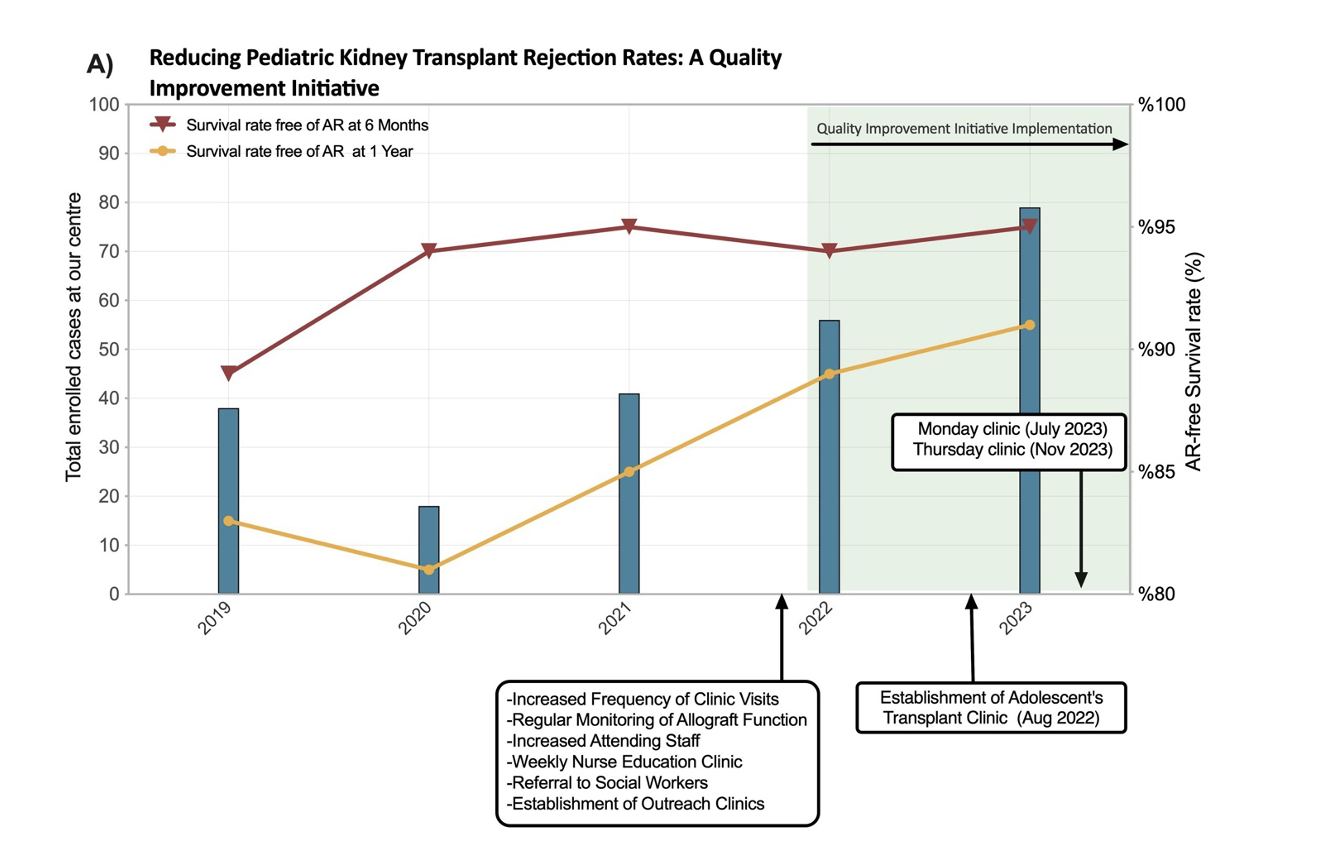
Methods: This retrospective pilot QI study included 232 recipients aged 1–17 years who underwent kidney transplantation at King Faisal Specialist Hospital & Research Centre, Riyadh, Saudi Arabia, from 2019–2023. The QI program, introduced in 2022, incorporated transition-focused care, structured patient and caregiver education, more frequent clinical and laboratory follow-up, improved clinic access, and multidisciplinary adherence support. Biopsy-proven acute rejection was classified using Banff criteria. We compared outcomes before (2019–2021) and after implementation (2022–2023), and used multivariable logistic and Cox regression to assess factors associated with rejection.
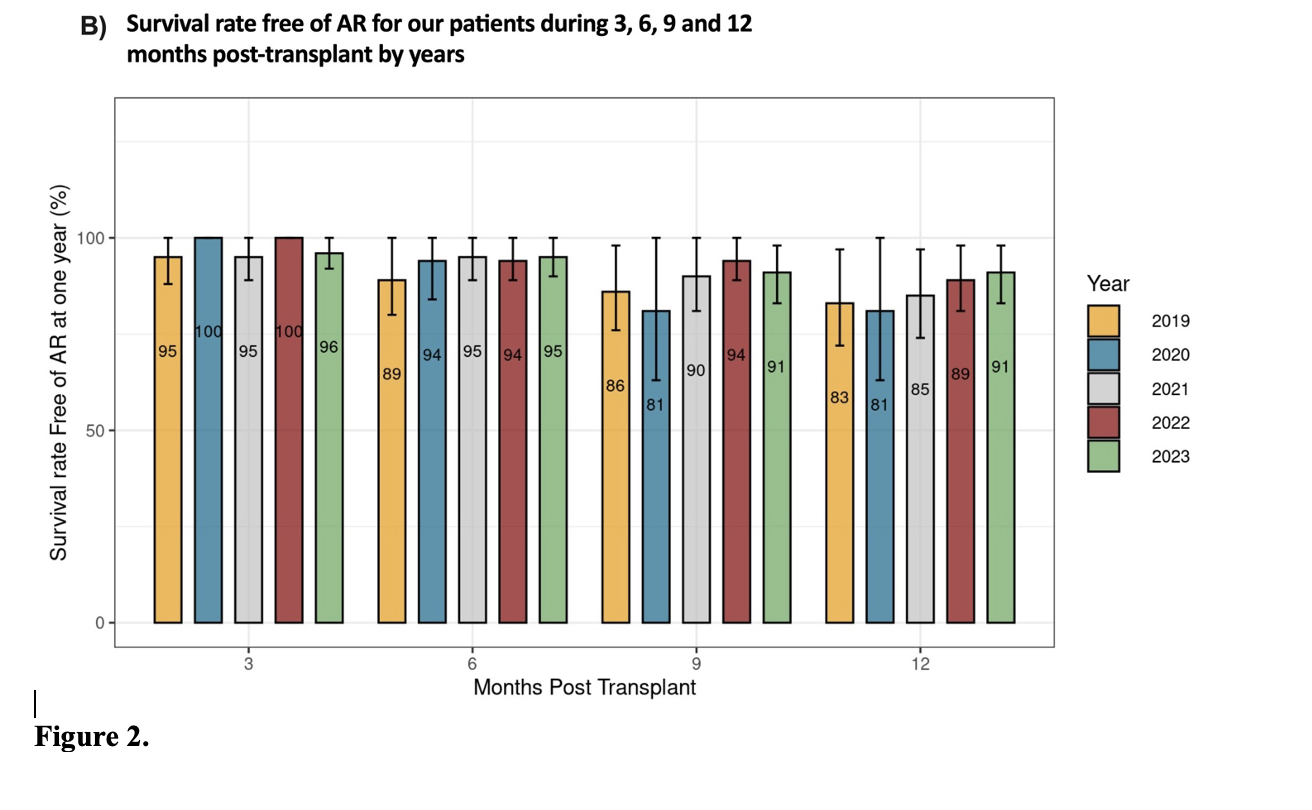
Results: Structural anomalies (30%) and glomerular disorders (18%) were the leading causes of kidney failure; 79% received living-donor grafts. Acute rejection differed across transplant years (P = 0.017), decreasing from 27% in 2021 to 11% in 2022 and 7.6% in 2023. The proportion with one rejection episode declined from 9.5% before to 3.6% after implementation, and with ≥2 episodes from 6.0% to 2.5%. First-year rejection was 7.6% (6/79) in 2023, compared with 14.6% (6/41) in 2021 (P = 0.52). T-cell–mediated rejection was the predominant phenotype. Graft failure was uncommon (5/232, 2.2%) and absent in 2023. Twelve-month rejection-free survival was 91% (95% CI, 83%–98%) among recipients transplanted in 2022–2023. Donor-specific antibody positivity independently predicted rejection (adjusted odds ratio, 9.93; 95% CI, 3.17–34.0; adjusted hazard ratio, 7.67; 95% CI, 2.69–21.9; both P < 0.001).
Conclusions: Implementation of a multidisciplinary QI program coincided with a substantial reduction in acute rejection, achieving a 2023 first-year rate below 10%, while transplant volume increased. The lack of a statistically significant difference in first-year rejection and the single-center retrospective design preclude causal inference. Sustained adherence support, surveillance, and DSA monitoring warrant continued evaluation in prospective multicenter studies.