
International Practice Variation in Paediatric Prioritization in Heart Transplant Allocation Schemes
Authors
Affiliations
Abstract
Introduction: Worldwide, children continue to die whilst waiting for a suitable donor on paediatric heart transplant waitlists. Paediatric prioritization is a multi-dimensional approach to decrease paediatric waitlist mortality. Global paediatric heart transplant prioritization and allocation strategies have not been assessed.
Methods: We conducted a scoping survey of paediatric heart transplant clinicians, using an International Paediatric Transplant Association mailing list and informal networks. We evaluated institutional resources, local and national allocation policies, listing and allocation prioritization strategies, and ABO-incompatible practices. Duplicate responses were removed. Data collection is ongoing.
Results: There were 41 unique responses from 36 institutions, representing 25 countries. 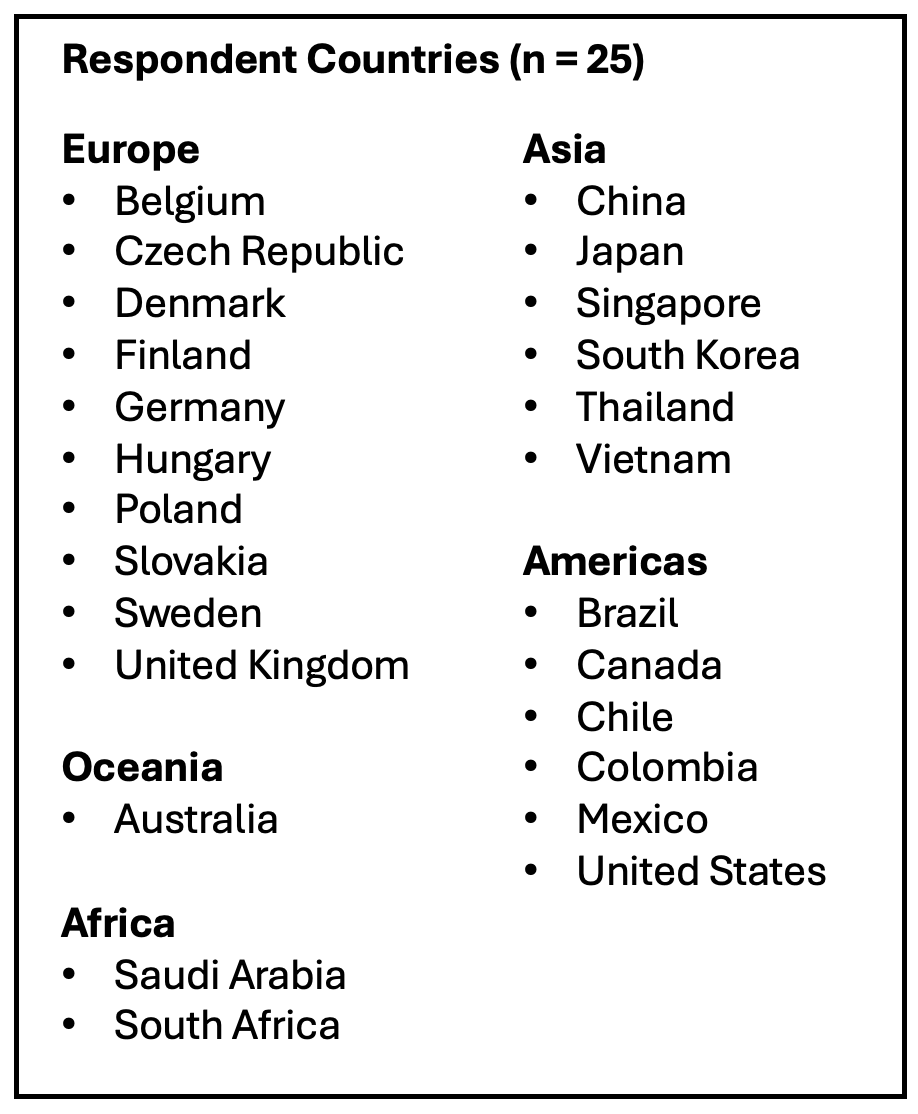
Thirty (73%) centres and 19 (76%) countries considered a paediatric patient for allocation to be < 18 years. National or supra-national frameworks to prioritize paediatric recipients existed in 19 countries – 52% prioritized paediatric recipients for all donors, and 68% for all paediatric donors. Additional measures included novel size-matching algorithms, supra-regional allocation for urgent paediatric patients, and priority weighting for non-dischargeable paediatric VAD over dischargeable VAD. ABOi transplant was reported in 56% of countries. Of these, 71% reported an upper age limit [median 2 (IQR 2 – 2) years]. Absolute titre thresholds were institutionally determined in 100%, with national thresholds specified in 4 countries, and a median titre threshold of 1:16 (IQR 1:8 - 1:32).
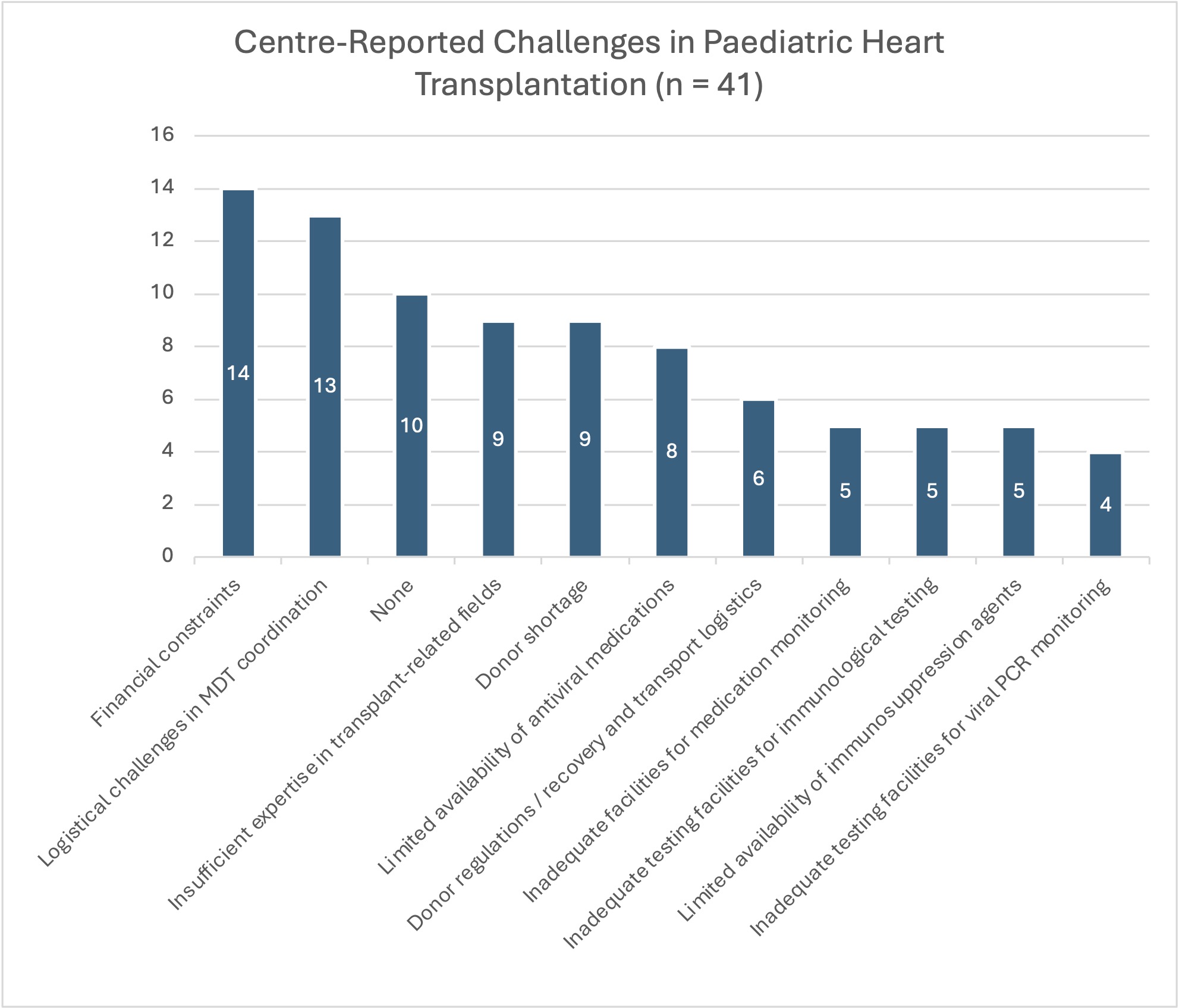
Paediatric recipients were felt to be adequately prioritized by 69% of respondents. Reported barriers include organ donation and transportation regulations, and limited donor supply. Proposed solutions include prioritization of paediatric non-dischargeable VADs, extension of prioritization thresholds (where relevant from 16 to 18 years) and paediatric donation campaigns. Respondents highlighted that the youngest recipients may not be advantaged by paediatric prioritization alone as they rarely compete for adult donors, and need dedicated efforts to improve bridge-to-transplant technology and increase the donor pool for children < 2 years of age.
Conclusion: This is the first global survey of paediatric heart transplant allocation, demonstrating widespread support for paediatric prioritization. Regulatory frameworks to prioritize paediatric recipients and facilitate DCD and ABOi transplantation are key. Advocacy and investment at the local, national and international level are required to promote health equity and improve outcomes for children waitlisted for heart transplant.