
New-onset diabetes after pediatric liver transplantation: National incidence, risk factors, and outcomes
Authors
Affiliations
Abstract
Introduction: New-onset diabetes after transplantation (NODAT) is an important metabolic complication, but its contemporary epidemiology and clinical significance after pediatric liver transplantation remain poorly defined.
Methods: We analyzed Organ Procurement and Transplantation Network data through June 2026. Recipients aged <18 years undergoing liver transplantation from January 2010 through December 2025 were included, allowing ≥ 6 months of potential follow-up. Multiorgan and repeat liver transplants and recipients with pretransplant diabetes were excluded. NODAT was defined as registry-reported diabetes during post-transplant follow-up. Analyses included group comparisons, conditional Kaplan–Meier survival among recipients with a functioning graft at 1 year, competing-risk methods, multivariable regression, and time-dependent Cox models. Registry-reported insulin-dependent NODAT was evaluated as a sensitivity endpoint.
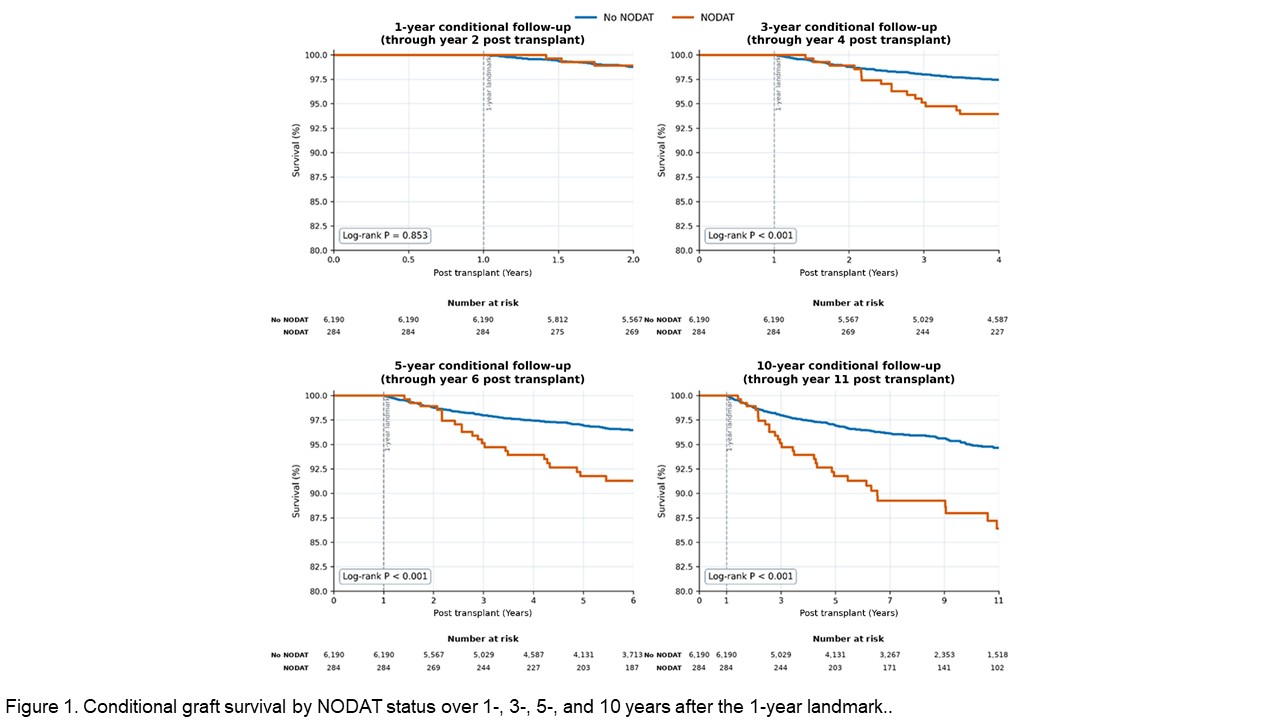
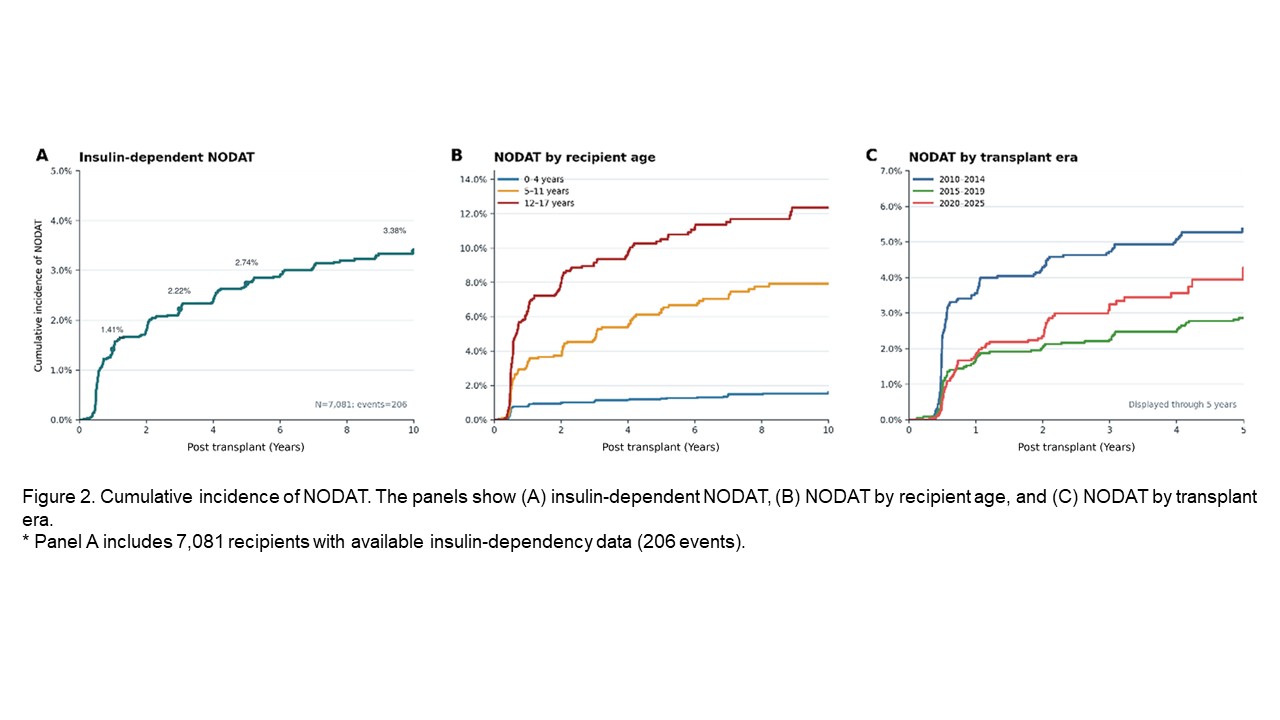
Results: Among 7,411 recipients, 302 (4.1%) developed NODAT. Affected recipients were older (median, 11 vs 2 years), had higher BMI (18.7 vs 17.4 kg/m²), were more frequently Black (26.8% vs 15.2%), and less frequently received living-donor grafts (9.9% vs 14.7%); infection and chronic rejection were also more frequent. Discharge immunosuppression was similar. At 1 year, NODAT recipients were less often receiving tacrolimus alone (34.0% vs 47.9%) and more often receiving tacrolimus–antimetabolite–corticosteroid therapy (16.8% vs 9.0%; both P<0.001). Among 1-year graft survivors, conditional graft survival was similar at 2 years (98.9% vs 98.8%; P=0.853) but lower with NODAT at 4, 6, and 11 years (93.9% vs 97.5%, 91.3% vs 96.5%, and 86.4% vs 94.7%; all P<0.001; Figure 1). Median time to first NODAT report was 342 days (IQR, 181–1,122); 53.0% occurred within 1 year and 83.4% within 5 years. Competing-risk cumulative incidence was 2.29% at 1 year, 3.93% at 5 years, and 4.79% at 10 years (Figure 2). Older age and Black race were the strongest independent predictors, while male sex was associated with lower risk. Time-dependent NODAT was associated with subsequent graft failure (aHR, 3.14; 95% CI, 2.37–4.15) and mortality (aHR, 2.71; 95% CI, 1.97–3.72). Of 302 NODAT cases, 206 (68.2%) were reported as insulin-dependent; corresponding aHRs were 3.80 and 3.10, respectively.
Conclusion: NODAT affects approximately 1 in 20 pediatric liver recipients by 10 years and is a strong marker of subsequent graft failure and mortality. Older children and Black recipients are at greatest risk and may benefit from intensified metabolic surveillance and risk-factor modification.