
Pediatric transplant psychology practice across centers: pre-transplant evaluation practice patterns, resources, and growth opportunities

Authors
Affiliations
Abstract
Introduction: Pediatric transplant centers in the United States vary in their involvement of psychologists as part of the pre-transplant evaluation process. To better understand evaluation practices, psychologists working with pediatric transplant patients in the US completed a practice survey. Information relevant to the respondents’ practice of psychology in transplant was gathered via survey questions. The aim of this project was to describe transplant-specific psychology practices to inform clinical practice.
Methods: A survey was designed by a workgroup of members of the Society for Pediatric Psychology Solid Organ Transplant Special Interest Group to assess pre-transplant psychological evaluation practices. Eighty-eight psychologists were identified and emailed the survey. Forty-seven psychologists from 38 medical centers provided complete responses. Descriptive statistics were used to summarize survey results.
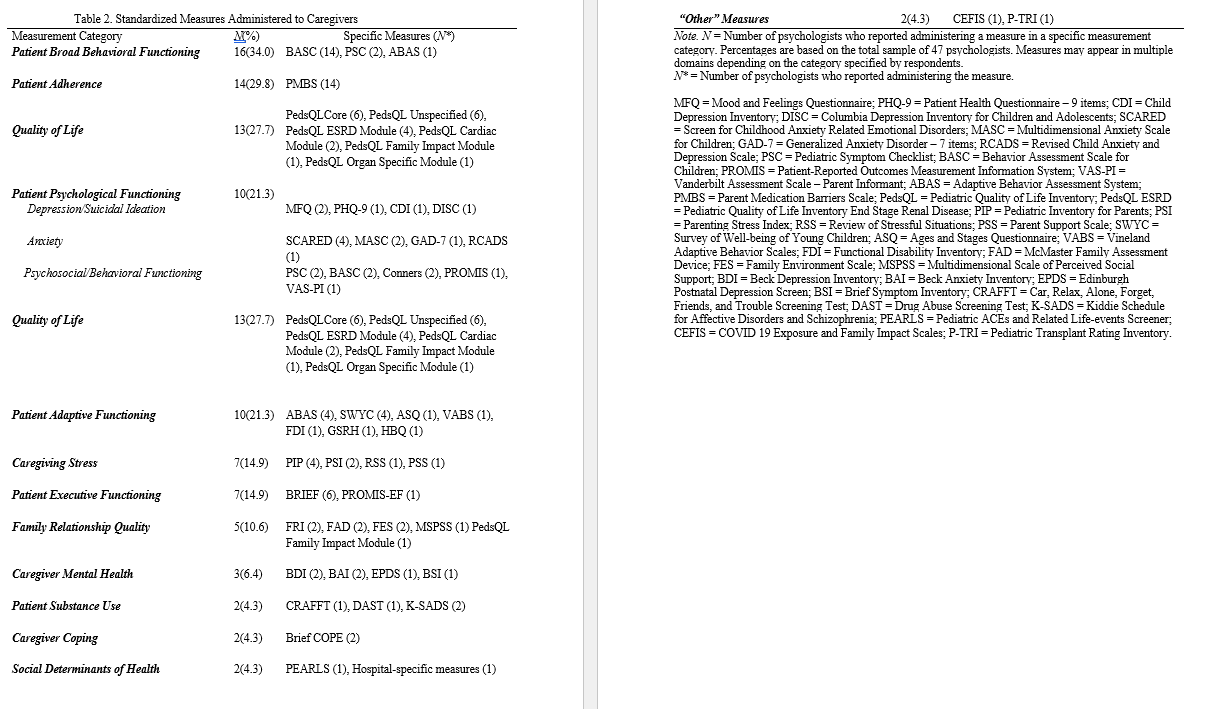
Results: Psychologists receive automatic referrals from the medical team to conduct pre-transplant evaluations for the majority of lung (78%), heart (75%), and liver (64%) candidates. Approximately half of kidney (55%), pancreas (50%), intestine (50%) and multivisceral patients (44%) are automatically referred to psychology for evaluation. Thirty-six psychologists reported they use at least 1 standardized patient/caregiver report measure (76.6%), with variation in domains assessed. Numerous standardized measures of patient and caregiver psychological and behavioral functioning are administered with varying frequency (see Tables 1 and 2). 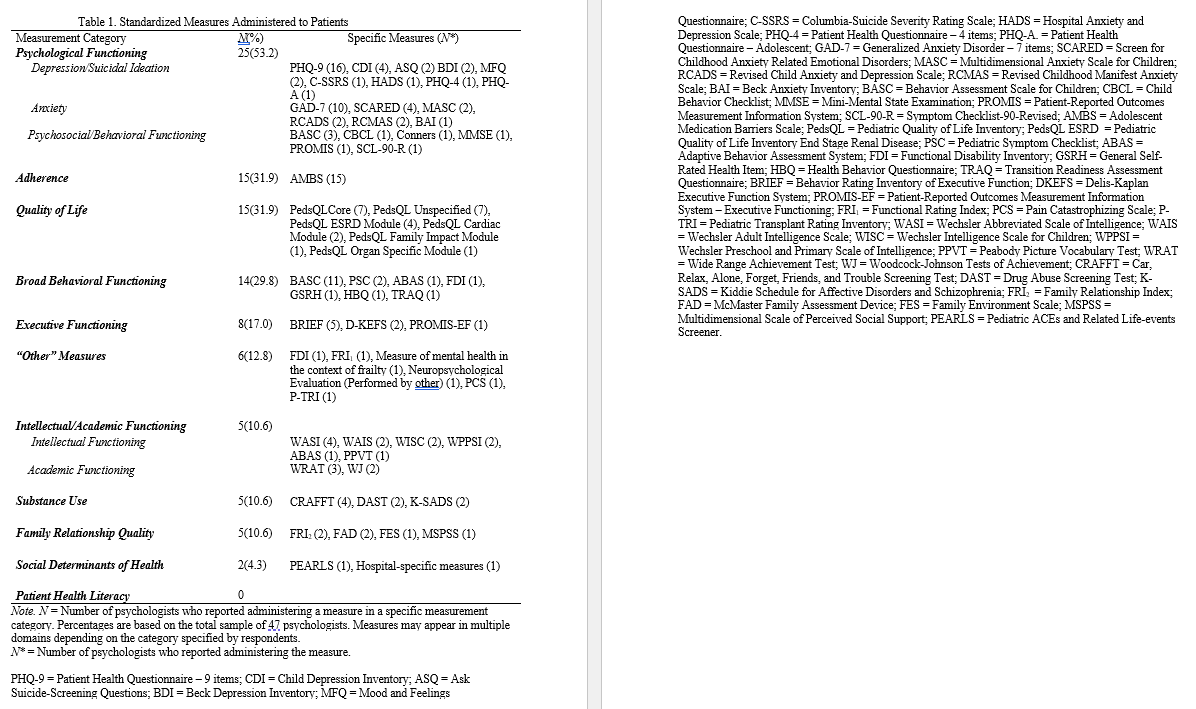
Conclusions: Transplant psychology has grown significantly as a field in terms of clinical care and research, though there are still many pediatric transplant centers without pediatric transplant psychologist support. There is both consistency and variation in transplant psychology practices regarding involvement in evaluations, assessment measures utilized, billing and psychologist FTE allocations in transplant. The data presented emphasize the importance of transplant centers directing resources to support a consistent and dedicated transplant psychology presence. Fellowships in transplant psychology are also important to train and grow the workforce. This study helps to move toward establishing consistency and guidelines for clinical practice among pediatric transplant psychologists.