Caregiver Refusal of Deceased Donor Kidney Offers in Pediatric Kidney Transplant Candidates: A National Cohort Study

Authors
Affiliations
Abstract
Introduction: Candidate refusal of deceased donor kidney offers (OPTN refusal code 728, "patient declined organ offer") has been associated with prolonged waiting time and delayed transplantation in adults. However, the characteristics and outcomes of pediatric candidates who decline kidney offers remain poorly understood. We sought to characterize pediatric candidates with documented offer refusal and identify factors associated with recurrent refusal behavior.
Methods: We performed a retrospective cohort study of pediatric kidney transplant candidates (< 18 years) using OPTN allocation data. Candidates with at least one documented 728 refusal were compared with candidates who accepted deceased donor kidney offers without a documented 728 refusal. Because refusals can occur only after center acceptance, candidates with ≥ 1 accepted deceased donor kidney offer were used to approximate the population exposed to patient-facing allocation decisions. Among refusers, candidates with a single 728 refusal were also compared with those experiencing serial 728 refusals (> 1 event).
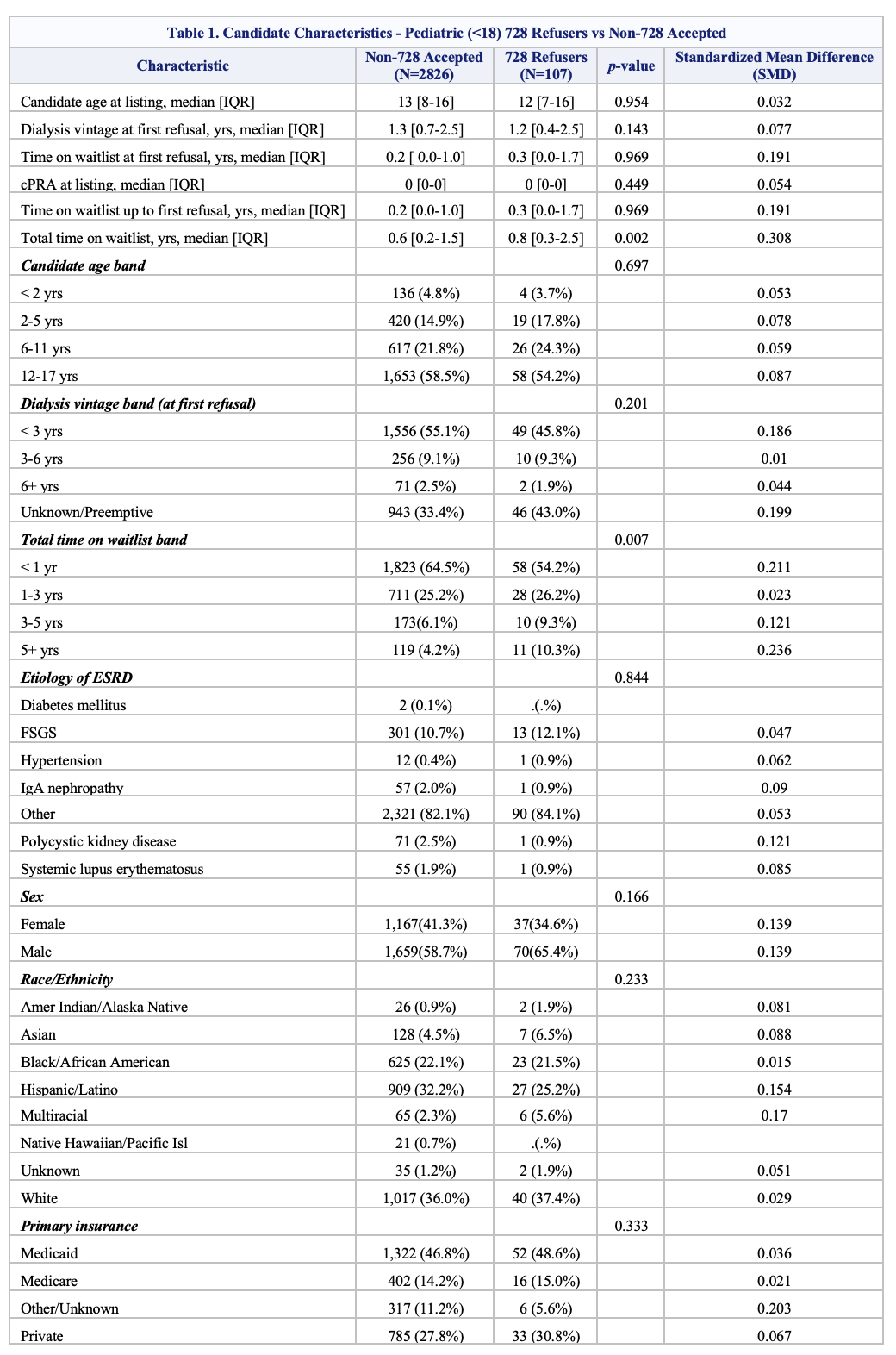
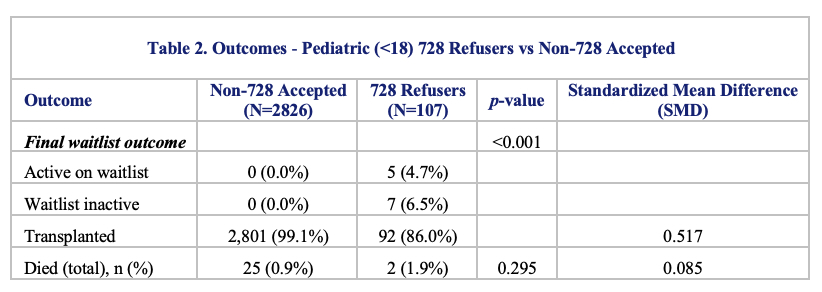
Results: Among 2,933 pediatric candidates, 107 (3.6%) experienced at least one documented 728 refusal and 2,826 accepted kidney offers without a 728 refusal. Baseline demographic and clinical characteristics were similar between refusers and non-refusers, including age at listing, dialysis vintage, cPRA, insurance status, race/ethnicity, and ESRD etiology (Table 1). Candidates with a documented refusal experienced longer total waitlist times (median 0.8 vs. 0.6 years, p = 0.002) and were less likely to ultimately undergo transplantation (86.0% vs. 99.1%, p < 0.001) (Table 2). Refusal behavior frequently recurred, with 29.9% of refusers experiencing multiple code 728 refusals. Compared with single refusers (N = 75), candidates with serial refusals (N = 32) were listed at a younger age (median 10 vs. 13 years, p = 0.02). Importantly, serial refusal was not associated with lower transplantation rates (84.4% vs. 86.7%, p = 0.72), greater mortality (0% vs. 2.7%, p = 0.35), or adverse waitlist outcomes. Among candidates who ultimately underwent transplantation, prior 728 refusal was not associated with significant differences in delayed graft function, length of stay, post-transplant renal function, graft survival, or mortality.
Conclusion: Pediatric kidney transplant candidates whose caregivers decline deceased donor kidney offers are clinically similar to non-refusers, suggesting that traditional demographic and disease-related factors do not explain offer refusal behavior. Refusal is associated with lower likelihood of transplantation; however, recurrent refusal appears concentrated among younger candidates and is not associated with worse waitlist or post-transplant outcomes. These findings highlight opportunities for targeted family-centered counseling and decision support during deceased donor kidney offer discussions.