
Feasibility of Prehabilitation Program in Heart Transplant Candidates at a Pediatric Center
Authors
Affiliations
Abstract
Introduction
With longer median wait times, patients are at risk for their health and conditioning to decline. With conditioning declines, patients are at a higher risk of increased frailty at the time of transplant which in turn increases their risk of poor outcomes, including death. While time to transplant is largely out of our control, patient conditioning is a potentially modifiable factor that could be addressed leading up to transplant. Prehabilitation in adult patients listed for heart transplant reduces postoperative complications and shortens ICU stays and total length of stays. We aim to evaluate the feasibility of a prehabilitation program in pediatric patients awaiting heart transplantation.
Methods
Patients older than 5 years old and waitlisted for heart transplant at a single center from April 2025-August 2026, participated in a prehabilitation program. The program consists of physical/occupational therapy for 5 days/week and mindfulness therapy while admitted. Inpatients completed daily checklists to track steps, participation in activities, and nutrition. Outpatient therapy is at least 1 day per week along with a self-directed activity plan, dependent on initial physical therapy consultation. Based on developmental appropriateness, sub-maximal exercise testing (6-minute walk test) and varying interventions to address respiratory muscle strengthening are implemented. Additional data collection included monthly skeletal muscle mass, grip strength, and a self-reported fatigue score.
Results
Since starting, twenty-two patients participated in the program with thirteen being inpatient. Over a 5-month time period, checklist completion for inpatients were 15-70%. After completion of an educational information session, checklist completion was assessed with improvement to 100% completion.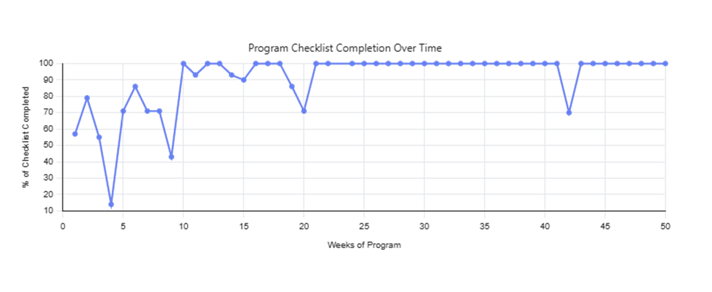
Conclusion
These findings provide preliminary support that a prehabilitation program on an inpatient cardiac unit is feasible, and acceptable. This project has increased the multidisciplinary team’s awareness of each individual patients’ prehabilitation. The clinical team has objective data to better assess a patient’s frailty which is now documented and tracked in the EMR. More studies need to be completed to determine the efficacy on pediatric transplant outcomes and shortened length of stay.