
A group-based rehabilitation model to support neurodevelopment in pediatric ventricular assist device (VAD) patients
Authors
Affiliations
Abstract
Introduction:
Children supported with VADs often experience prolonged hospitalization, which can impact their neurodevelopment. Historically, VAD patients were seen one-on-one for rehabilitation; however, evidence suggests that children’s development is shaped by direct interactions and observing interactions between others. Group-based therapy may provide an alternative model that integrates individualized rehabilitation with caregiver coaching, peer modelling, and social participation. A joint occupational therapy/physiotherapy group, with support from rehabilitation assistants, was implemented for VAD inpatients. This quality-improvement initiative evaluated whether a group-based rehabilitation model achieved the intended goals to 1) provide individualized, goal-directed rehabilitation; 2) support caregivers to promote their child’s development; and 3) foster social interactions and participation in group-based rehabilitation.
Methods:
Goal-based developmental activities were delivered in the rehabilitation gym for VAD inpatients, supported by VAD-trained rehabilitation staff members and at least one VAD-trained caregiver or registered nurse. Electronic questionnaires were provided to caregivers of children who participated in > 10 sessions between July 2025 and July 2026. Following discharge, semi-structured interviews were conducted to explore family experiences in greater depth. Descriptive findings and qualitative themes were summarized.
Results:
Six medically stable patients on VAD support participated in the group (3 males; mean age at time of first group session 16 ±10.6 mos; 5 LVAD, 1 BiVAD; 5/6 with attendant caregivers). Four out of five caregivers responded to the questionnaire. All respondents reported high satisfaction with the group format, which addressed individual rehabilitation goals and improved knowledge about strategies to support their child's development. Analysis of the interviews identified five key themes; (1) Peer modelling enhanced motivation and developmental participation; (2) Social connection, friendship, and a sense of community; (3) Opportunities for social learning and turn-taking; (4) Safely progressed, higher-intensity rehabilitation beyond the patient room; and (5) Environmental and logistical limitations. 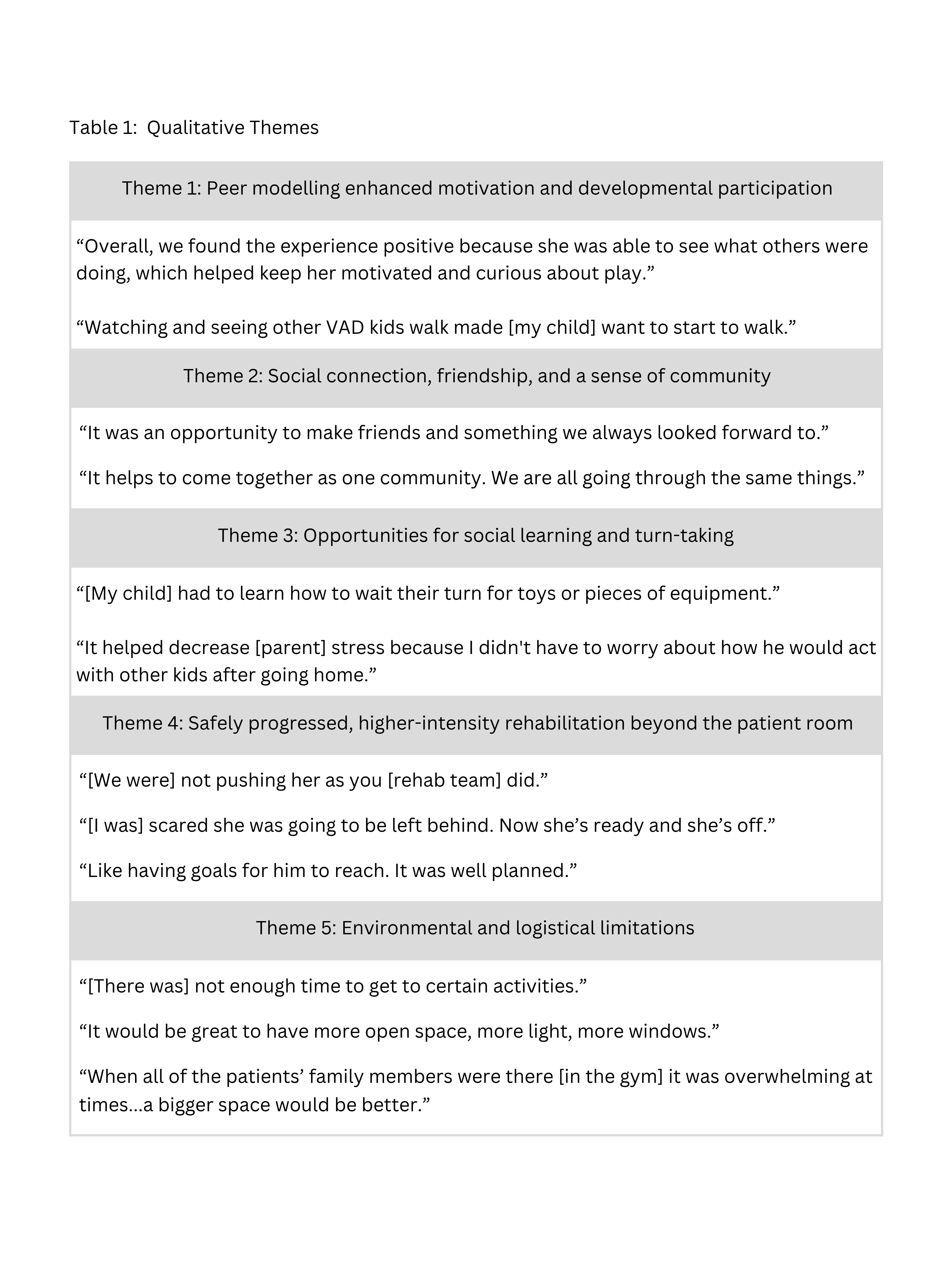
Conclusion:
Families valued this successful group-based rehabilitation model to support the neurodevelopment of children hospitalized with VAD support. The group supported individualized therapies, caregiver learning, and created meaningful opportunities for social interaction within a hospital setting. Caregivers reported benefits beyond initial therapy goals including peer modelling, social learning, enjoyment, caregiver connection, and community. Future evaluation should examine developmental outcomes and potential expansion to additional populations.