
BRIDGE-ing the wait: small-group inpatient caregiver education and psychosocial sessions during long Heart transplant (HTx) waiting times
Authors
Affiliations
Abstract
Introduction
As paediatric HTx waitlist times increase, caregivers face long inpatient stays marked by uncertainty and stress. Historically caregiver support and education check-ins were through ad hoc bedside interactions which may not support evolving caregiver needs or remain sustainable as inpatient volumes increase. Through the BRIDGE framework (Building Relationships through Interprofessional Delivery of care, Growth, and Engagement), HTx nursing and social work (SW) introduced formalized small-group caregiver sessions to improve preparedness, engagement, and psychosocial support. This study aimed to assess feasibility of implementation of this model and to evaluate its perceived value by caregivers.
Methods
Using a QI approach, HTx nursing and SW co-developed and led recurring (q 2-3 mo) 1-2 hour small-group caregiver sessions timed around patient care routines to facilitate participation. Content combined structured education focusing on life post HTx with open discussion. Families whose first language was not English were invited with an English support person and offered a 1:1 follow up interpreted session. Feedback was collected post-using an email survey.
Results
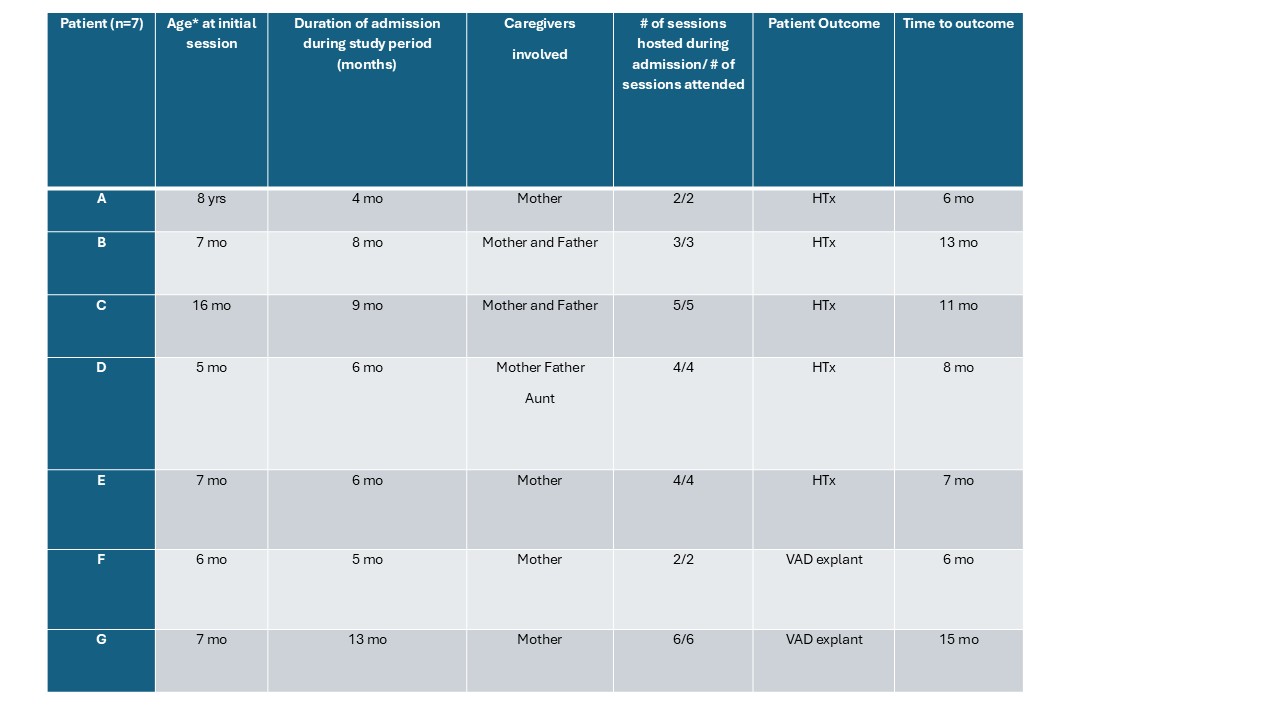
There were 6 sessions from May 2025 - June 2026 with 11 caregivers from 7/10 eligible families. Non-participation (n=3) was due to patient death, early delisting (recovery), and family preference. Median age of included patients was 7 mo (range 5-96 mos); 57% female). Attendance was 4 - 10 caregivers per session (7 mothers, 3 fathers, and 1 aunt). 5/7 children underwent HTx (mean waitlist 9±2.9 mos), and 2/7 were explanted for recovery (6 and 15 mos).(Table 1) Preliminary survey responses suggest that compared to the previous ad hoc approach, caregivers 1) found the sessions very helpful 2) described feeling more supported and more informed, 3) found the dedicated small group sessions more valuable, and 4) suggested offering more frequent sessions. Caregivers valued learning from the HTx team, hearing from other families, asking questions, preparing for going home, and discussions about coping and emotions. Preliminary observations suggest the model was well received, with consistent participation and repeat attendance. Staff observed improved efficiency while maintaining opportunities for individualized follow-up when needed.
Conclusion
Implementation of a model of structured small group caregiver sessions was feasible and well received for families of children awaiting HTx. It enhances caregiver preparedness, engagement, and psychosocial support while improving the efficiency of care delivery. By fostering shared learning and relationship-building, it addresses key gaps associated with prolonged hospitalization. Ongoing experience and survey responses will be used to further evaluate caregiver experience, refine future sessions, and guide potential expansion of group education and psychosocial support models to outpatient waitlisted HTx patients and caregivers.