
Daratumumab for Antibody-Mediated Rejection in Pediatric Heart Transplant Recipients: A Single-Center Experience
Authors
Affiliations
Abstract
Antibody-mediated rejection (AMR) after pediatric heart transplantation (HT) is associated with cardiac allograft vasculopathy, graft dysfunction, and graft loss despite current therapies. Daratumumab, a CD38-targeting plasma cell-depleting antibody, is a potential therapy, but pediatric HT experience remains limited. We describe its use, safety, and clinical response in a single-center cohort.
We retrospectively reviewed pediatric HT recipients receiving ≥1 daratumumab dose for AMR from September 2019-June 2026. Data were collected on usage frequency and safety for all daratumumab encounters. Demographics and HT history including recent AMR therapies were obtained at the time of first round of daratumumab for each patient. Pre and post daratumumab laboratory values including BNP, NT-proBNP, and AlloSure® Heart, ANC, IgG and biopsy results were compared. Paired values were compared using Wilcoxon signed-rank tests.
28 patients received a total of 150 infusions; 10 patients received ≥1 one course. 1 patient continued monthly daratumumab for 11 months after the initial course and is still ongoing. 6 patients (4%) had infusion reactions including chest tightness, dyspnea, rash, hypertension, itchy throat or emesis; 5 subsequently required dosing over 2 days. 4 experienced other adverse events, including ataxia and abdominal pain, and 5 developed infections (viral URI, C. difficile infection) within 3 months.
At time of first daratumumab course, median age was 16.39 years [IQR 8.9–18.5], weight was 52.9 kg [34.5–70.8], and time since HT was 3.5 years [2.1–5.8]. Patients received a median of 4 doses [2-4]. Recent therapies surrounding daratumumab course included rituximab (n=22,78.6%), intravenous immunoglobulin (n=19,86.4%), and bortezomib (n=7,31.8%). Median BNP (pg/mL) decreased from 138.95 [IQR 74.98–368.53] to 68.6 [37.93–191.5] (n=26, p=0.009), dd-cfDNA(%) from 1.60% [0.91–4.90] to 0.17% [0.07–0.23] (n=17, p<0.001), and IgG from 818 [646–1110] to 605 mg/dL [527–776] (n=21, p=0.017). Changes in ANC were not significant (3.32 to 4.45×10⁹/L; n=28, 100%, p=0.171). Among 12 patients with paired biopsies, pre and within 3 months of daratumumab course,11 had baseline AMR; 2/11 (18%) resolved to pAMR0, 4/11 (36%) improved from pAMR2 to pAMR1, and 5/11 (45%) had persistent pAMR1. No patient had persistent pAMR2 or worsening AMR. 8 patients received ≤2 doses due to weight <15 kg, infection concerns, AMR improvement, mild ABMR on MMDx, or access limitations. Six of these had paired dd-cfDNA measurements; all decreased and 5 reached ≤0.22% within 1 month. In the 1 patient that did not have ddcfDNA, AMR resolved on biopsy. (Figure 1)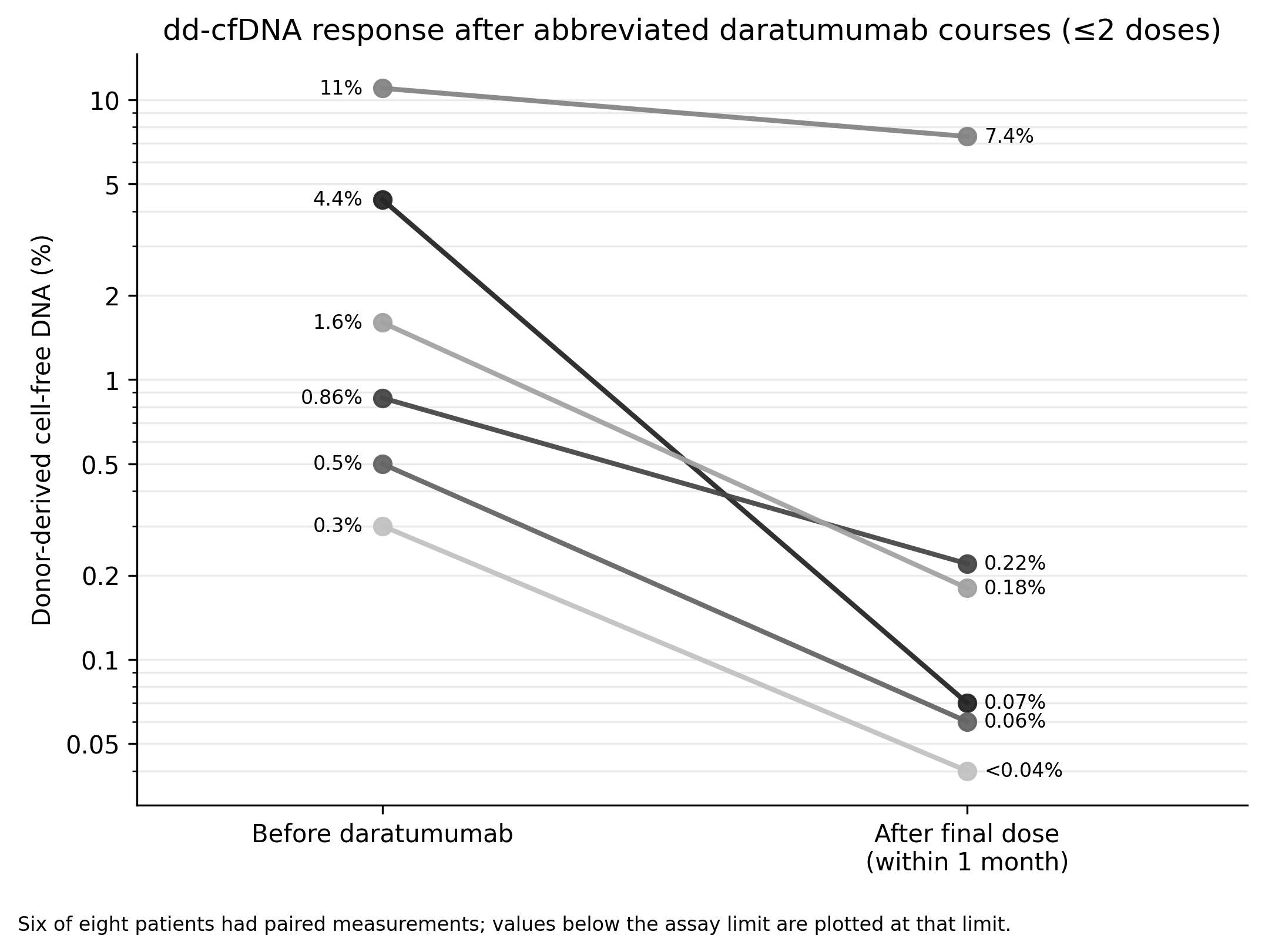
Daratumumab use in Pediatric HT recipients with AMR was associated with significant improvement in markers of graft injury including BNP and ddcfDNA. A subset of patients may not require the traditional 4 dose course.Further studies should define optimal dosing, duration, and long-term safety and efficacy.