A Validated Donor Risk Score to Predict 5-Year Graft Loss or Mortality in Pediatric Liver Transplant Recipients
Authors
Affiliations
Abstract
Introduction: Current transplant risk indices are helpful for risk stratification of adult donors, but their application to pediatrics is limited. We aimed to develop a quantitative donor risk index for pediatric liver transplant recipients.
Methods: National SRTR data was used to identify pediatric (age <18 years) liver transplant recipients between 6/30/2004-1/1/2026. Pre-transplant recipient and donor factors were selected based on clinical knowledge and prior research. Four regularized Cox-proportional hazards models containing donor and recipient factors were fit using different estimation procedures to predict death or graft loss within 5-years of transplant. The models were ranked based on Brier score at 5-years. The marginal effects of the donor factors from the best performing model were calculated to generate a numeric risk score.
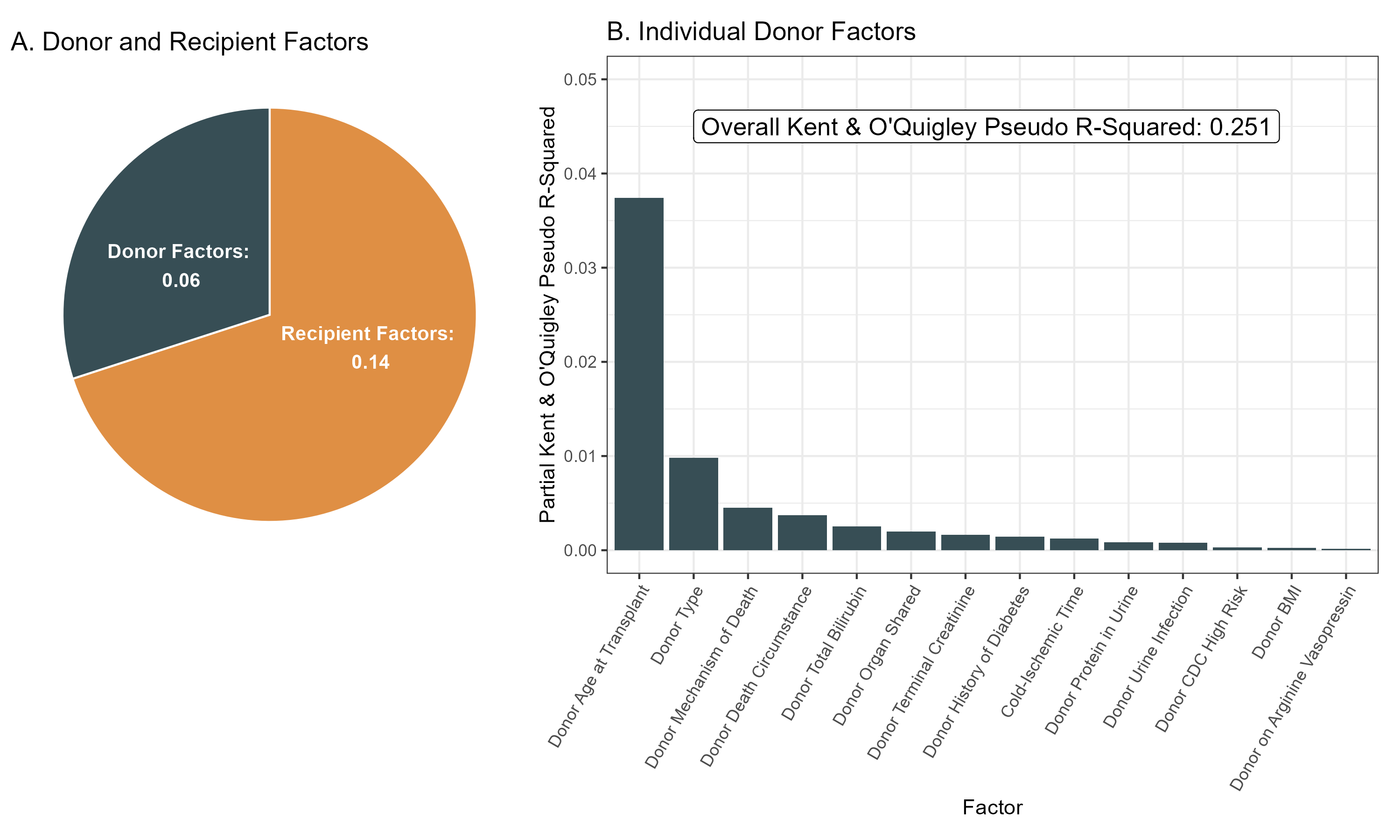
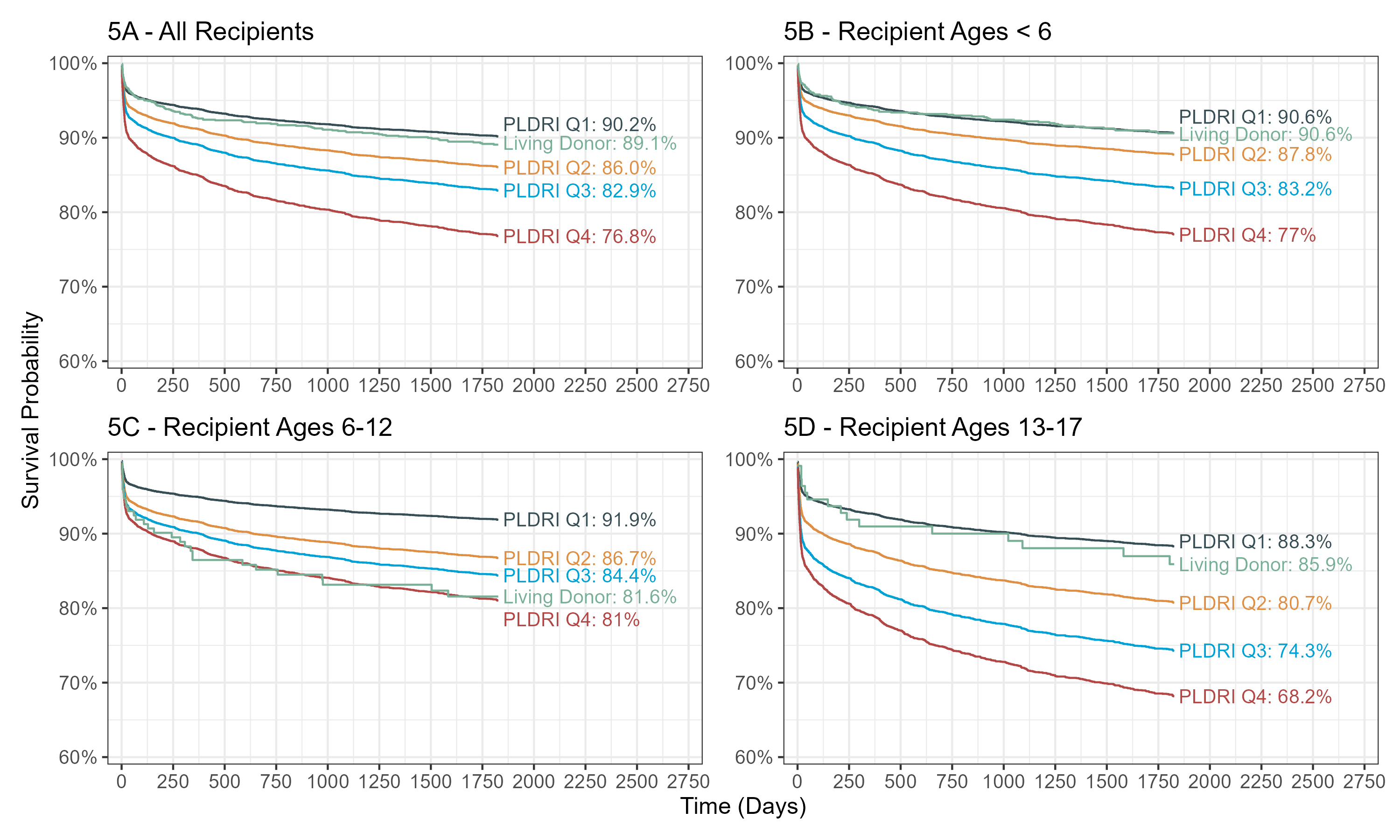
Results: We identified 8,416 pediatric transplant recipients between 6/30/2004-1/1/2026 of which 6,312 (75%) were used to develop each model, while 2,104 (25%) were used to validate the model. A donor risk score was devised based on 7 donor factors from the predicted model. Donor age, deceased donor liver graft type (whole/partial/split), and donor mechanism of death accounted for the greatest contribution of donor factors to the outcome of graft and patient loss within 5-years of transplant. Donors aged < 2 years portended the highest risk of graft loss. With exception of recipients aged 6-12 years, living donor grafts performed similarly to the top quartile of deceased donor liver grafts.
Conclusion: A novel pediatric liver donor risk index can inform risk assessment for pediatric liver recipients.