Abnormal gene expression profiling and donor-derived cell-free DNA in pediatric kidney transplant recipients without biopsy-proven rejection: early eGFR trajectory
Authors
Affiliations
Abstract
Introduction:
Gene expression profiling (GEP) and donor-derived cell-free DNA (dd-cfDNA) are emerging non-invasive biomarkers for allograft surveillance in kidney transplant recipients. However, the clinical significance of abnormal GEP and dd-cfDNA results in the absence of biopsy-proven rejection remains unclear. This pilot study aimed to evaluate the association between biomarker results and eGFR change at 6 months post-biopsy in pediatric recipients without biopsy-proven rejection.
Methods:
We prospectively recruited pediatric kidney transplant recipients (<21 years) who underwent for-cause biopsies between 8/20/23 and 2/6/25. Blood samples for GEP (n = 27) and dd-cfDNA (n = 25) were collected at the time of the biopsy. Serum creatinine and height were recorded at baseline and at 6 months post-biopsy. Patients were stratified by GEP results (TX vs. non-TX) and dd-cfDNA levels (positive: >1.0% vs. negative: ≤1.0%). Estimated glomerular filtration rate (eGFR) was calculated using the CKiD U25 creatinine-based equation. Changes in eGFR from baseline (ΔeGFR) at 6 months were compared between normal and abnormal biomarker groups using the Wilcoxon rank-sum test.
Results:
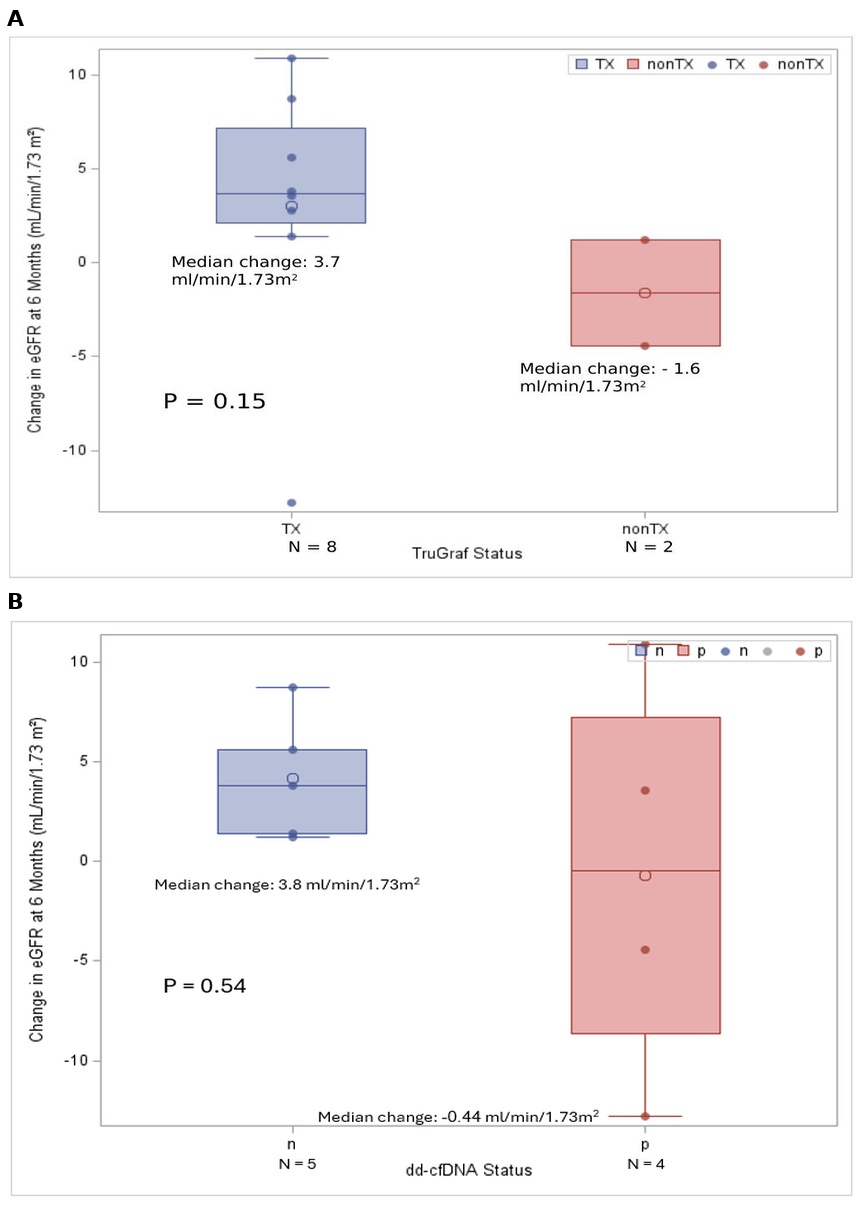
Our pilot study included 27 biopsies performed in 23 recipients. The median age of the study cohort was 6.1 years (IQR: 3.9- 13.7); 55.6% were male, and 92.6% were white. Among the 17 recipients without biopsy-proven rejection, 3 had non-TX GEP, and 6 had dd-cfDNA >1.0%. In this non-rejection subset, recipients with non-TX GEP results demonstrated eGFR decline at 6 months post-biopsy compared to those with TX GEP results (Figures 1A). A similar pattern of eGFR decline was observed in recipients with dd-cfDNA >1.0% despite no biopsy-proven rejection (Figure 1B).
Conclusion:
Although not statistically significant, our pilot study suggests a potential association between abnormal GEP and dd-cfDNA results and adverse eGFR outcomes in pediatric kidney transplant recipients without evidence of biopsy-proven rejection. These hypothesis-generating findings warrant larger, adequately powered studies to validate our observations and delineate the role of noninvasive biomarkers in clinical decision-making in this population.