
First Year Rejection Surveillance Biopsy Frequency in Pediatric Heart Transplant Recipients: a Pediatric Heart Transplant Society (PHTS) Analysis
Authors
Affiliations
Abstract
Introduction: Optimal surveillance strategy for rejection after pediatric heart transplantation is unclear and remains difficult to study given significant practice variation. The PHTS Standardizing Care Committee (SCC) sought to streamline surveillance approaches into four pathways to analyze current practices and associated short term outcomes.
Methods: Drawing from collective experiences across PHTS sites, the SCC divided rejection surveillance into 4 pathways based on number of planned biopsies within the first post-transplant year: low intensity (LI) if ≤3, medium intensity (MI) if 4-5, high intensity (HI) if >5, and undefined. Questions were added to the PHTS database in 2023 to capture intended and final biopsy strategy. Patient characteristics, frequency of (and reasons for) deviation from intended pathway, and 2-year outcomes were compared between pathways.
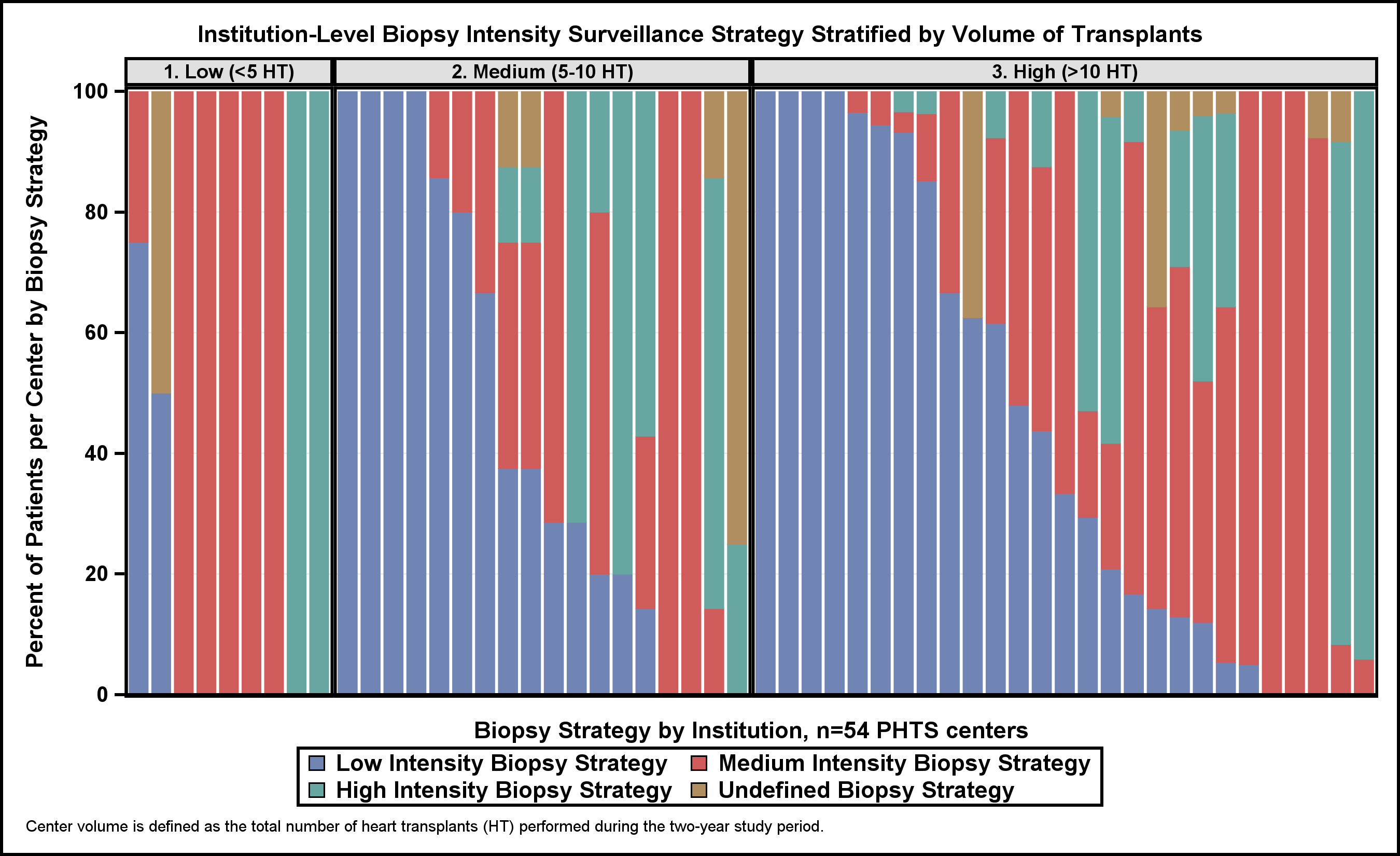
Results: From 6/22/23-6/30/25, 774 pediatric heart transplant recipients were captured in the database. Initial intended biopsy strategy was LI in 353 (46%), MI in 268 (35%), HI in 121 (16%), and undefined in 32 (4%). Patients in the LI strategy were younger/smaller, more often received induction therapy, were non-sensitized, and had shorter ischemic times. ABO incompatible transplants were more common in the undefined strategy. Freedom from first rejection (including hemodynamically significant and ≥2R cellular rejection) was superior in the LI group compared to the MI and HI groups (Figure 1), but short-term graft survival did not differ. A LI strategy was utilized in only 2/9 (22%) low volume transplant centers, compared to 14/19 (78%) medium volume centers and 22/27 (81%) high-volume centers (Figure 2). Most patients (91%) adhered to their intended biopsy strategy and 6% altered their strategy, mostly due to concerns for rejection (41%), new donor specific antibodies (23%), or graft dysfunction (18%). Frequency of echocardiography and additional for-cause biopsies did not differ between groups, though utilization of donor-derived cell-free DNA was higher in the HI group with a median of 5 samples in first year, compared to 1.5 in the MI group and 1 in the LI group (p=0.04).
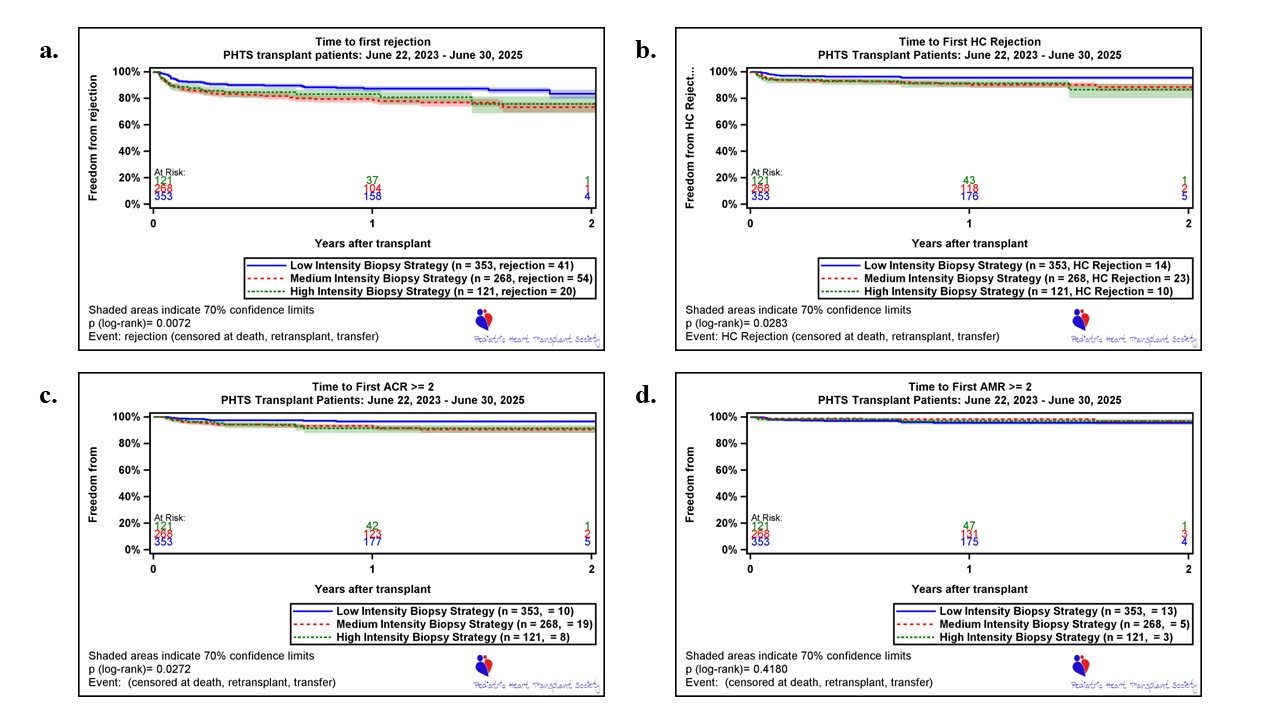
Conclusion: Frequency of surveillance biopsy after pediatric heart transplantation is variable, associated with recipient/transplant characteristics, and may depend on institutional practice. Freedom from first hemodynamically significant rejection is superior in the LI strategy, which likely reflects a lower risk patient population. Short term survival is equivalent in each biopsy strategy, illustrating that infrequent biopsies are reasonable in select patients. Non-invasive testing is utilized heavily even in HI strategies, which suggests that these tools are currently being used to supplement, not supplant, biopsy.