Voiding dysfunction is associated with BK Polyomavirus viruria but not clinically significant viremia in pediatric kidney transplant recipients

Authors
Affiliations
Abstract
Background: BK polyomavirus (BKPyV) infection is a common and challenging complication after pediatric kidney transplantation. While progression from viruria to viremia and BK virus nephropathy (BKVN) has been linked to immunosuppression intensity, the contribution of structural etiologies of kidney disease and lower urinary tract abnormalities to persistent urinary BK shedding, and their potential implications for allograft outcomes, remain unclear. We hypothesized that CAKUT and voiding dysfunction predispose patients to chronic BK viruria but not to high-level viremia or BKVN.
Methods: We performed a single-center retrospective cohort study of pediatric kidney transplant recipients (KTR) to identify characteristics associated with development of BK viruria, BK viremia, viruria without viremia and persistent viruria after viremia clearance. Multiple predictor models adjusted for CKD etiology, voiding dysfunction, post-transplant UTIs, age, sex, donor type, induction therapy, prior transplant, and HLA mismatch.
Results: The cohort included 158 pediatric KTR.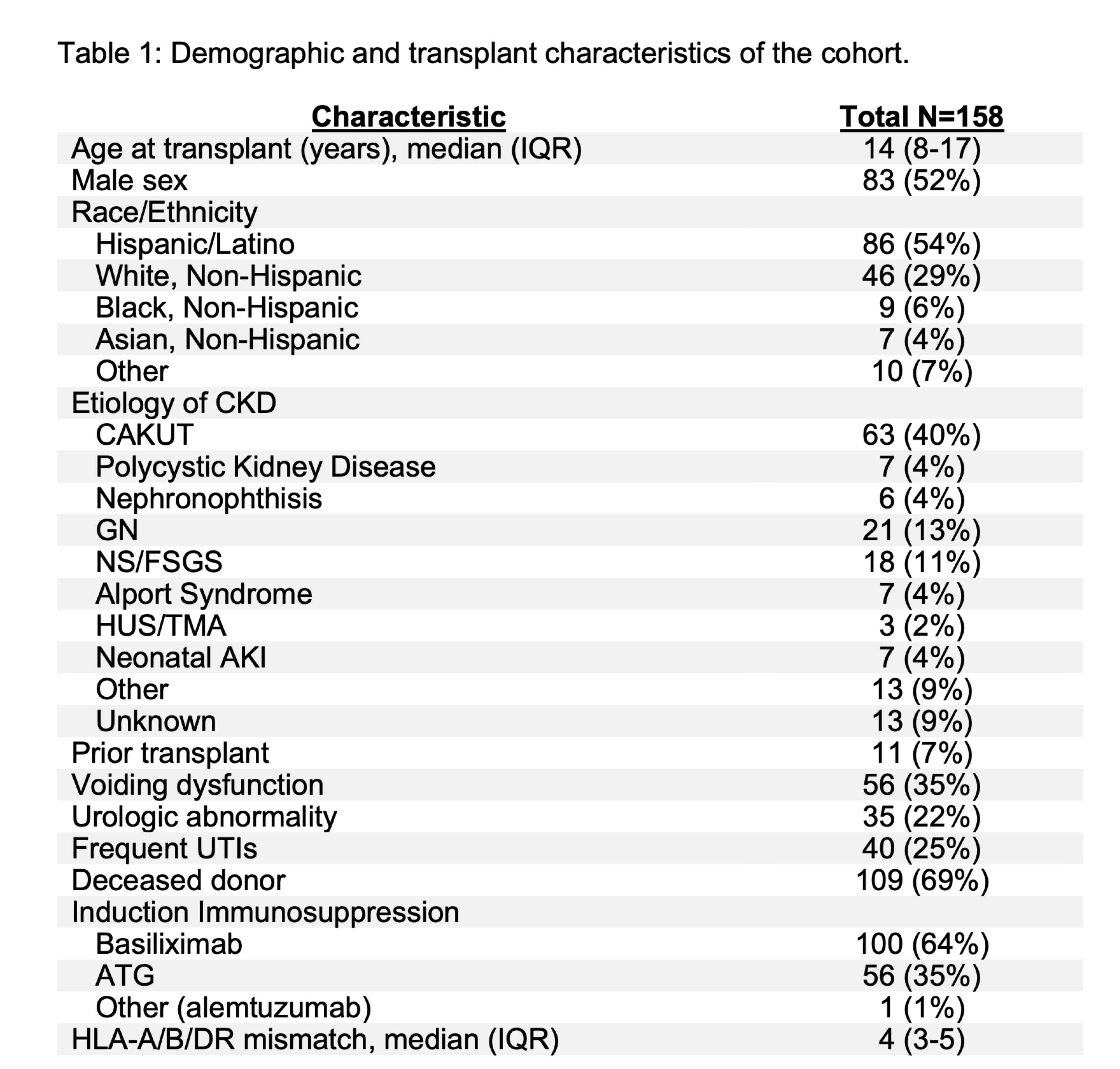
Detectable BK viruria occurred in 82 patients (52%), BK viremia in 52 (33%), high-level viruria (>10^7 copies/mL) in 51 (32%), high-level viremia (>10^4 copies/mL) in 33 (21%), and BKVN in 6 (4%). On average, viruria preceded viremia by 1.5 weeks, and the degree of viruria predicted subsequent plasma BK viral load >10^4 copies/mL or BKVN with an AUC of 0.88. CKD etiology was not associated with BK infection, although male sex was independently associated with viruria (OR 2.3, p=0.02) and viremia (OR 3.1, p=0.004) in adjusted analyses.
Viruria without viremia and persistent viruria after viremia clearance were more common among KTR with voiding dysfunction than among those with normal lower urinary tract function (Fig. 1). Time-to-event analysis demonstrated that voiding dysfunction was independently associated with earlier onset of BK viruria (HR 2.3, p=0.02), but not with high-level viruria, high-level viremia, or BKVN.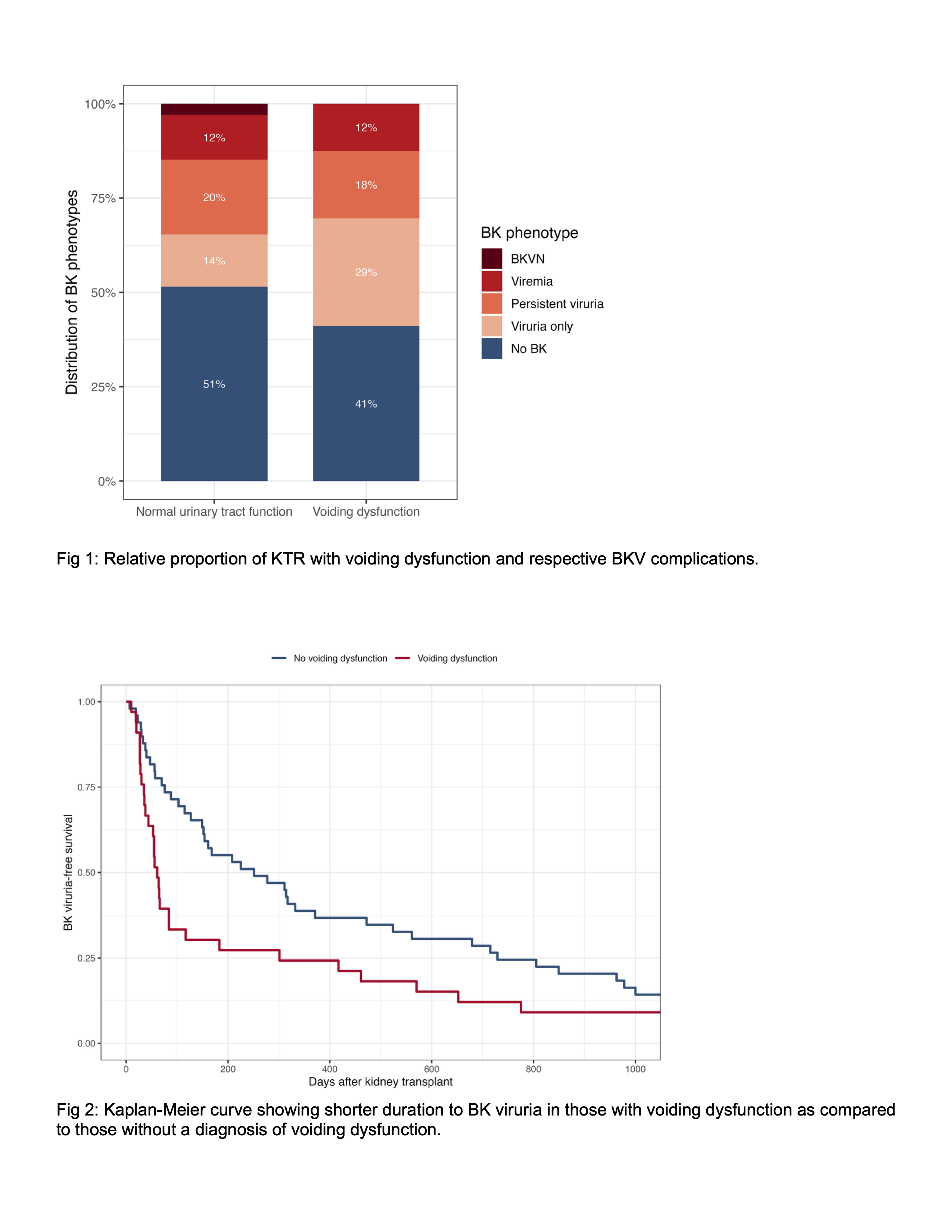
Conclusions: Among pediatric KTR, voiding dysfunction was associated with earlier onset of BK viruria but not with high-level viremia or BKVN. Patients with voiding dysfunction were overrepresented among those with isolated viruria and persistent low-level viruria following viremia clearance. These findings suggest that chronic urothelial inflammation may promote persistent BK shedding within the urinary tract without progression to systemic infection. In contrast, development of BK viremia and BKVN may be driven primarily by host immune factors and immunosuppression intensity. The clinical significance of persistent BK viruria remains uncertain. Future studies will investigate how BK-specific cellular immunity and immunosuppression exposure influence progression from viruria to clinically significant viremia and examine the relationship between BK reactivation, donor-specific antibody formation, and acute rejection.