Adverse Donor Health Criteria do not Negate the Robust Advantage of Live Related Donation in Pediatric Kidney Transplantation
Authors
Affiliations
Abstract
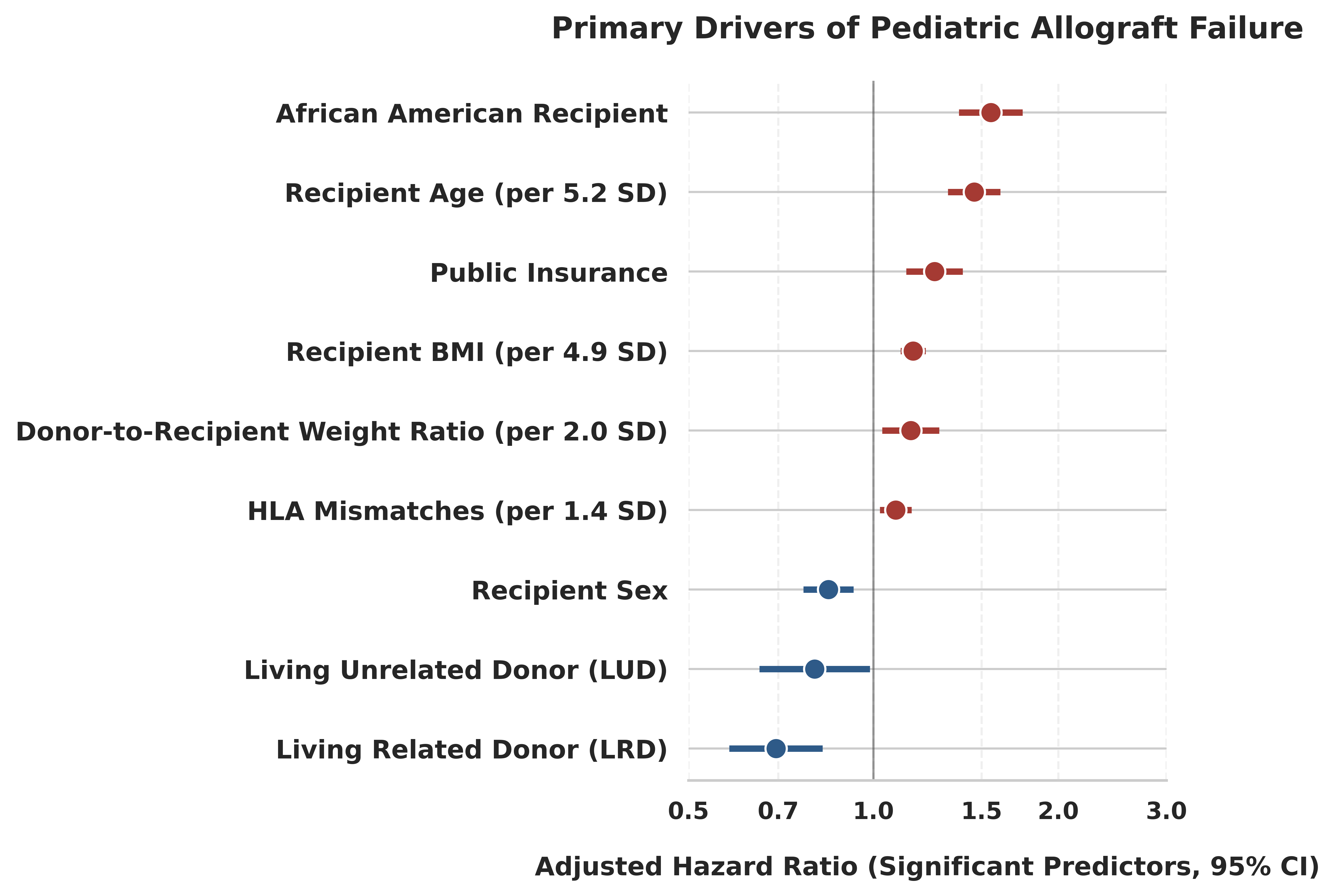
Kidney transplantation is the optimal therapy for pediatric end-stage renal disease, yet living donor (LD) transplants comprise less than one-third of US pediatric cases, and donors with health comorbidities are frequently excluded from consideration. While live related donation (LRD) is associated with superior outcomes compared to deceased donor (DD) transplantation, it remains unclear whether this advantage persists when LRDs present with adverse health criteria (e.g., obesity, hypertension, smoking history, advanced age, elevated creatinine, or HLA mismatch). This study compared outcomes of suboptimal LRD kidneys against high-quality DD kidneys to determine whether donor risk factors negate the LRD survival advantage.
Methods
This retrospective cohort study used UNOS registry data on first-time, solitary pediatric (<18 years) kidney transplant recipients from 2010–2025 (N=8,915). Recipients were categorized as Perfect DD (PDD, no adverse criteria, n=732) or LRD (N=2,487) stratified by cumulative adverse criteria (≥1, ≥2, ≥3 of: diabetes, hypertension, smoking, BMI≥30, ≥4 HLA mismatches, creatinine ≥1.5 mg/dL, or age ≥50). Kaplan-Meier and log-rank tests compared 10-year graft and patient survival across groups. Multivariable Cox proportional hazards models, including sensitivity analyses for proportional hazards violations, isolated the independent effect of LRD status.
Results
LRDs had superior 10-year graft survival versus DDs (80.0% vs. 62.5%) and versus PDDs. LRD groups with ≥1 and ≥2 adverse criteria maintained significantly superior graft survival versus DDs, and ≥1 criteria remained superior to PDDs; groups with ≥2–3 criteria were comparable to PDDs. Adjusted Cox analysis confirmed LRD as strongly protective (HR 0.69, 95% CI: 0.58–0.83, p<0.001), independent of logistical advantages (shorter cold ischemia, more pre-emptive transplant). Donor age, BMI, smoking, hypertension, diabetes, and creatinine were not significant predictors of graft failure; only HLA mismatch (HR 1.06, p=0.005) remained significant.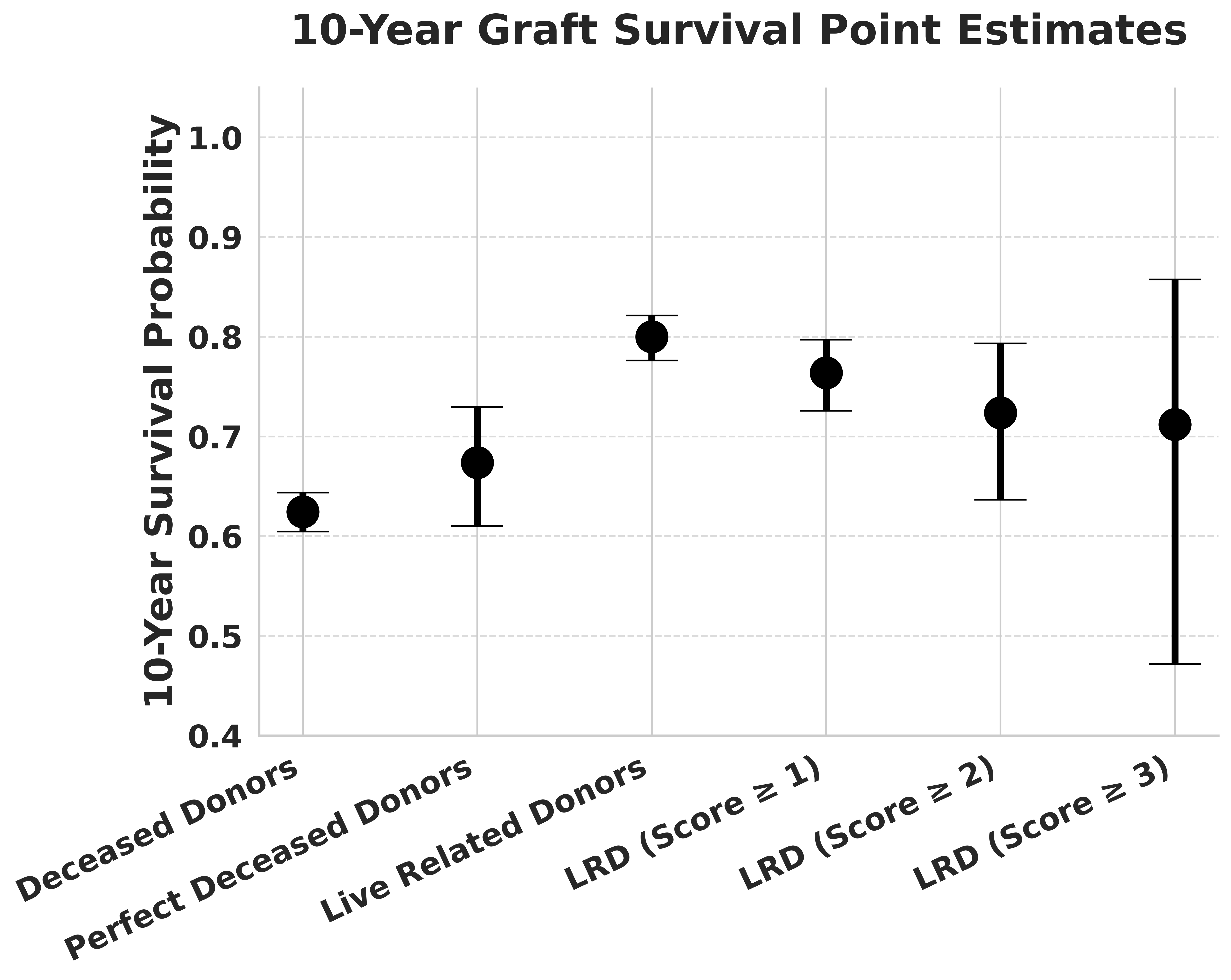
Conclusion
LRD confers a robust graft and patient survival advantage over DD transplantation that persists despite multiple adverse donor health criteria, with outcomes generally comparable to or exceeding those of the most rigorously selected DD kidneys. These findings support individualized, shared decision-making around LRD candidacy rather than automatic exclusion based on isolated comorbidities, while underscoring the need for prospective studies on long-term donor safety.