Comparison of Laparoscopic and Robotic Donor Hepatectomy for Pediatric Liver Transplantation
Authors
Affiliations
Abstract
Background
Living donor liver transplantation (LDLT) reduces waitlist times and pre-transplant mortality for pediatric patients and offers improved graft survival and lower rejection rates versus deceased donor transplantation. Minimizing donor morbidity is critical, as donors are healthy volunteers and often the caregivers of their recipients. Minimally invasive donor hepatectomy has expedited recovery and likely expanded the donor pool. Although both laparoscopic and robotic approaches are increasingly used, their relative safety and outcomes in pediatric LDLT remain unclear. This study compared graft and recipient outcomes following laparoscopic versus robotic donor hepatectomy for pediatric LDLT.
Methods
A retrospective chart review of pediatric LDLT recipients (age <18 years at transplant) whose donors underwent minimally invasive hepatectomy was performed from February 2020 to May 2026. Robotic donor hepatectomies (2023–2026) were compared with laparoscopic hepatectomies (2020–2023). 30-day donor outcomes, 90-day recipient outcomes, and 1-year graft and recipient survival was assessed.
Results
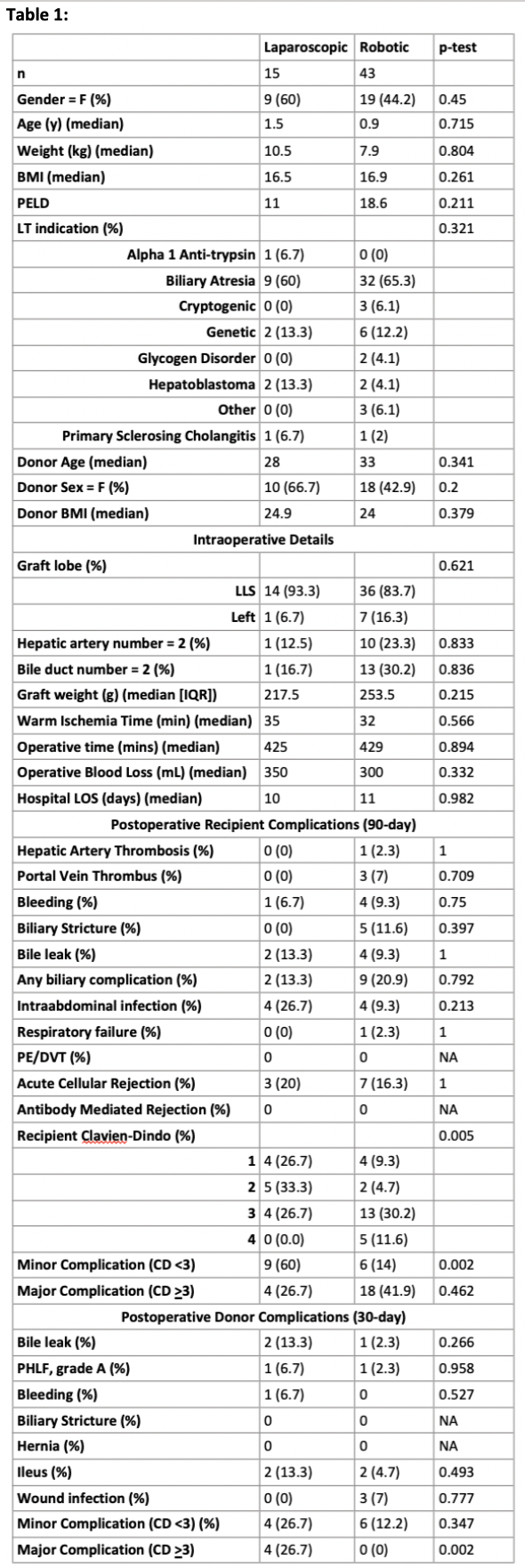
58 pediatric LDLTs were included: 15 laparoscopic and 43 robotic donor hepatectomies. Donor and recipient demographics and liver disease etiologies did not differ between groups. PELD scores were also comparable (median 18.6 vs 11, p=0.211) though trended higher in the robotic cohort (table 1). The robotic cohort comprised 36 (83.7%) left lateral segmentectomies (LLS) and 7 (16.3%) left hepatectomies; the laparoscopic cohort had 1 (6.7%) left hepatectomy and 93.3% LLS. Numbers of hepatic arteries and bile ducts were comparable; all grafts had one portal vein. Graft weights were similar (median 253.5 vs 217.5 g, p=0.215), as were intraoperative blood loss, warm ischemia time, and operative duration.
Postoperatively, donors in both groups had comparable rates of biliary leak, stricture, bleeding, ileus, and wound complications (table 1). A greater proportion of laparoscopic donors developed major complications (Clavien-Dindo >3) (26.7% vs 0%, p=0.002).
There were no significant differences in recipient bleeding, vascular complications, biliary complications (stricture and/or leak), intra-abdominal infection, or acute cellular or antibody-mediated rejection. Although more laparoscopic recipients developed minor complications (CD <3), major complication rates were comparable (26.7% vs 41.9%, p=0.462).
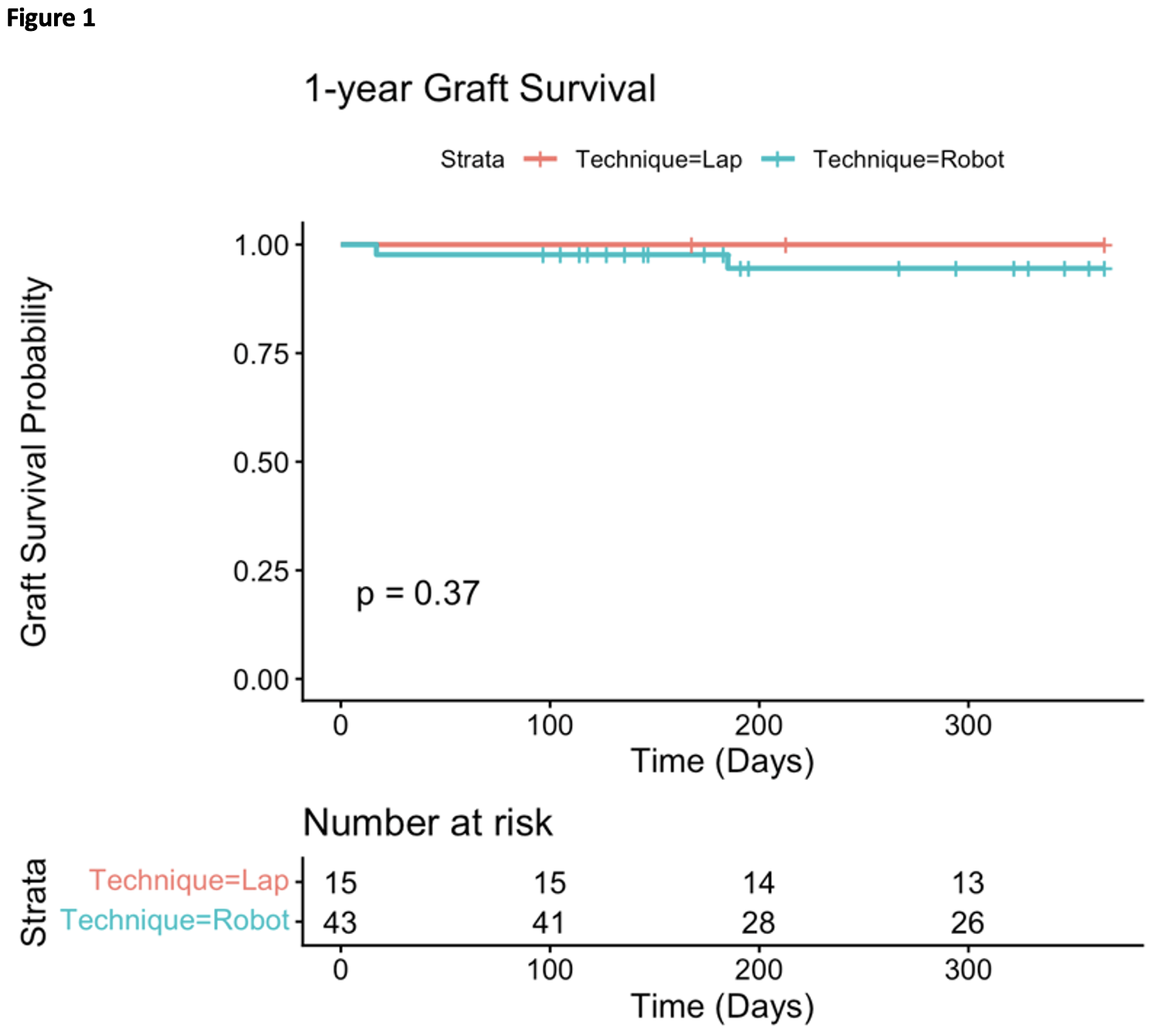
One-year graft survival was 94.5% (robotic) versus 100% (laparoscopic) (p=0.37, figure 1). 1-year patient survival was 100% in both cohorts.
Conclusion
Robotic and laparoscopic donor hepatectomy for pediatric LDLT yielded comparable recipient outcomes and 1-year graft survival. Significantly more laparoscopic donors developed major complications, supporting the robotic approach as a safe and potentially preferable alternative.