The Mighty Method™: A Structured Pedagogical Approach to Building Organ Literacy and a Culture of Donation
Authors
Affiliations
Abstract
Introduction: Organ donation depends not only on clinical systems, but on what people understand, value and feel able to discuss before donation is ever contemplated. Yet education about organs and donation often begins late, through public awareness campaigns or at moments of clinical consequence. The Mighty Method™ is a theory-informed educational framework designed to support age-appropriate organ literacy, health-related behaviours, prosocial reasoning and the language for family conversation..
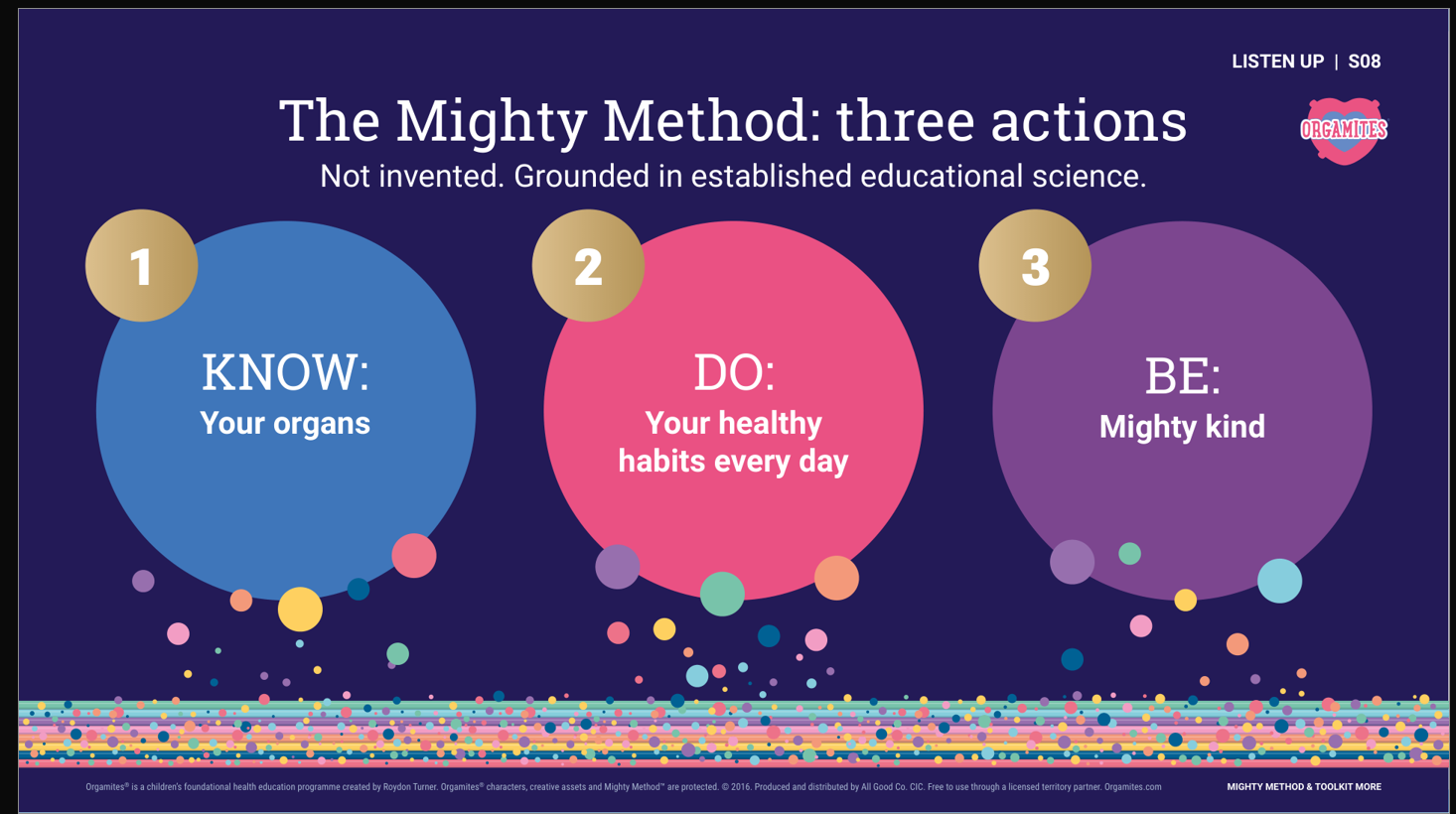
Methods: The Mighty Method integrates biological and health literacy, habit formation, prosocial development and oracy within a Know–Do–Be architecture for children aged 5–11. Three sequenced teacher toolkits: Mighty Me, Mighty Habits and Mighty Kind move from understanding organs, to caring for them, to considering how actions can help others. Lessons use a consistent Switch On–Listen Up–Lean In structure and extend learning into the home through family conversation resources. Donation is not introduced as an isolated topic or decision. Children build the knowledge and reasoning to encounter the concept within a wider understanding of how bodies work, why organs matter and how people can help one another. Children are never asked to express donation preferences or make donation-related decisions.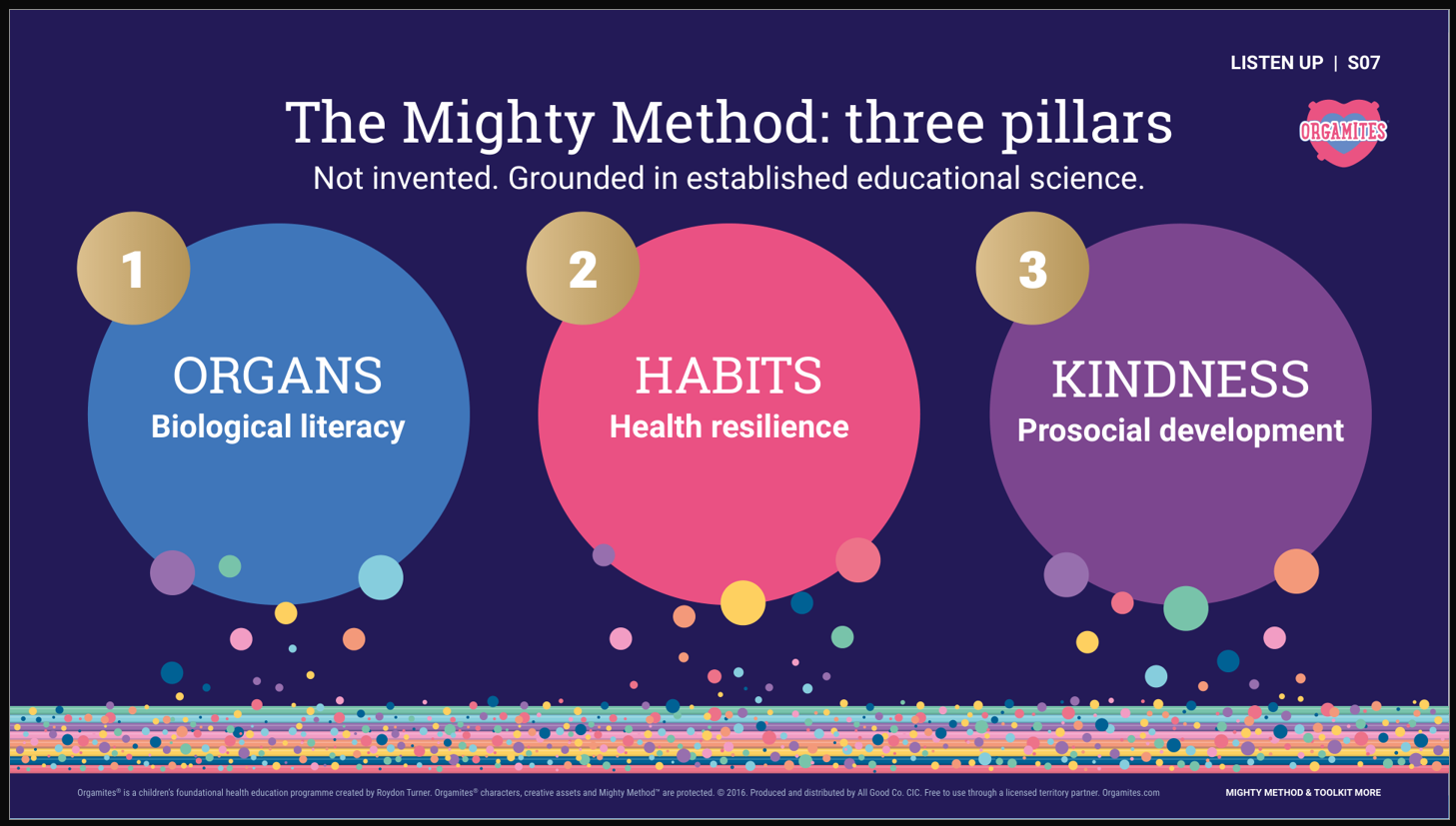
Results: Over ten years, the wider Orgamites programme has directly reached approximately 180,000 students, with openly accessible resources estimated to have reached a further 500,000+ students across more than 6,000 schools in eight countries and territories. Implementation has included collaboration with national donation and transplantation organisations, including Canadian Blood Services. The original three-pillar educational framework was peer-reviewed and published following presentation at WTC and IPTA in 2025. Subsequent academic and policy work has strengthened the case for positive, developmentally appropriate donation education and for embedding learning within school curricula. Formal longitudinal evaluation of the Mighty Method itself remains a priority.
Conclusion: Childhood education may represent a long-horizon complement to adult-facing donation awareness initiatives. Prospective, longitudinal evaluation is needed to determine whether the framework improves knowledge, family communication, and donation-related attitudes over time. Rather than asking awareness campaigns to overcome fear, myth and silence in adulthood, the Mighty Method begins earlier: building knowledge, habits, language and prosocial understanding while children are forming their relationship with their bodies and communities. We propose childhood education as part of the long-term social infrastructure of donation and invite collaboration to evaluate its effects on children, families and future donation culture.