Reducing Procedural Stress During Lab Draws in Pediatric Solid Organ Transplant Recipients: A Child Life-Driven Quality Improvement Initiative
Authors
Affiliations
Abstract
Background: Pediatric solid organ transplant recipients require frequent monitoring throughout their post-transplant course, exposing them to repeated venipuncture and associated procedural stress. Unmanaged procedural anxiety can lead to negative coping patterns, increased distress with subsequent procedures, and reduced cooperation with long-term medical care. Child life specialists are uniquely positioned to address this burden, yet standardized intervention protocols for this population remain lacking at many transplant centers.
To address this gap, Child Life developed and implemented a quality improvement initiative to standardize procedural support and increase access to evidence-based pain management interventions for pediatric transplant recipients undergoing venipuncture.
Objectives: To improve patient experiences during venipuncture for pediatric solid organ transplant recipients through implementation of individualized coping plans, developmentally appropriate pain management interventions, and family-centered procedural support.
Methods: A pre and post quality improvement initiative was implemented in a pediatric solid organ transplant outpatient clinic to standardize Child Life procedural support and access to evidence-based pain management interventions during routine venipuncture. Pediatric patients aged 0-17 years presenting for routine venipuncture were eligible for inclusion. Patients receive individualized coping plans based on developmental level, prior healthcare experiences, and patient preferences. Interventions include developmentally appropriate procedural preparation, distraction, comfort positioning, and pain management strategies, including topical anesthetics when available and preferred. Baseline data were collected prior to protocol implementation, with post-implementation data collection ongoing. Outcome measures include patient-reported fear and pain scores, FLACC scores for patients unable to reliably self-report, and caregiver satisfaction with the venipuncture experience. Process measures include utilization of comfort positioning, Child Life interventions, and pain management strategies during venipuncture. Descriptive statistics will be used to summarize changes in process and outcome measures following implementation of the standardized protocol.
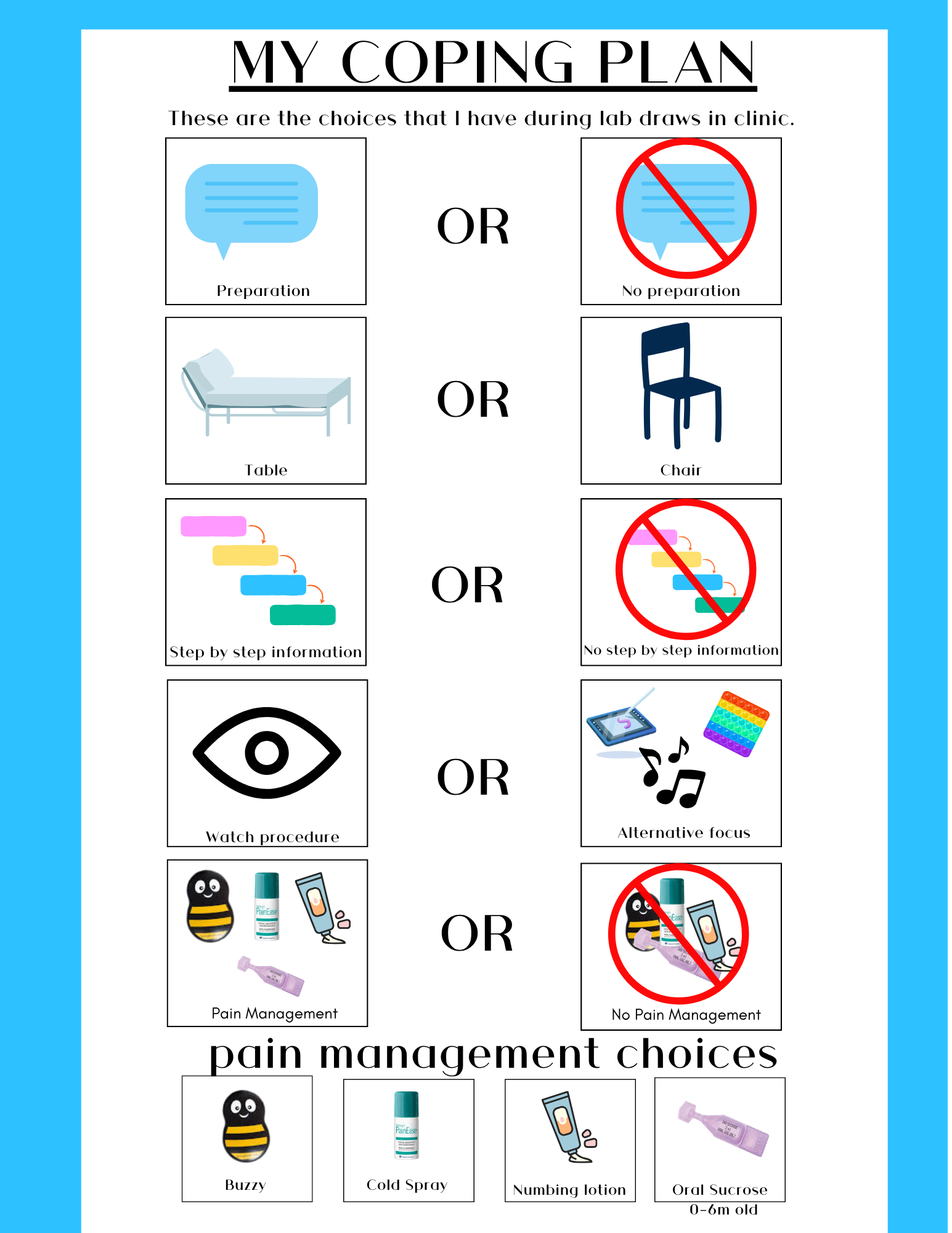

Results: Data collection is ongoing. Preliminary implementation of the standardized protocol has increased utilization of comfort positioning, expanded access to evidence-based pain management interventions, and promoted a more consistent approach to Child Life procedural support during routine venipuncture. Final analyses will evaluate the protocol's impact on patient-reported fear and pain, observational distress (FLACC) scores, and caregiver satisfaction.
Conclusions: A standardized Child Life protocol combining distraction, comfort positioning, and pain management options is a feasible and potentially impactful approach to reducing procedural distress in pediatric transplant patients undergoing routine venipuncture. Ongoing evaluation will further assess the protocol's impact on patient pain, distress, and caregiver satisfaction. This initiative highlights the value of integrating Child Life services into standard outpatient transplant care and supports the use of non-pharmacologic approaches to procedural pain management in this vulnerable population.