Retrospective single high-volume center analyzing monoclonal anti-IL2 receptor basiliximab versus polyclonal anti-thymocyte globulin in pediatric kidney transplant recipients
Authors
Affiliations
Abstract
Background: Induction therapy is essential to prevent graft rejection in pediatric kidney transplantation, with basiliximab and ATG being the most widely used agents. Comparative evidence to guide the selection of the most effective induction therapy in pediatric kidney transplantation remains limited.
Methods: We conducted a retrospective cohort study in pediatric (<18 years) kidney transplant recipients at King Faisal Specialist Hospital & Research Centre (KFSH&RC), Riyadh, Saudi Arabia, between January 2010 and December 2023, in patients who received induction with either basiliximab or ATG. The primary outcome was a composite of delayed graft function (DGF), biopsy-confirmed acute rejection, graft loss, or all-cause mortality. Outcomes were analyzed using Kaplan–Meier survival analysis and multivariable Cox proportional hazards models adjusted for relevant confounders.
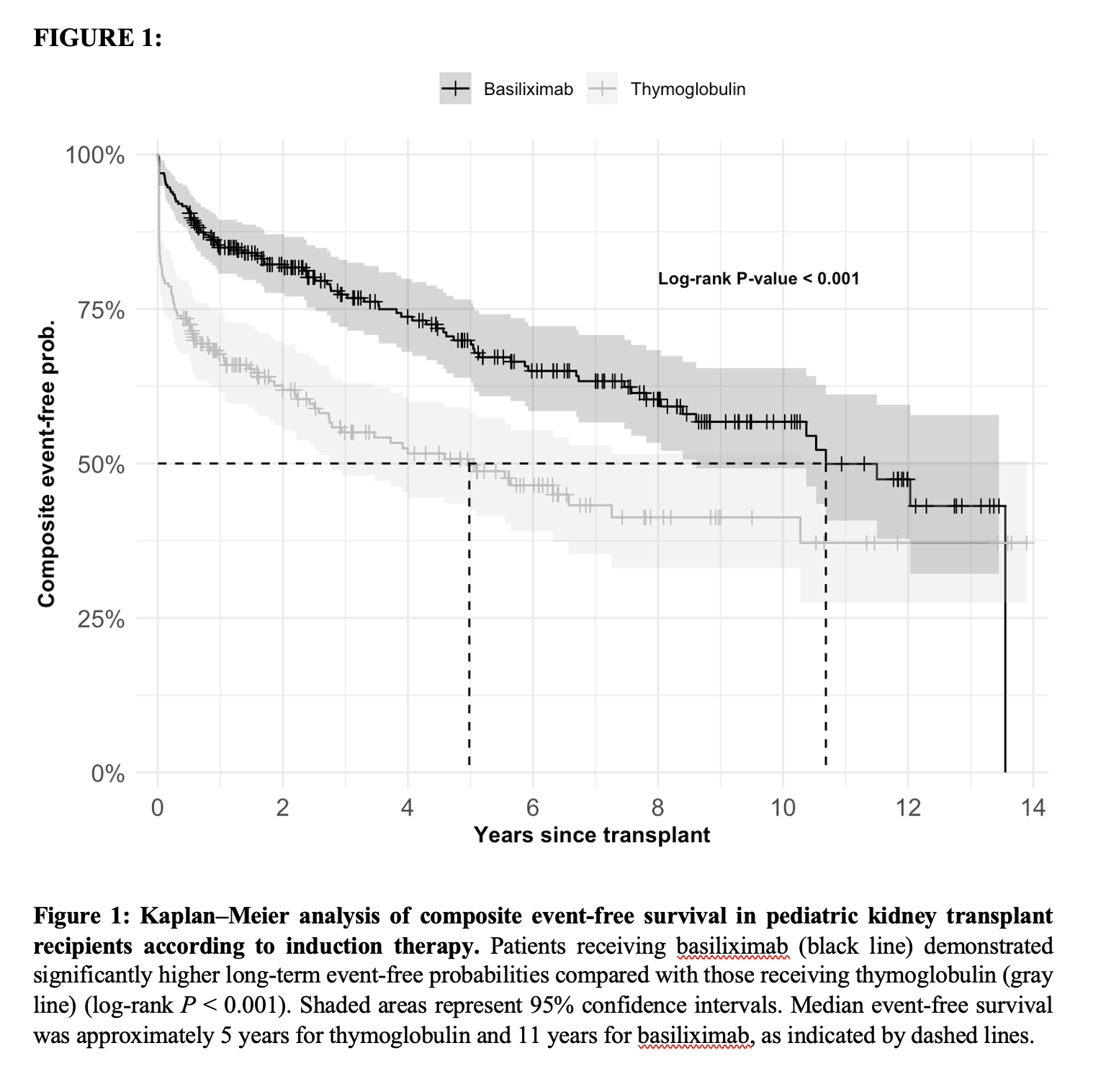
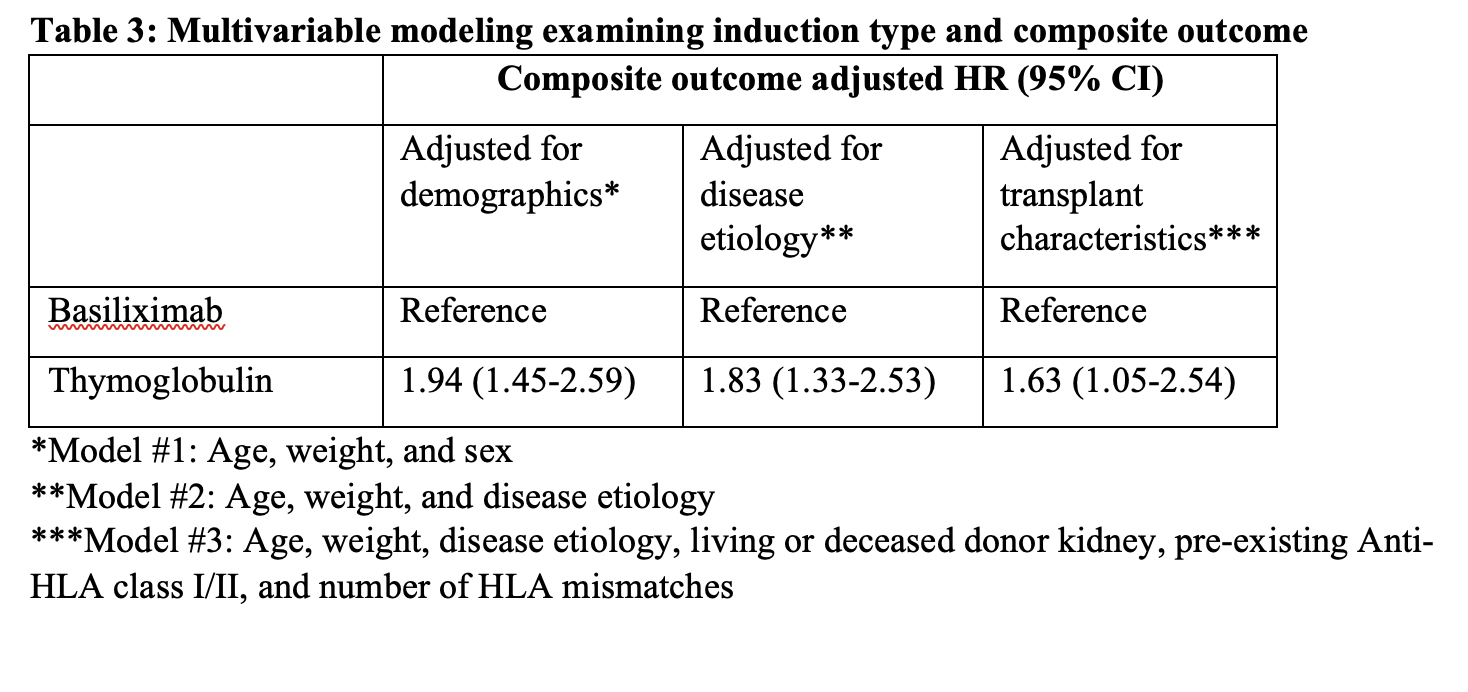
Results: A total of 474 patients were included (263 basiliximab, 211 ATG). ATG recipients were older, had higher pre-transplant weight, more HLA mismatches, and greater baseline immunologic risk. The composite outcome occurred more frequently in ATG recipients compared to basiliximab (46% vs 33%, p = 0.003). At five years, composite outcome–free survival was 70% in the basiliximab group versus 50% in the ATG group. In adjusted Cox models controlling for demographics, disease etiology, and transplant characteristics, ATG remained independently associated with a higher risk of the composite outcome (HR 1.63, 95% CI 1.05–2.54). Sensitivity analyses examining outcomes separately showed higher rates of DGF and acute rejection in the ATG group.
Conclusion: In this single-center cohort, basiliximab was linked to lower rates of acute rejection and DGF, along with superior long-term composite outcome–free survival compared with ATG. These findings support basiliximab as an effective induction agent in pediatric kidney transplantation, even in settings where ATG is often reserved for higher-risk recipients.