Comparison of the Lung Allocation Score and Composite Allocation Score in Pediatric Donors and Candidates
Authors
Affiliations
Abstract
Introduction: Pediatric lung transplant has been an accepted therapy for children with lung failure since 1987. Since then over 1500 pediatric lung transplants have occurred in the United States. There are unique challenges with pediatric transplant, including limited access to appropriately sized donor organs. The Organ Procurement and Transplantation Network (OPTN) updated the organ allocation methodology in 2023 by replacing the lung allocation score (LAS) with the composite allocation score (CAS). The LAS calculated a score using the patient’s objective data to predict waitlist mortality and post-transplant survival, and allocated offers to candidates based on blood type and fixed geographic boundaries. Additionally, under the LAS, pediatric donors were also offered first to pediatric recipients. With the new allocation system, which is a continuous distribution model pediatric donor organs are not prioritized for pediatric recipients. The CAS does give extra points to difficult to match candidates, including awarding pediatric candidates 20 (out of 100) additional points. While studies have shown that wait time and waitlist mortality decreased after the implementation of CAS, studies have not looked specifically at the impact on pediatric recipients. This study aimed to review how pediatric candidates are affected.
Methods: A large pediatric lung program ran a report from the United Network of Organ Sharing to review all organ offers to their institution from January 2018 through July 2026. Candidates waiting for dual organs and those 18 or older were excluded. Comparisons were made between the LAS and CAS eras were analyzed using Graphpad Prism Version 10.0, applying Fisher’s exact test for categorical variables and Mann-Whitney U or unpaired t-tests for continuous variables.
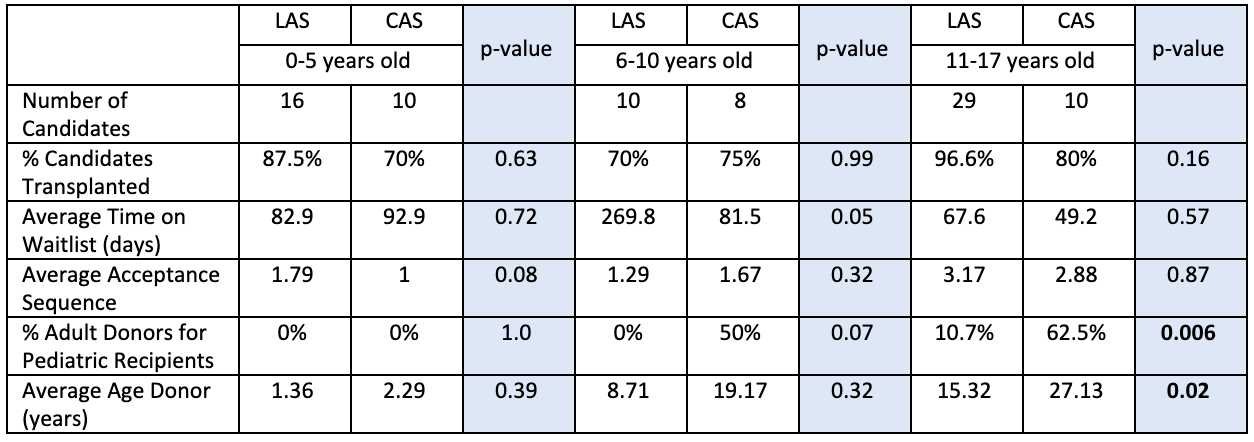
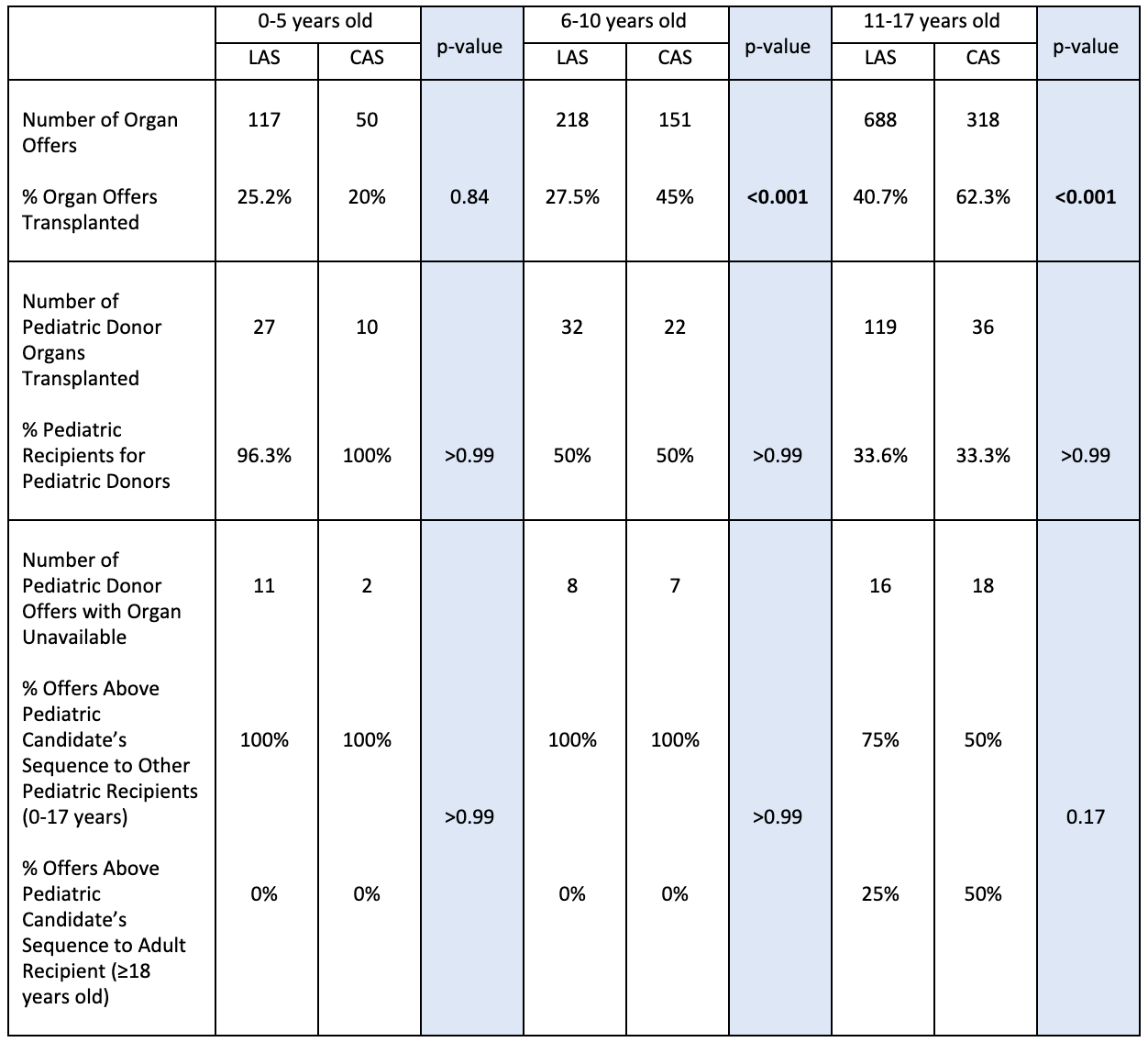
Results: A total of 83 candidates and their 1542 total organ offers were reviewed. Infants/young children (0-5 years) and school aged children (6-10 years) showed no statistically significant differences in waitlist or donor characteristics between eras. However, the adolescent candidates (11-17 years) differed significantly between the two allocation systems. The adolescent group experienced decreased average time on the waitlist and lower average acceptance sequence, but these candidates also accepted significantly more adult donor lungs (62.5% vs 10.7% p=0.006) with higher average donor ages. Additionally, a higher percentage of the pediatric organ offers were directed and accepted by an adult recipient before being offered to a pediatric candidate.
Conclusion: With the CAS, older pediatric patients are more frequently overlapping with adults on organ offers leading to larger age-mismatches than previously seen with age prioritization system under the LAS. Outcome data for pediatric recipients of adult donor organs, as well as graft survival of pediatric organs into adult recipients should be reviewed in future studies.