Beyond the hospital room: evaluating outdoor therapeutic programming for children awaiting heart transplant
Authors
Affiliations
Abstract
Introduction: For children awaiting heart transplantation (HTx) on a ventricular assist device (VAD), the long hospitalization can limit developmental exploration, peer interaction, physical activity, and participation in age-appropriate experiences. This increases the risk of social isolation, emotional distress, and delayed developmental progress. Outdoor access has been limited by institutional safety requirements/risk management, and emergency response protocols. Child life specialists can help mitigate these challenges by creating opportunities for normalization, socialization, play, and meaningful engagement. This study analyzes the psychosocial impact of a structured outdoor group programming initiative for pediatric VAD patients awaiting HTx.
Methods: Phase 1 (implemented in June 2025) began with recurring (2-3/week) rooftop outdoor medically supported sessions for pediatric VAD patients and families. Activities were tailored to participants’ developmental abilities, interests, and medical status, with goals of promoting social interaction, normalization, physical activity, autonomy, and coping. Phase 2 involved a post-program caregiver survey assessing perceived impacts on participants’ learning, socialization, emotional well-being, and engagement in developmentally appropriate activities. Quantitative data was analyzed descriptively, and qualitative responses will undergo thematic analysis to identify program strengths, challenges, and opportunities for improvement.
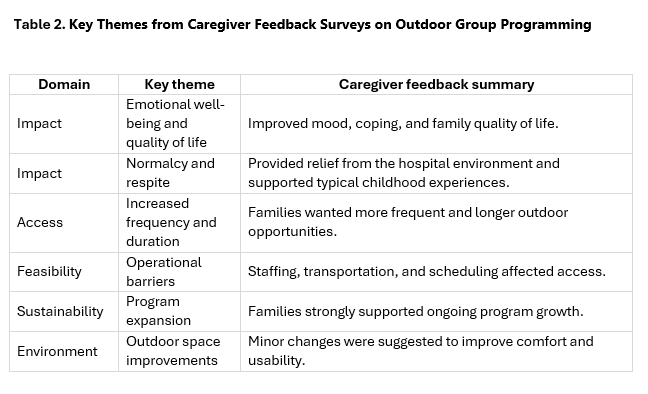
Results: Participant characteristics and program reach are summarized in Table 1 with 10 VAD patients and families participating in an average of 17.7 sessions. Preliminary caregiver responses (n=5) (Table 2) indicate that outdoor access promoted emotional well-being, improved quality of life, social connection, and a sense of normalcy during prolonged hospitalization. Caregivers expressed strong support for expanding access, citing benefits to coping and resilience. Common recommendations included increasing session frequency and duration, offering weekend availability, and addressing staffing and logistical barriers. Data collection for Phase 2 is ongoing. 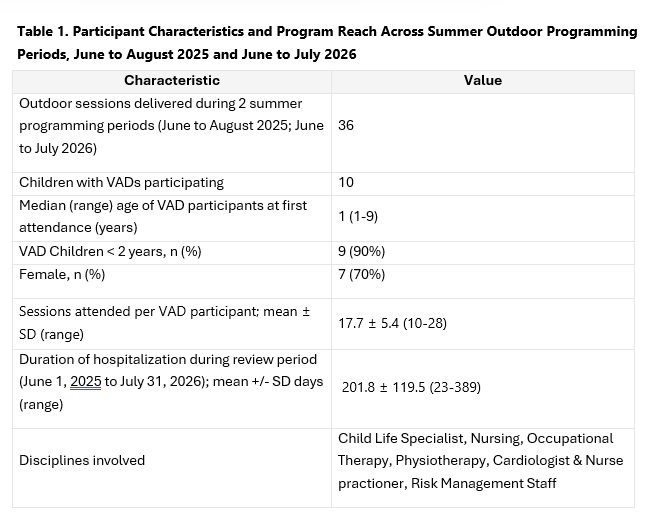
Conclusion: Pediatric VAD patients awaiting HTx experience unique psychosocial and developmental challenges. Outdoor group programming offers a feasible and valuable intervention to promote normalization, peer connection, emotional well-being, and developmentally supportive experiences during extended inpatient stays. These preliminary findings support continued program development and highlight the importance of medically supported therapeutic recreation. Given the limited data, this study contributes to the emerging literature on child life interventions that support quality of life for hospitalized pediatric HTx candidates.