Transplant Teen Together: A pilot study for assessing teen and family satisfaction and efficacy of a novel intervention for teen transition education and psychological support.
Authors
Affiliations
Abstract
Background: Despite existing literature on needs related to teen transition from pediatric to adult care, there is little research related to an intervention to support improvements in this transition. This is a critical period in transplant care as there is high prevalence of nonadherence of medication, an increase in psychiatric diagnosis compared to non-transplanted peers, and lacking peer support for teens with solid organ transplant. These risk factors lead to pre-mature graft rejection which can require re-transplantation or, in worst case, death. As there is limited research on transition support aimed at teens with solid organ transplants, this intervention was developed to assess the effectiveness of a teen support group for transplant patients outside of their clinic setting.
Methods: A pediatric transplant program comprised of heart, liver and kidney transplant patients conducted a pilot teen and parent transplant support group with planned bimonthly offerings. With programming from our multidisciplinary staff, adolescents aged 13-21 years and their parents are invited to a lunch with separated support groups for parents and adolescent patients. Parents are given topics pertinent to transition to adult care. Patients are given similar education and participate in a peer group task and discussion. After participation, both parents and teens are given a 5-point Likert scale satisfaction survey as well as the Adolescent Barriers to Medication/Parent Barriers to Medication Scale (AMBS/PMBS), a validated measure related to experience with medications. The lunch and meeting space is provided by a community resource, located outside the hospital, and timed after a transplant clinic.
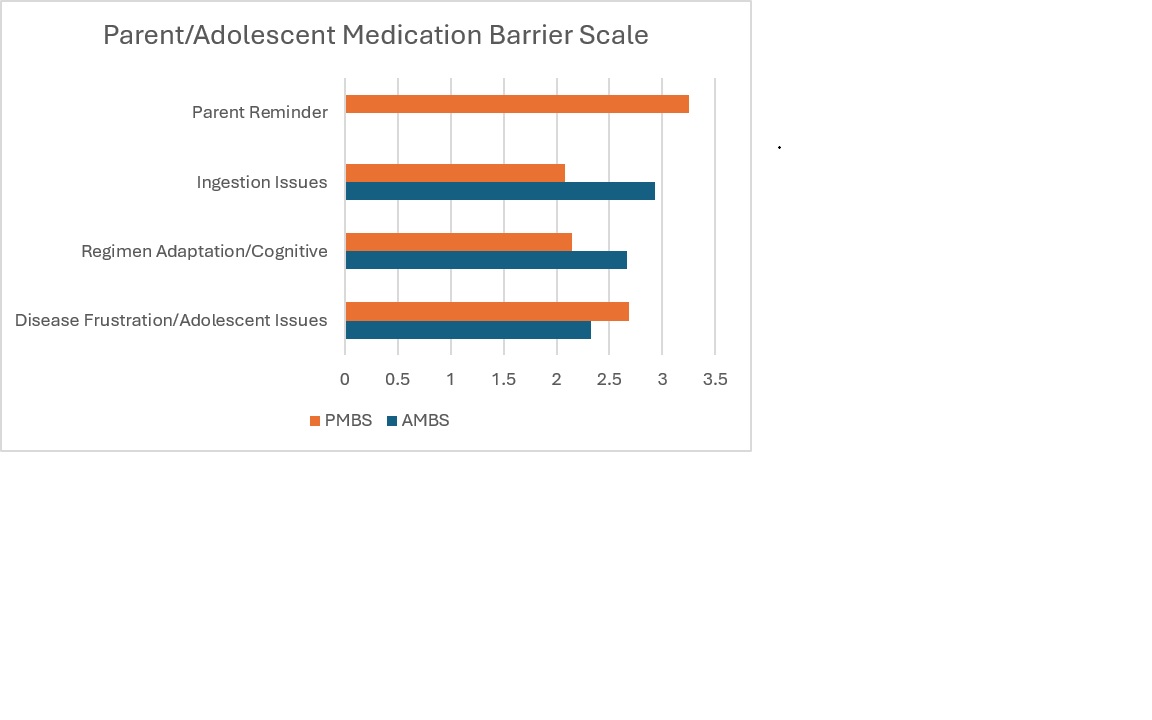
Results: Initial results indicate high levels of satisfaction for our patients (4.5) and parents (4.75) with the teen transplant group. Additional results indicated that teen patients rely heavily on their parents for medication adherence, indicating a strong need for more education in support of their independence. See Figures 1. for AMBS/PMBS results.
Conclusions A teen support group can serve as a strategy to enhance teen transition learning, psychological support, and building community. Additionally, this initiative demonstrates the critical role of the multidisciplinary transplant team in addressing psychological and educational needs of pediatric teen transplant patients. This novel intervention will attempt to identify what patients and caregivers feel is meaningful education and peer interaction. Additionally, using AMPS/PMBS validated surveys reveal the main barriers to medication adherence in our teen transplant population. We also hope to illustrate our experience utilizing a community resource, which can decrease obstacles to providing this type of support outside of hospital budgets and constraints, and build outside support for our population. Future research will be conducted by assessing long-term outcomes of those attending the groups.