Impact of pre-transplant anti-CD20 antibody administration on post-transplant EBV infection after ABO-incompatible pediatric liver transplantation
Authors
Affiliations
Abstract
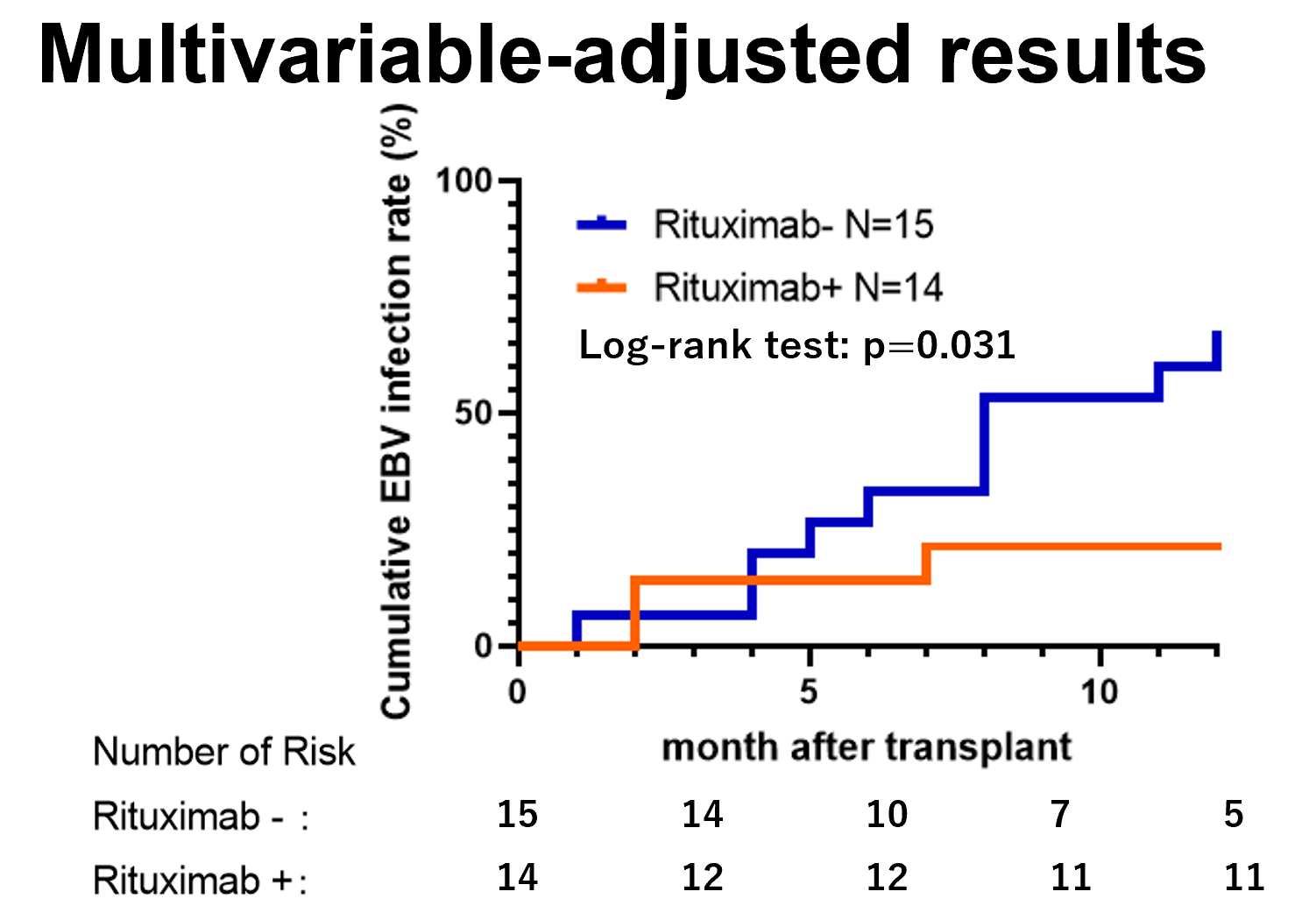
Methods: We conducted a single-center retrospective observational study. Patients who underwent their first isolated LT at a younger age than 18 years at our institution from July 2014 to December 2024 and had at least 5 post-transplant EBV DNA measurements were included. Clinical information was collected from electronic medical records. Patients who received rituximab for ABOi-LT were compared with those who did not receive rituximab. The primary outcome was the occurrence of EBV infection within 12 months after LT. Propensity-score matching was performed using age at LT, indication of LT, and recipient EBV serostatus to balance baseline characteristics between the groups. Time to EBV infection was evaluated using Kaplan-Meier analysis and the log-rank test. A subgroup analysis was performed in EBV donor-seropositive/recipient-seronegative (D+/R−) recipients, who are at high risk for post-transplant EBV infection.
Results: A total of 487 pediatric LT recipients met the inclusion criteria; 17 received pre-transplant rituximab for ABOi-LT and 470 did not receive rituximab. Before matching, the groups differed in age, weight, cause of LT, ABO compatibility, and recipient EBV serostatus. After propensity-score matching, baseline differences in the prespecified matching variables were reduced. Kaplan-Meier analysis demonstrated a significantly lower cumulative EBV infection rate at 1-year post-LT in the rituximab group than in the non-rituximab group (33.3% vs. 78.6%, P=0.031). Subgroup analysis within the EBV serostatus-mismatched (D+/R−) group also revealed a lower cumulative EBV infection rate in the rituximab group (0% vs. 76.0%, P=0.015).
Conclusion: Pre-LT rituximab administration may decrease the occurrence of EBV infection in the early post-LT period and may potentially prevent PTLD. The preventive effect was also observed among high-risk (EBV D+/R−) recipients. Given the retrospective single-center design and small number of rituximab-treated patients, further prospective interventional studies with larger cohorts are needed to confirm our observation.