"The More We Get Together": Circle Time (CT) to Support Children with Ventricular Assist Devices (VADs) During Long Hospitalizations
Authors
Affiliations
Abstract
Introduction
Children waiting for heart transplant (HTx) with VADs often experience long hospital stays during critical periods of development which can limit opportunities for play, socialization, caregiver-child interaction, and other developmentally supportive experiences, while contributing to caregiver stress. Increasing patient complexity has placed growing demands on allied health professionals (AHPs) providing individualized interventions. To address these challenges, we developed Circle Time (CT), a group intervention run by AHPs for cardiac inpatients. Sessions include developmentally appropriate play, music, sensory experiences, and caregiver participation. CT expanded from weekly to twice-weekly to meet growing needs. This allowed support of multiple patients and caregivers simultaneously, increasing access to therapy while fostering peer connection, caregiver engagement, and a more family-centered inpatient experience.
The aims of this study were to explore the experiences of caregivers of children with VADs who participated in CT, and the perceptions of nursing staff about the impact on patients, families, clinical service delivery, and the inpatient environment.
Methods
Data collected (May 2025-May 2026) included session frequency, attendance, and patient demographics. Caregiver questionnaires assessed perceived impacts on bonding and attachment, developmental support, socialization, and overall experience. Nursing staff questionnaires evaluated perceived benefits for families, effects on the unit environment, and the influence on patient and caregiver wellbeing.
Results
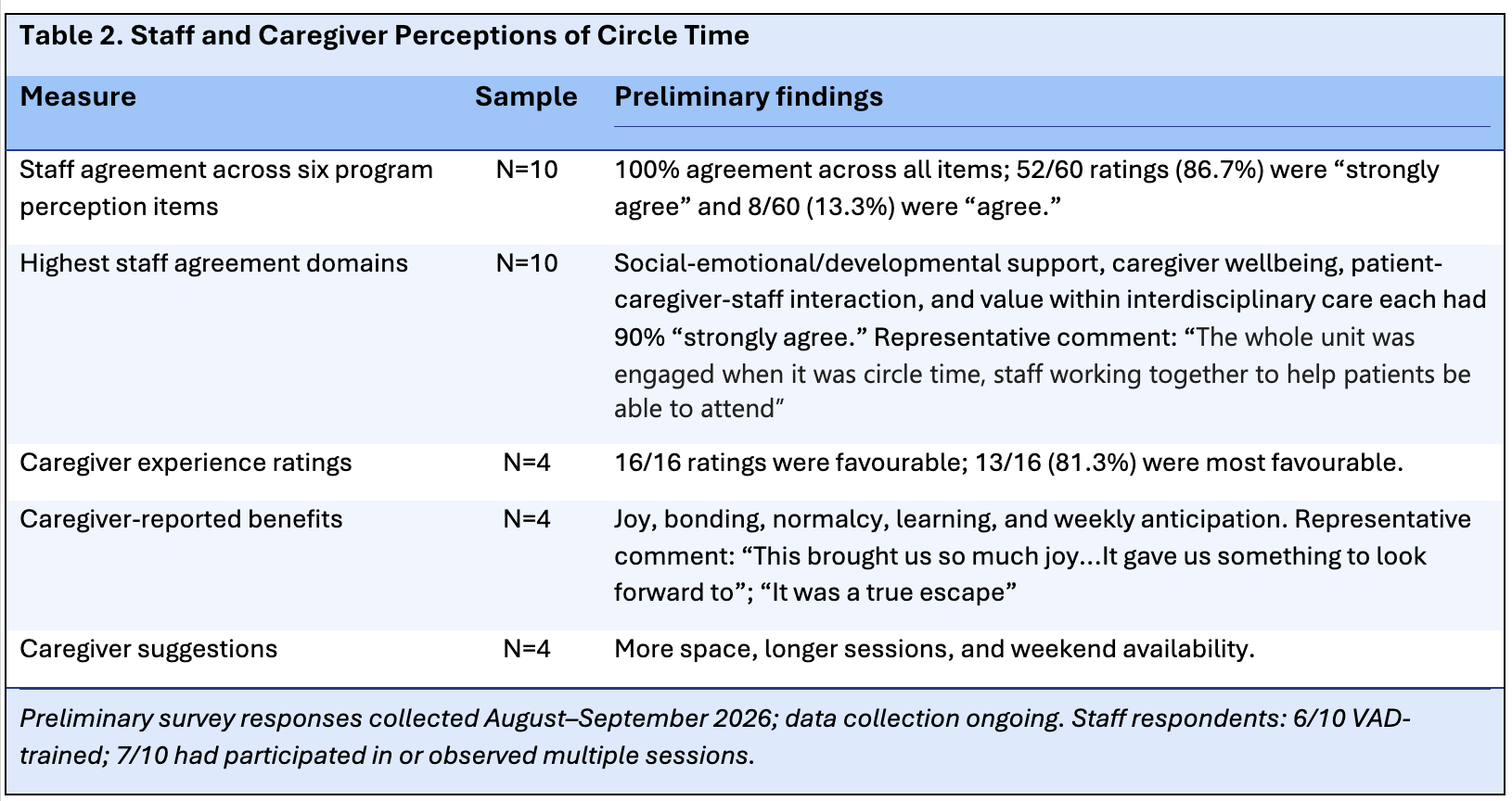
Ten VAD patients (median age 1 y, range 1-9; 70% female) attended a mean of 22.5 (+/- 12.2) CT sessions over the study period (Table 1). Preliminary survey findings are summarized in Table 2. Caregiver feedback indicated that CT provided opportunities for caregiver-child interaction, supported developmental engagement, and fostered connections with other families; the program was described as contributing to a sense of normalcy, routine, and community during a long hospital stay. None felt disadvantaged or neglected in a group setting. Nursing staff reported that CT positively influenced the inpatient environment by making it more engaging and family-centered; they perceived benefits for caregiver wellbeing, patient engagement, and opportunities for social connection. 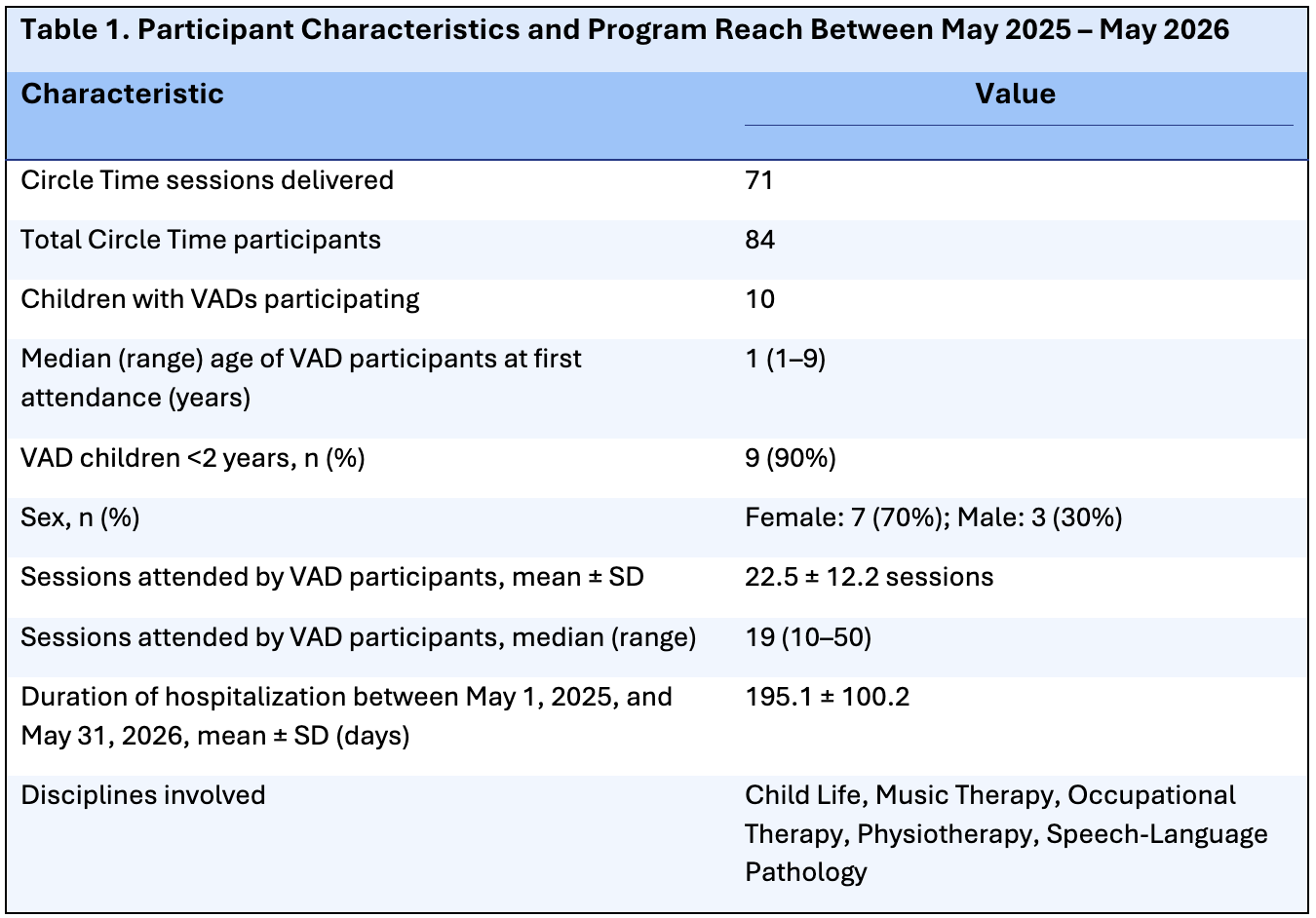
Conclusions
CT is an interdisciplinary group intervention that supports developmental experiences and caregiver engagement for hospitalized children with VADs. Findings suggest that the program offers an efficient group-based approach to developmentally supportive care and may positively influence family experience, caregiver wellbeing, and the inpatient environment without disadvantaging individual children. Ongoing evaluation will inform future program development of group programming for medically complex children and their families.