Interferon-Guided JAK1/2 Inhibition with Ruxolitinib for Steroid-Refractory Rejection After Pediatric Liver Transplantation
Authors
Affiliations
Abstract
INTRODUCTION
Steroid-refractory acute cellular rejection (ACR) after pediatric liver transplantation is difficult to treat, and lymphodepletion carries substantial infectious and metabolic toxicity. Ruxolitinib, a JAK1/2 inhibitor that blocks signaling downstream of type I and II interferons, is approved for steroid-refractory graft-versus-host disease, but experience in solid-organ rejection is limited. We report on its use for refractory ACR.
CASE PRESENTATION
A 15-year-old girl underwent orthotopic liver transplantation for acute liver failure; explant pathology revealed autoimmune hepatitis/primary sclerosing cholangitis overlap. At 5 months post-transplant, she developed steroid-refractory ACR requiring methylprednisolone and antithymocyte globulin (ATG). She remained on tacrolimus, mycophenolate, and prednisone but could not be weaned off steroids. Immune profiling revealed persistent innate and adaptive activation with Th1-predominant inflammation and mixed type I/II interferon activation; IFN-γ elevated at 13.3 pg/mL with CXCL9 in the reference range. At 18 months she re-presented with AST 182 and ALT 250 U/L; biopsy confirmed ACR (Banff rejection activity index [RAI] 5/9). Despite repeated pulse steroids, she had an inadequate response, with enzymes worsening during taper. Repeat biopsy 2 weeks later showed RAI 5/9. Allograft tissue showed a CD8+/CD103+ tissue-resident memory T-cell infiltrate. ATG was considered however there were concerns for infection risk, given obesity (BMI 40.4 kg/m²), and steroid-induced diabetes. Ruxolitinib 10 mg twice daily was started with antimicrobial prophylaxis and increased to 15 mg twice daily. ALT fell from 199 to 68 U/L within 10 days. Transaminases normalized by month 5 and remained normal through 8 months. Ruxolitinib was reduced to 10 mg twice daily and prednisone tapered from 60 mg twice daily to 5 mg daily, without further rejection or opportunistic infection. 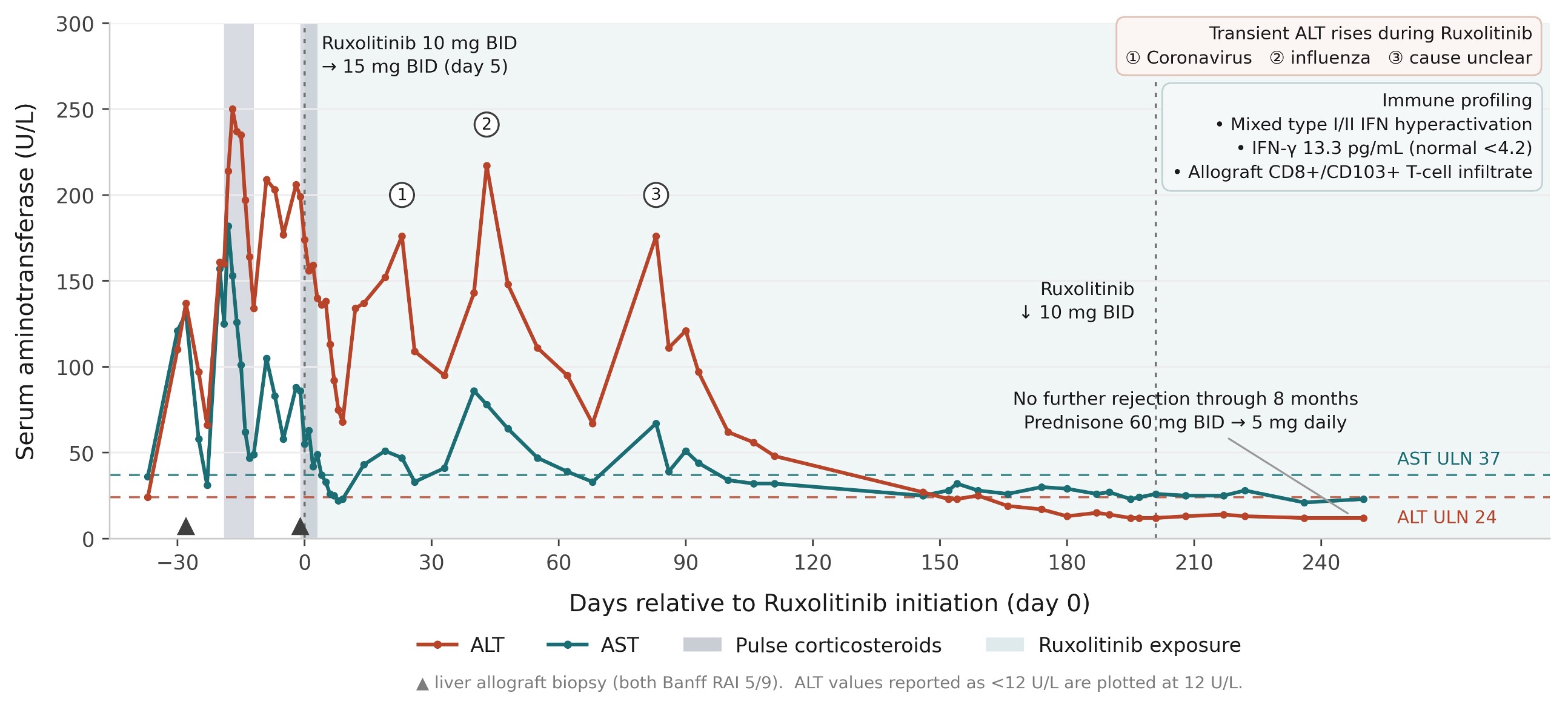
DISCUSSION
Ruxolitinib was chosen to attenuate a broad, cytokine-mediated inflammatory response rapidly and importantly, reversibly. JAK1/2 blockade interrupts signaling directly downstream of the receptor; corticosteroids and lymphodepletion act further upstream. Thymoglobulin actively destroys and clears T-cells from the body and its effect is more durable and prolonged. Profiling showed type I interferon and IFN-γ elevation without a rise in CXCL9, suggesting a broader inflammatory phenotype and supporting potential multi-organ benefit. 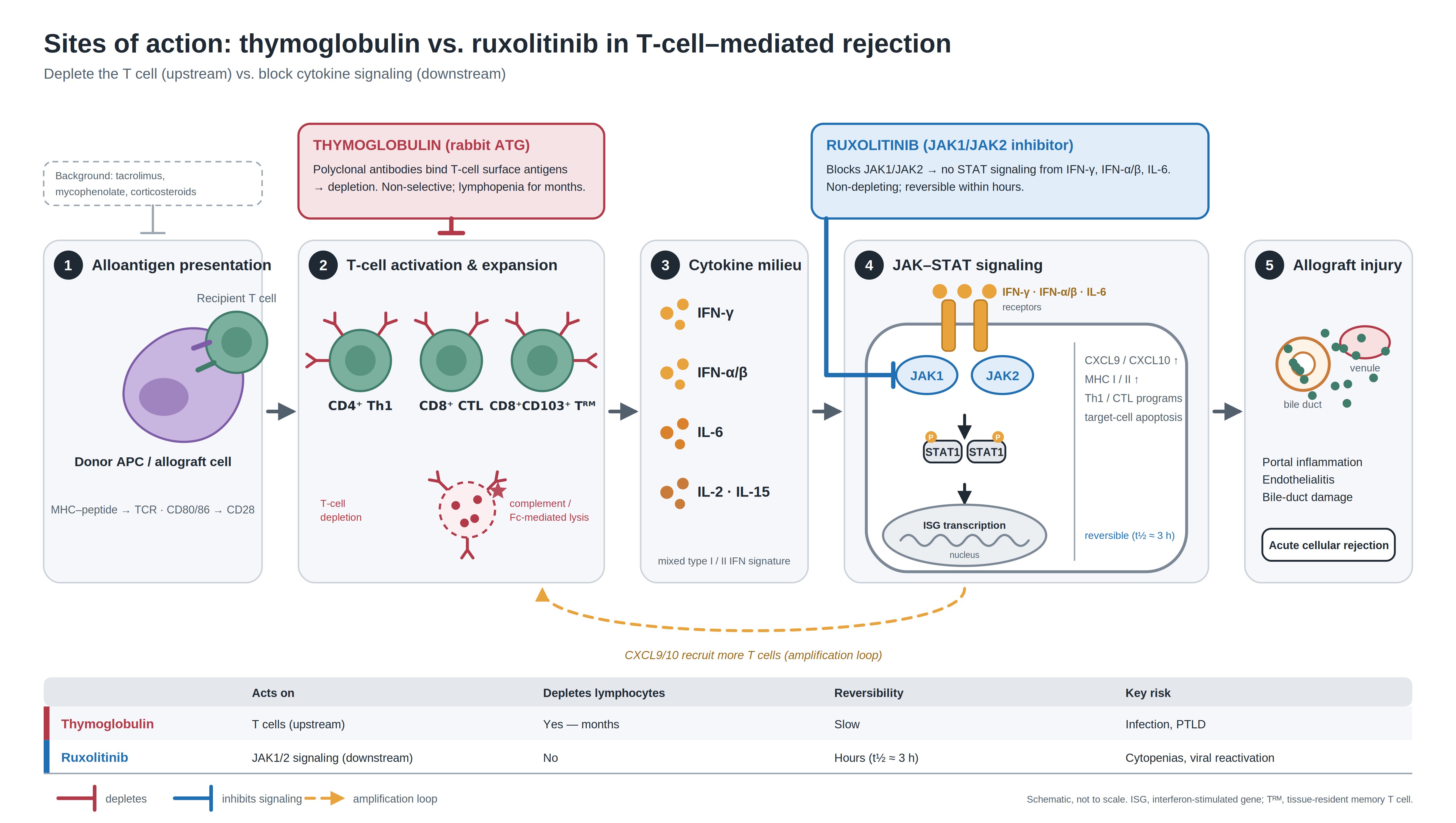
CONCLUSION
In recurrent steroid-refractory pediatric liver allograft rejection with mixed type I/II interferon activation, mechanism-directed JAK1/2 inhibition was associated with durable biochemical remission and substantial steroid sparing without opportunistic infection. Prospective evaluation in refractory solid-organ rejection is warranted.