Implementation of a novel ultrasound protocol for biliary atresia at an independent pediatric center: early experience and outcomes
Authors
Affiliations
Abstract
Introduction: Biliary atresia (BA) is a progressive, inflammatory, fibro-obliterative cholangiopathy of infancy resulting in impaired bile flow, cholestasis and eventual cirrhosis if left untreated, making timely diagnosis imperative. Historically, evaluation of suspected BA has relied on a combination of laboratory, radiologic, and histological findings; however, intra-operative cholangiogram remains the diagnostic gold standard. Ultrasonography has been a key component of this evaluation, but traditional techniques lack sufficient accuracy to consistently diagnose BA, often requiring further invasive testing with cholangiography and liver biopsy. More recently, absence of the duct at the hilum (DaH) in combination with measurements of maximum echogenicity (MxE) at the right portal vein, specifically an MxE of 1.0 to 4.0 mm when the DaH is absent or an MxE greater than 4 mm regardless of DaH visualization, have emerged as promising sonographic markers of BA. Initial studies have shown excellent performance, including 100% sensitivity for BA using a standardized four-step protocol for DaH identification. We present our experience with training, implementation, and outcomes of this protocol.
Methods: Hepatology and Radiology reviewed published data and discussed implementation and best practices with the pioneers of the technique from Texas Children’s Hospital. One sonographer was trained virtually in the identification of DaH and MxE during live ultrasound evaluations for neonatal cholestasis. Ultrasound examinations performed over a 12-month period (April 2025 - April 2026) were retrospectively reviewed in infants undergoing evaluation for BA. Patients continued to undergo standard of care, liver biopsy, and cholangiography at the discretion of the clinical team.
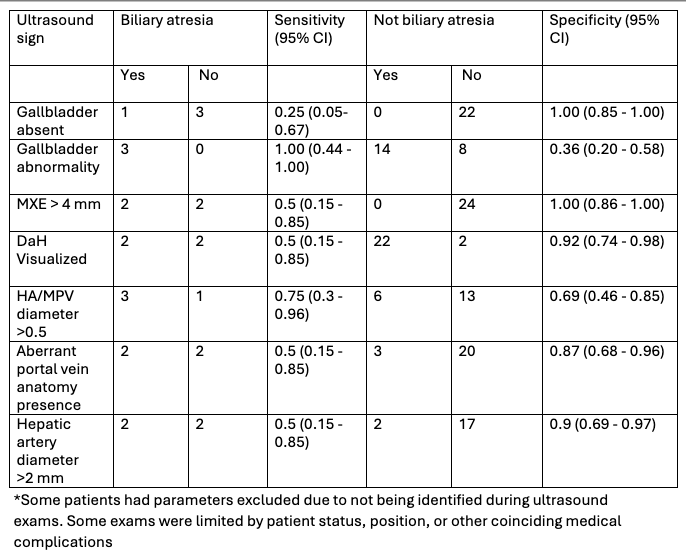
Results: Thirty infants were included in the study; however, two patients were excluded due to presence of cystic structures which are a known limitation to this protocol. The median age of the cohort was 35 days (range: 6-168 days) and median weight was 3.89 kg (range 1.36 kg – 5.49 kg). Overall, 10 of the total 28 infants ultimately underwent cholangiography and four were diagnosed with biliary atresia and underwent Kasai portoenterostomy. Among the four patients with BA, our U/S findings detected three based on the above DaH and MxE criteria, with two having an absent DaH and one with a MxE >4 mm. The fourth patient with BA had a visible DaH and MxE of 1.7 mm despite ultimately having BA. Of note on a later review by our ultrasound technician, the structure identified as the DaH was a possible alternate vessel. Of the six patients who underwent cholangiogram and did not have biliary atresia, all six were also negative per the BA U/S parameters yielding a specificity of 100%.
Conclusion: Implementation of a novel BA ultrasound protocol through virtual training and multidisciplinary collaboration is possible. While diagnostic performance was lower than reported in the original papers, review of the false-negative examination demonstrated potential challenges in DaH identification during early implementation which highlights the importance of ongoing training. Adoption of this protocol may facilitate earlier diagnostic stratification and reduce invasive testing in neonatal cholestasis. Our findings highlight the need for continued training to optimize implementation across a larger group of sonographers and centers.