Bridging the gap in Pediatric Liver Allocation: An International IPTA Survey
Authors
Affiliations
Abstract
Introduction
Worldwide pediatric liver allocation policies vary considerably, yet little is known about the degree of international consensus regarding pediatric prioritization. The International Pediatric Transplant Association (IPTA) Advocacy Committee conducted a global survey to characterize current pediatric liver allocation policies, identify areas of variation, and inform future consensus recommendations.
Methods
We conducted a cross sectional electronic survey of pediatric transplant hepatology professionals worldwide. The survey was distributed through IPTA, the Society of Pediatric Liver Transplantation and direct professional outreach. It evaluated center characteristics, allocation governance, pediatric age definitions, accessibility of allocation criteria, prioritization mechanisms, perceived policy adequacy, and willingness to adopt IPTA recommendations. Duplicate responses were removed by retaining the most complete submission.
Results
Current analysis includes 49 unique responses; denominators vary because additionally survey items were introduced during ongoing data collection. Respondents represented 22 countries across six continents, with the largest representation from the United States (12/41, 29%) followed by Argentina and India. Although nearly all of respondents 46/49 (94%) strongly supported pediatric-priority allocation, only half believed children were currently prioritized adequately, while 17/38 (45%) believed they were not (Figure 1).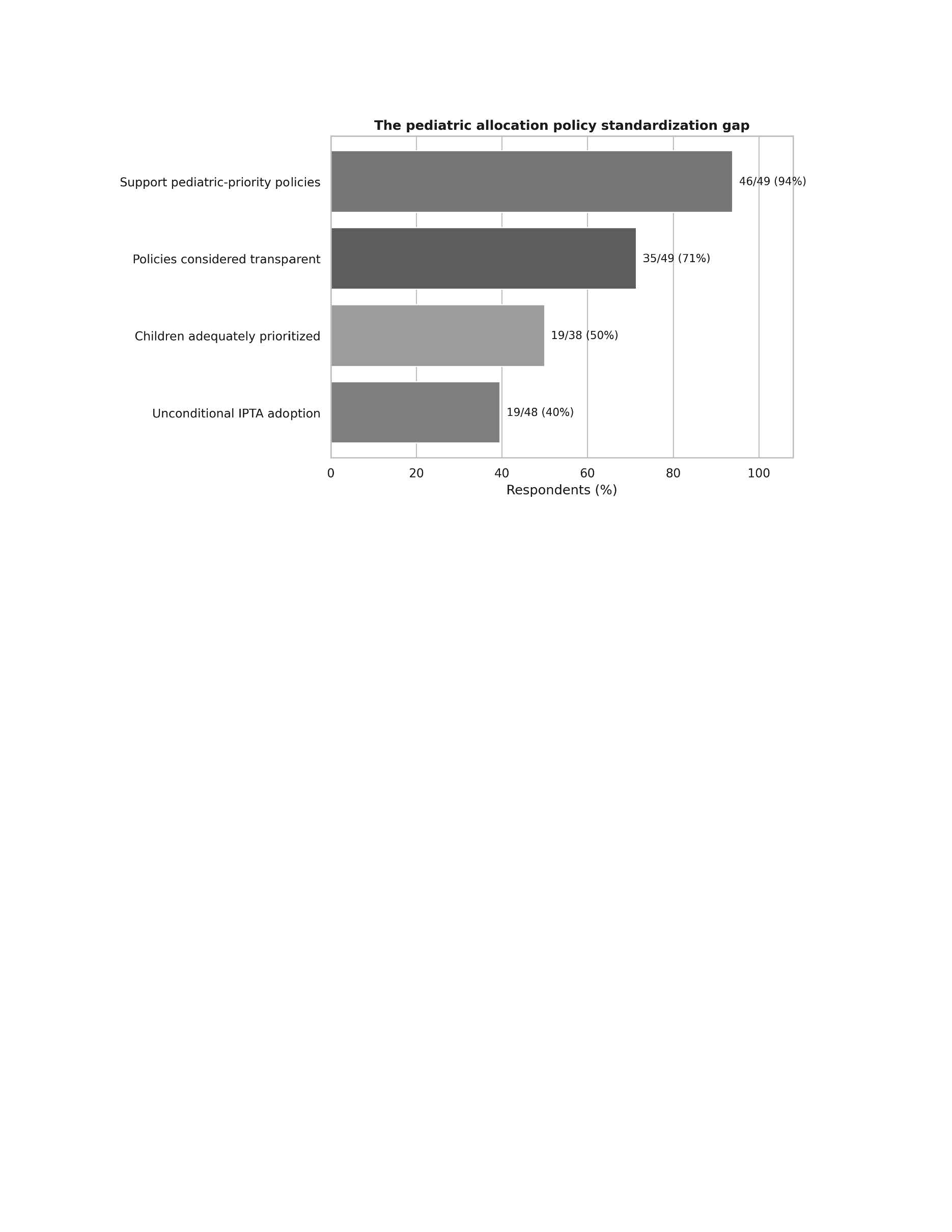
National liver allocation policies were utilized by 82[IB1] % with a predominance of high income countries, while 10% followed center-specific policies and 8% reported other arrangements. Allocation policies were considered transparent by 35/49 (71[IB2] %). The median upper age defining pediatric allocation was 18 years, although definitions varied. Pediatric donor-to-pediatric recipient priority was the most commonly reported prioritization strategy (93%). Other prioritization strategies included adjusted PELD or exception scoring, mandated or incentivized split/technical-variant graft use (45% for both, respectively), while pediatric priority for any deceased-donor liver was reported by 38% (Table 1) 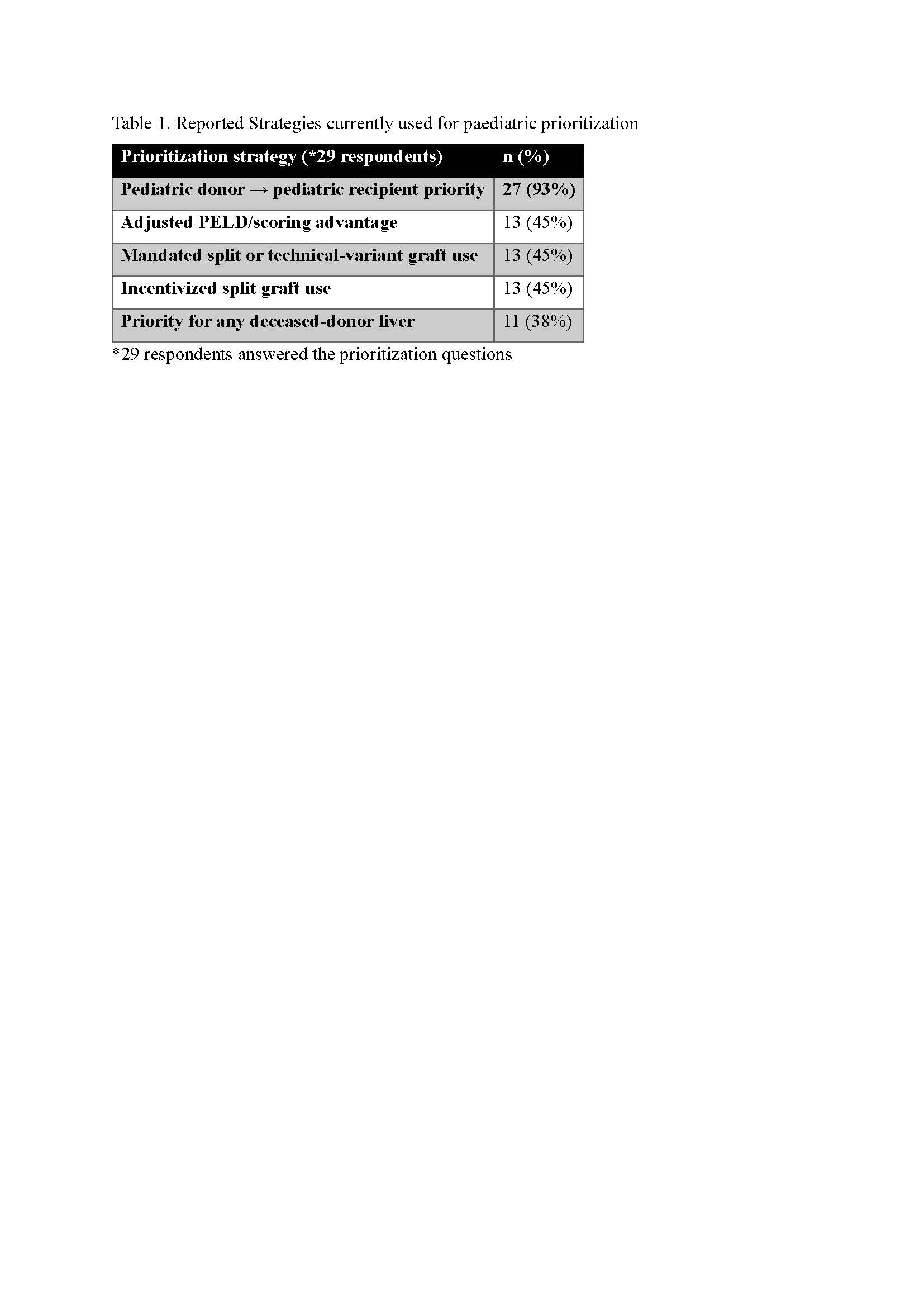
Conclusion
Pediatric prioritization within liver allocation policies remains highly heterogeneous worldwide, despite strong and nearly universal support from the pediatric transplant community. The disconnect between professional opinion and current practice highlights the need for international informed, evidence-based guidance. These findings inform IPTA Advocacy committee recommendations to focus on addressing pediatric age definitions, donor-recipient priority, PELD exceptions, transparency, and role of technical-variant and split liver transplantation while highlighting the importance of greater pediatric representation in national allocation policy development.
[IB1]is supported by data that national allocation policies are practiced in established high income countries?
[IB2]where they considered transparent in national allocation systems primarily?