Donor derived cell free DNA trends following pediatric heart transplant
Authors
Affiliations
Abstract
Introduction:
Donor-derived cell-free DNA (dd-cfDNA) is a sensitive biomarker of allograft injury after heart transplantation (HT). dd-cfDNA is typically elevated in the immediate post HT period due to graft healing. In adults without acute rejection (AR), levels return to baseline around 6 weeks post HT. However, little is known about the decline of dd-cfDNA early after pediatric and young adult HT and thus when the commonly used threshold is applicable. We hypothesized that dd-cfDNA would normalize by 6 weeks after HT among pediatric and young adult patients without AR.
Methods:
All patients who underwent HT at our center following initiation of dd-cfDNA-led surveillance in October 2021 were identified. By protocol, endomyocardial biopsy (EMB) was performed 2 weeks after HT followed by concurrent EMB and dd-cfDNA at 6 and 12 weeks. Thereafter at 6, 9, 12, and 18 months, surveillance was performed by dd-cfDNA with reflex EMB if dd-cfDNA was elevated (≥0.16%) or clinical concern of graft dysfunction. Baseline demographics, along with relevant surgical, donor-specific antibody (DSA), and EMB results were assessed with dd-cfDNA at 6 weeks. We also analyzed the trend of dd-cfDNA levels with stratification based on the presence/absence of rejection through the first 18 months post HT.
Results:
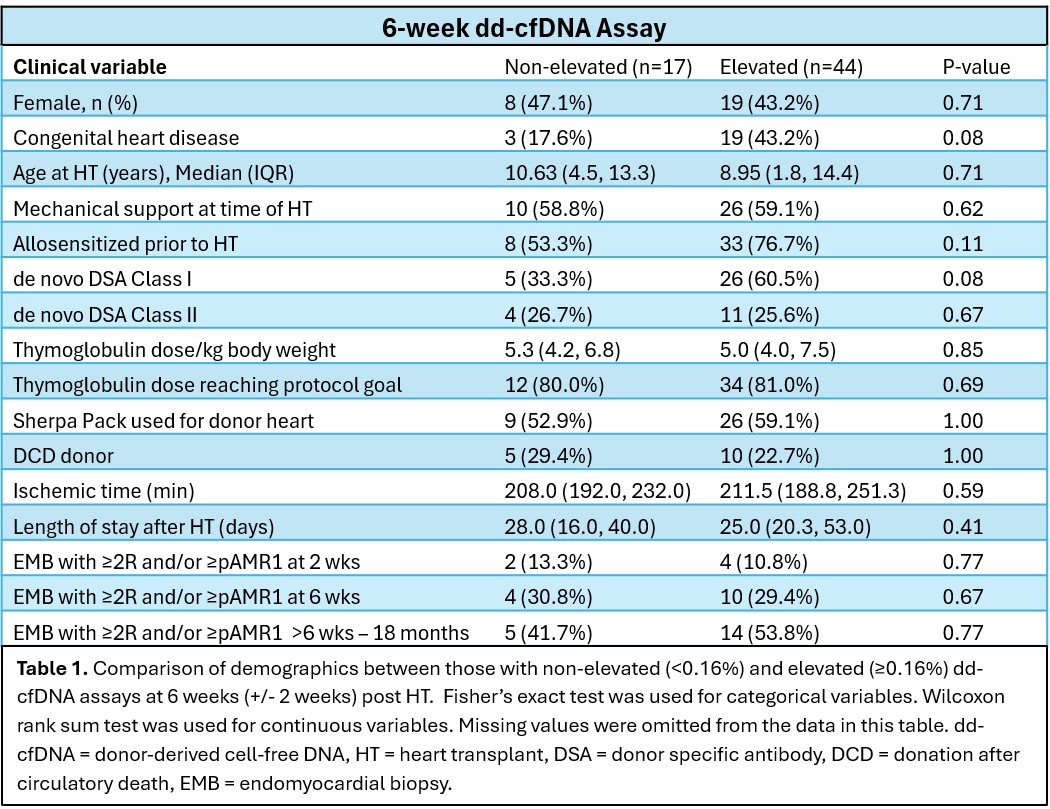
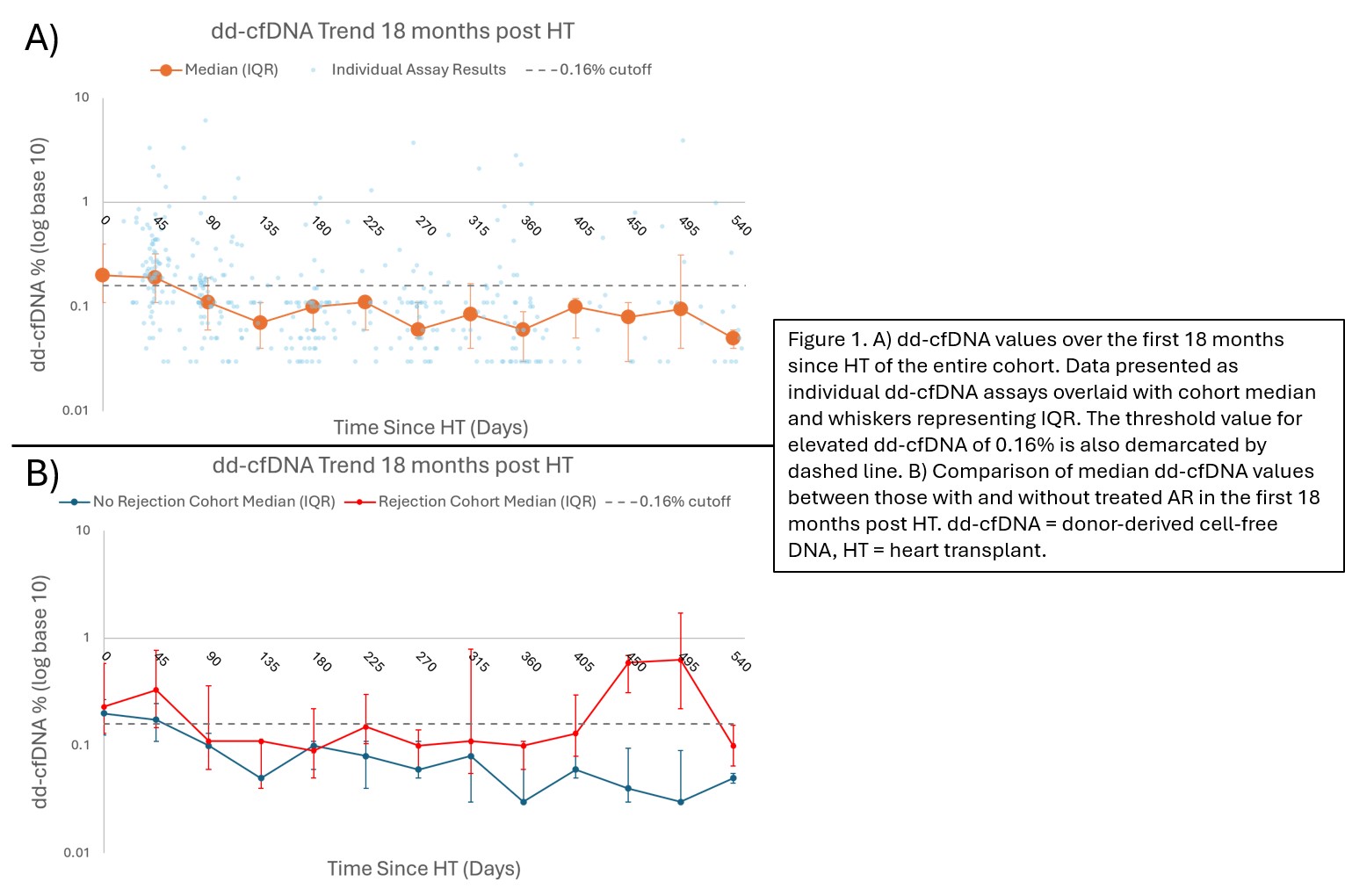
Seventy patients underwent HT after initiation of the dd-cfDNA-led protocol. Of these, 61 (87%) had a dd-cfDNA level obtained at 6 ± 2 weeks post HT, with 44 (72%) of these being elevated. Median dd-cfDNA at 6 weeks was 0.19% (IQR 0.11-0.32). None of the pre or early-post HT variables assessed were significantly associated with elevated dd-cfDNA at 6 weeks post HT (Table 1). Figure 1 shows the trend in dd-cfDNA to 18 months after HT for the entire cohort (1A) as well as comparison of trends between those with and without treated episodes of AR in the first 18 months post HT (1B).
Conclusion:
dd-cfDNA was elevated in most pediatric and young adult HT recipients at 6 weeks after HT without identified relationship to patient characteristics including ischemic time, induction immunosuppression, or rejection on EMB at 2 or 6 weeks. dd-cfDNA levels tend to fall below the 0.16% threshold by 12 weeks after HT and are higher among those with subsequent AR. Use of dd-cfDNA to “rule-out” rejection before 12 weeks appears to require a higher threshold.